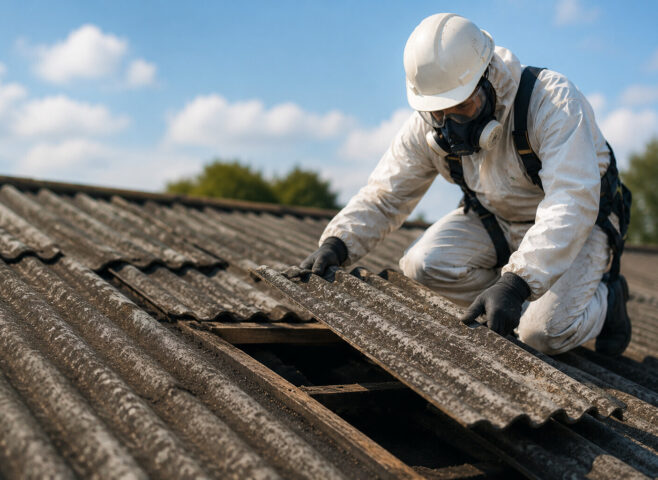
Replacing the roof on an older garden room can seem like a straightforward improvement, particularly when the covering is tired, leaking or no longer suits the house. In Exeter and across Devon, however, many garden rooms, extensions and detached buildings were constructed or altered during periods when asbestos-containing materials were widely available. A roof that looks like ordinary cement sheet may contain asbestos fibres, and cutting, drilling or breaking it during replacement can release hazardous dust.
Arranging asbestos testing before work begins gives homeowners, landlords and contractors a clear basis for planning. It helps identify whether the roof covering, soffits, flashings, insulation or adjoining panels require special controls. The safest approach is to establish what is present before anyone starts dismantling the structure, rather than relying on appearance or an assumption about the building’s age.
Why an older garden room roof should be tested
Asbestos cement roof sheets were used on garages, sheds, workshops, porches and garden buildings because they were durable and resistant to weather. They can remain in place for decades without causing a problem when they are intact and left alone. The risk changes when a replacement project involves lifting fixings, snapping sheets, using power tools or transporting broken pieces through the garden.
Testing is also important because the roof is rarely the only material affected by a replacement. Guttering may be fixed through asbestos cement, an old ceiling lining may sit below the sheets, and panels around the gable or eaves may have been installed at the same time. A surveyor can consider the roof as part of the whole work area and identify materials that might otherwise be overlooked.
Professional asbestos testing normally involves taking carefully selected samples for laboratory analysis. Sampling should be planned to minimise disturbance, with the material sealed and labelled appropriately. The resulting report can confirm whether asbestos is present and, where relevant, identify the type of asbestos and the material in which it is bound.
What the testing process can clarify
The report should give practical information that supports the next decision. A negative result for a representative material may allow the contractor to proceed using ordinary construction controls, while a positive result means the work needs a suitable asbestos plan. It may be possible to leave an intact roof undisturbed, or the client may decide that removal is preferable before installing the new covering.
Testing can help distinguish between asbestos cement and other sheet materials, but it does not replace a full assessment of condition. Cracks, weathering, moss, damaged edges and previous repairs all affect how the roof should be handled. The location of the building also matters: a narrow side passage, children’s play area or neighbouring property may require additional arrangements for access and enclosure.
Keep the report with the project records and share it with everyone who will plan or price the work. A roofer who knows the result in advance can allow for controlled dismantling, appropriate protective measures and lawful waste handling. This is more reliable than discovering a suspect sheet halfway through the job, when workers and schedules may already be exposed to unnecessary disruption.
Planning removal or replacement safely
If asbestos is identified, do not pressure a general builder to continue without the right controls. Depending on the material, its condition and the proposed work, removal may need to be carried out by a competent asbestos contractor with the correct training, equipment and waste arrangements. The work area should be managed so that occupants, neighbours, pets and other trades are kept away from potential contamination.
Good planning includes deciding how sheets will be lowered without breaking, how surfaces will be dampened where appropriate, and how debris will be packaged and transported. It should also cover the route from the garden room to the collection point. Asbestos waste must not be placed in a normal household skip or mixed with ordinary building materials. A controlled asbestos removal process includes suitable packaging and disposal through an authorised route.
Homeowners should avoid sweeping, brushing or pressure-washing suspected asbestos materials. Do not drill through a sheet to inspect it, and do not break off a piece for an informal test. If damage occurs before testing, stop work, keep people away and obtain professional advice. Small precautions at this stage can prevent a manageable roof project becoming a wider clean-up operation.
When to arrange asbestos testing in Exeter
The best time to arrange testing is before obtaining final quotations or agreeing a start date. Early results allow the client to compare like-for-like prices and avoid delays caused by unexpected findings. Testing is especially sensible before replacing an older garage or garden room roof, installing solar equipment, adding insulation, changing roof timbers or converting the building into an office or living space.
At Westcountry Asbestos Removal, we can help assess the materials that may be disturbed and explain the practical next steps once laboratory results are available. If you are planning work on an older garden room in Exeter, arrange professional asbestos advice before contractors begin. A short period of preparation can protect the people carrying out the work, keep the project organised and provide confidence that the new roof is installed on a properly understood structure.