RECOGNISING ASBESTOS
Asbestos remains one of the most significant health hazards found within older buildings across the United Kingdom. Although its use is now prohibited, asbestos-containing materials are still present in many homes, commercial premises and industrial properties built before the ban came into force.
The manufacture, importation and use of asbestos products were fully prohibited in the UK in 1999, following earlier restrictions that removed the most hazardous forms, including blue asbestos (crocidolite) and brown asbestos (amosite), in 1985. Prior to these bans, asbestos was widely incorporated into construction products due to its excellent fire resistance, insulating properties, strength and durability.
The danger arises when asbestos-containing materials become damaged, deteriorate or are disturbed. When this happens, microscopic fibres can be released into the air and inhaled. Exposure to these fibres has been linked to several serious illnesses, including mesothelioma, asbestos-related lung cancer and asbestosis. These diseases often develop many years after exposure and can have life-changing consequences.
Anyone carrying out renovation work, property maintenance, demolition projects or DIY activities on older buildings should understand the potential presence of asbestos before beginning work. Many asbestos-containing materials can appear harmless at first glance, making awareness and caution essential.
UK legislation places clear responsibilities on employers where asbestos may be encountered. Individuals who could potentially disturb asbestos during their work, as well as those responsible for supervising such activities, must receive appropriate information, instruction and training. The level of training required depends on the type of asbestos work being undertaken, whether it falls under non-licensed work, notifiable non-licensed work or fully licensed asbestos activities.
ASBESTOS REMOVAL IN EXETER
Recognising Materials That May Contain Asbestos
Asbestos was widely used throughout the UK in construction, manufacturing, transport and consumer products because of its strength, insulation properties and resistance to heat and fire, and although banned in 1999, it can still be found in many older buildings within materials such as ceilings, walls, roofing, insulation and floor coverings; as all asbestos types can pose a serious health risk when disturbed and fibres become airborne, suspected materials should never be identified by appearance alone and should always be professionally tested if there is any doubt.
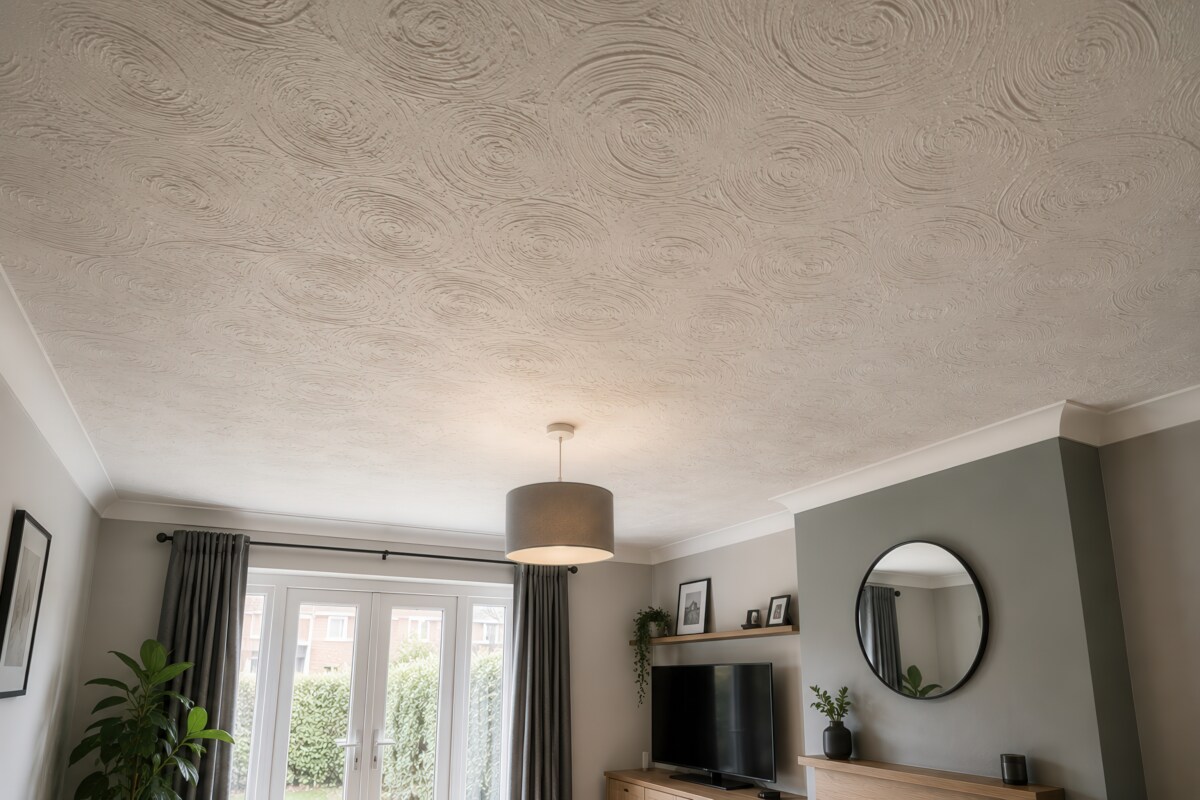
Asbestos Textured Coatings (Artex)
Artex is a textured decorative coating commonly found on older ceilings and walls, often used to create patterns such as swirls, stipples and other decorative finishes. Some Artex coatings applied before the UK asbestos ban in 1999 contained asbestos fibres to improve strength and durability. Although these coatings were usually white when first applied, they may have since been painted any colour.
It is impossible to identify asbestos-containing Artex by appearance alone, and professional testing is required to confirm whether asbestos is present. If you suspect a textured coating may contain asbestos, avoid drilling, sanding or disturbing it, and seek advice from a suitably trained asbestos professional before carrying out any work.
Asbestos floor tiles
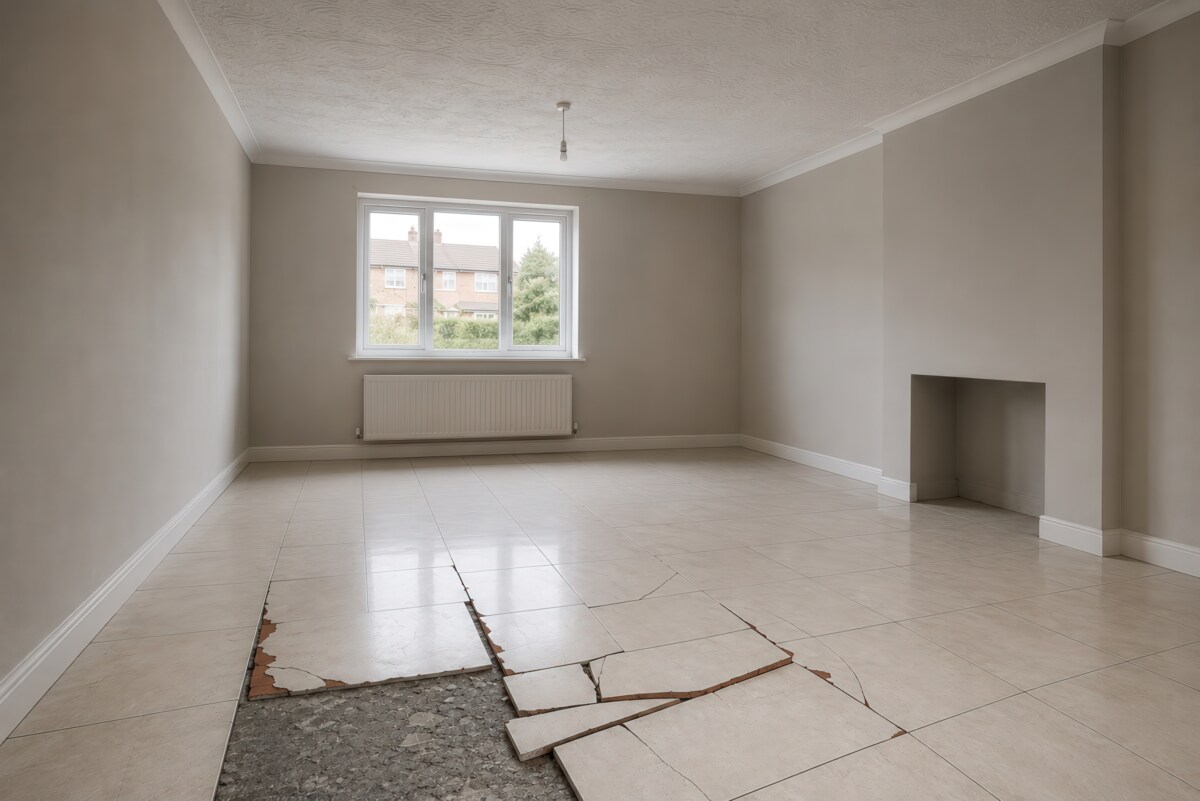
Asbestos was commonly added to older floor tiles, including PVC, vinyl and thermoplastic tiles, to make them stronger and more resistant to wear. These tiles are often found in kitchens, hallways, corridors, cupboards and utility areas, and may sometimes be hidden beneath newer flooring that has been laid over the top.
Asbestos floor tiles cannot be reliably identified by appearance alone, as they can look very similar to ordinary tiles and the asbestos fibres may not be visible. Other older flooring materials may also contain asbestos, including bitumen adhesive, stair nosings, sheet flooring, paper-backed floor coverings and some floor screeds. If you suspect any old flooring may contain asbestos, avoid lifting, breaking or sanding it, and arrange professional testing before carrying out further work.
Asbestos Insulation Board (AIB)
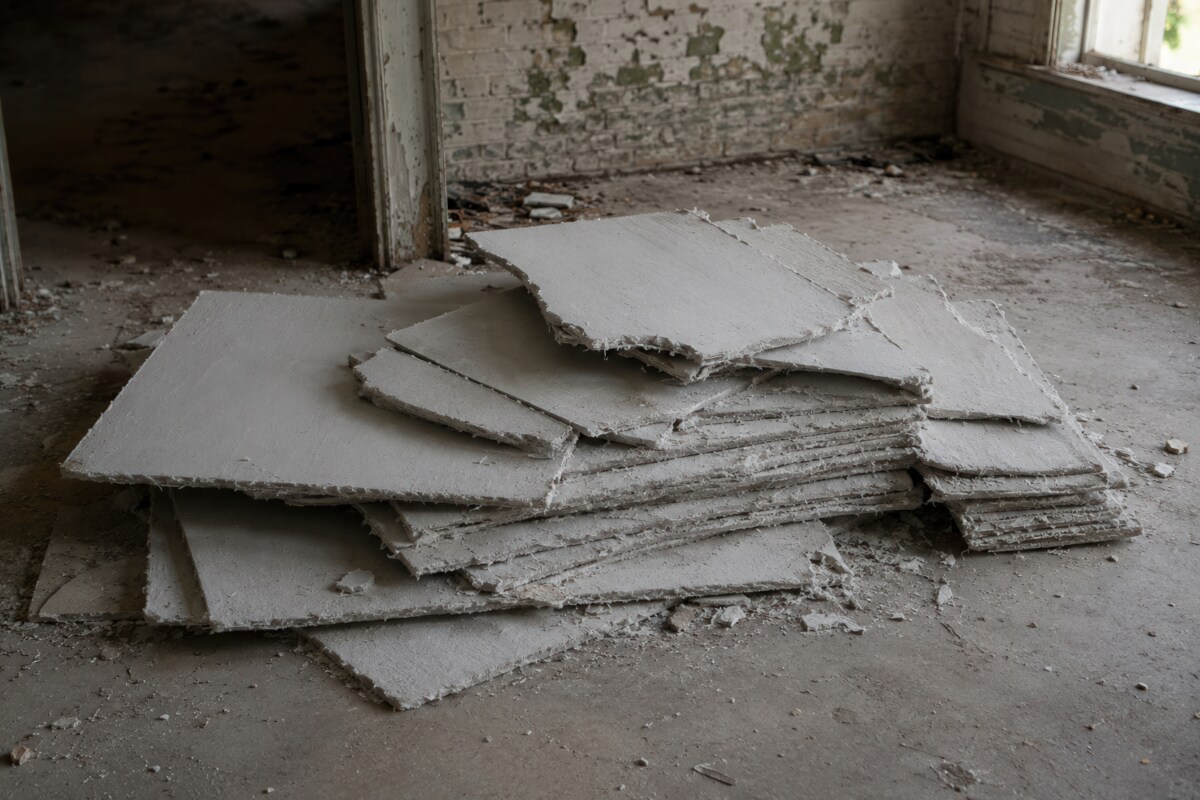
Asbestos Insulation Board (AIB) was widely used in older buildings for fire protection, insulation and partitioning. It can be found in a variety of locations, including fire doors, ceiling tiles, partition walls, soffits, service risers and around window and door openings. In many cases, AIB is concealed behind other building materials or incorporated within walls and ceilings, making it difficult to identify without professional inspection.
Because AIB often contains a higher percentage of asbestos than many other building products, it should be treated with extreme caution. If you suspect AIB may be present in a property built before 2000, avoid disturbing the material and seek professional advice before carrying out any maintenance, refurbishment or demolition work.
Asbestos Pipe Insulation
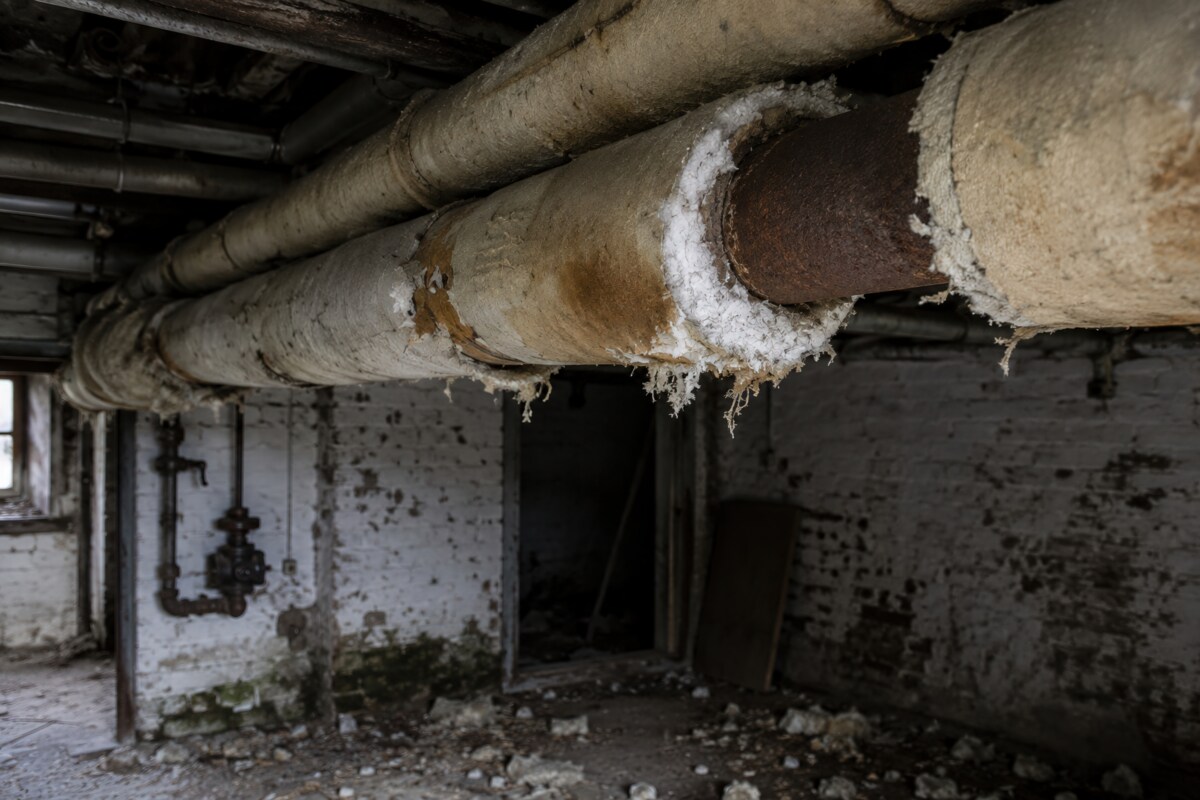
Asbestos pipe insulation was commonly used on heating systems, boilers and pipework to reduce heat loss and provide thermal protection. It can appear in several forms, including fibrous lagging, plaster-like coatings around joints and bends, or wrapped insulation hidden beneath paint, cloth or protective coverings, making it difficult to recognise by appearance alone.
Pipe insulation containing asbestos is considered one of the higher-risk asbestos materials because it can be easily damaged, releasing harmful fibres into the air when disturbed. If asbestos pipe insulation is suspected, it should be left untouched and assessed by a qualified asbestos professional, as removal and repair work will often require specialist procedures and licensed contractors.
Asbestos Cement Roofing
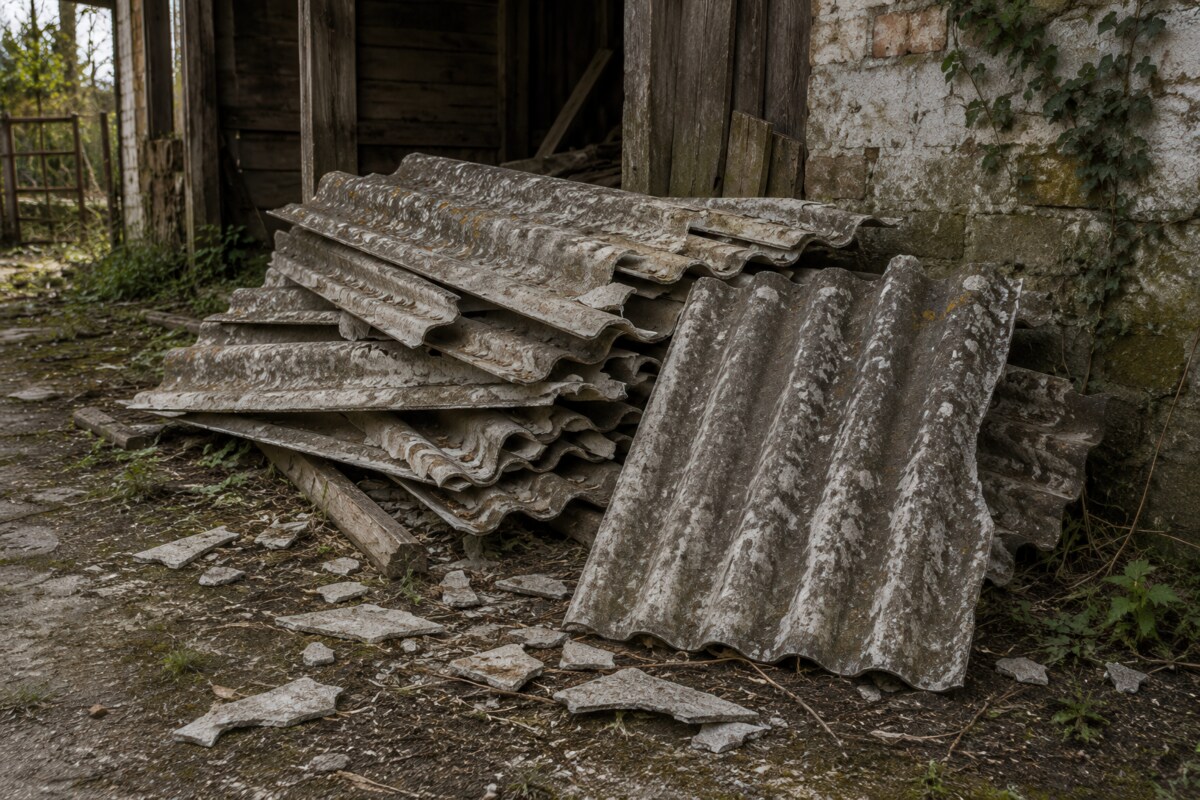
Asbestos cement was widely used in roofing products due to its durability, weather resistance and long lifespan. It is commonly found in older corrugated roof sheets, roof tiles, garages, agricultural buildings and industrial structures. Many asbestos cement products have a grey, cement-like appearance, although their age and condition can make them difficult to identify accurately.
Asbestos cement was also used in a range of other building materials, including gutters, downpipes, wall cladding, soffits and underground water or drainage pipes. Because asbestos cannot be confirmed by appearance alone, any cement-based product installed before 2000 should be approached with caution. If there is any uncertainty, professional asbestos testing is the safest way to determine whether asbestos fibres are present.
Loose Fill Asbestos Insulation
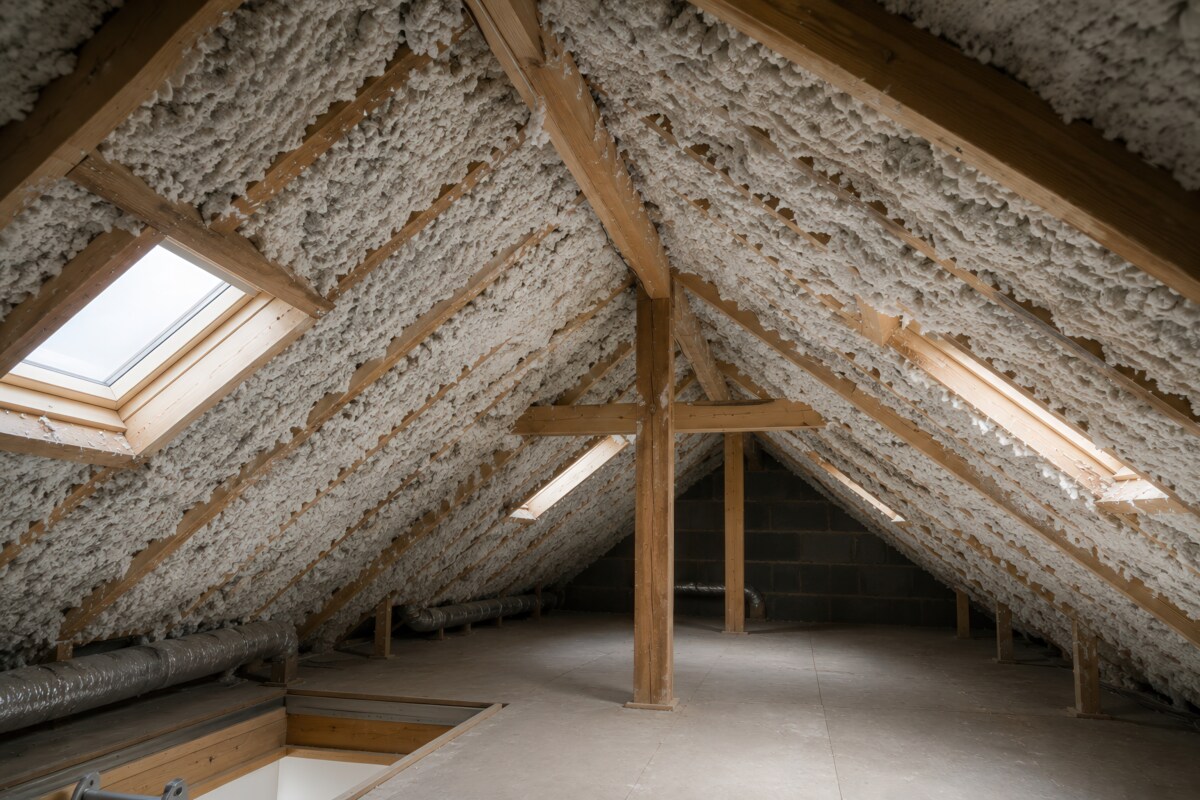
Loose fill asbestos insulation was historically used to improve thermal insulation in homes and buildings, particularly within lofts, cavity walls and beneath floorboards. It typically appears as a soft, fluffy material and may be white, grey or bluish in colour. Unlike many other asbestos-containing products, loose fill insulation consists largely of loose asbestos fibres, making it one of the most hazardous forms of asbestos that can be encountered.
Because the material can be easily disturbed, even minor work such as drilling, lifting floorboards or accessing roof spaces can release dangerous fibres into the air. If you suspect loose fill asbestos insulation may be present in a property, it should be left undisturbed and assessed by a qualified asbestos professional before any maintenance, renovation or insulation replacement work is carried out.
Asbestos Testing, Asbestos Surveys & Safe Removal Services in Exeter
Types of Asbestos and Their Appearance
Six different asbestos minerals have been identified, but the three most commonly used in UK construction materials were white asbestos (chrysotile), brown asbestos (amosite) and blue asbestos (crocidolite). Other forms, including tremolite, actinolite and anthophyllite, were used far less frequently and are more commonly encountered as trace contaminants within other asbestos-containing materials.
The following sections provide an overview of the different asbestos types and some of their typical visual characteristics. However, asbestos can be extremely difficult to identify by appearance alone, particularly when it is mixed into building products. If there is any uncertainty, professional testing remains the only reliable method of confirming whether a material contains asbestos.
Chrysotile (White Asbestos)
White asbestos is the most commonly encountered asbestos type and was widely used in products such as floor tiles, insulation, roofing materials and fire-resistant building components.
Amosite (Brown Asbestos)
Brown asbestos was frequently used in insulation boards, ceiling tiles and thermal insulation products, and is recognised by its straight, brittle fibres.
Crocidolite (Blue Asbestos)
Blue asbestos is considered one of the most hazardous forms of asbestos and was commonly used in insulation, fireproofing materials and some asbestos cement products.
Tremolite, Actinolite and Anthophyllite
These less common asbestos types are often found as contaminants within other asbestos-containing materials rather than being deliberately used in large quantities.
Asbestos Removal Branch Areas
- Asbestos Removal Broadclyst
- Asbestos Removal Devon
- Asbestos Removal Dunchideock
- Asbestos Removal Ebford
- Asbestos Removal Exeter
- Asbestos Removal Exminster
- Asbestos Removal Exmouth
- Asbestos Removal Farringdon
- Asbestos Removal Ide Exeter
- Asbestos Removal Marsh Barton
- Asbestos Removal Matford
- Asbestos Removal Pathfinder Village
- Asbestos Removal Shillingford Saint George
- Asbestos Removal Sowton
- Asbestos Removal Stoke Hill
- Asbestos Removal Topsham
- Asbestos Removal Woodbury Salterton


Proud to work with the following organisations…