Chrysotile is the most widely used form of asbestos in history. Commonly called white asbestos, it was incorporated into an enormous range of building materials and manufactured products because it was strong, flexible, resistant to heat and relatively inexpensive. Although its use was prohibited in the United Kingdom in 1999, chrysotile remains present in countless buildings constructed or refurbished before the ban. For homeowners, landlords, employers and tradespeople, understanding this material is therefore not simply a matter of historical interest. It is an important part of managing older properties safely.
Asbestos is not an artificial substance created in a factory. It is the collective name for six naturally occurring fibrous minerals found within certain rock formations. These minerals are divided into two principal groups: serpentine asbestos and amphibole asbestos. Chrysotile is the only asbestos mineral in the serpentine group, while amosite, crocidolite, tremolite, actinolite and anthophyllite belong to the amphibole group.
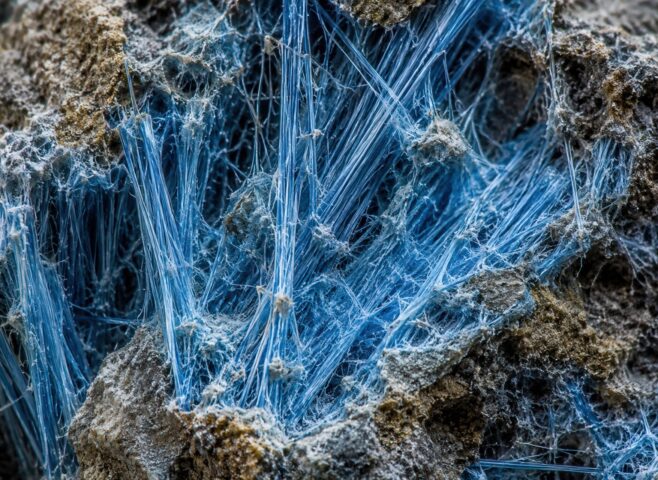
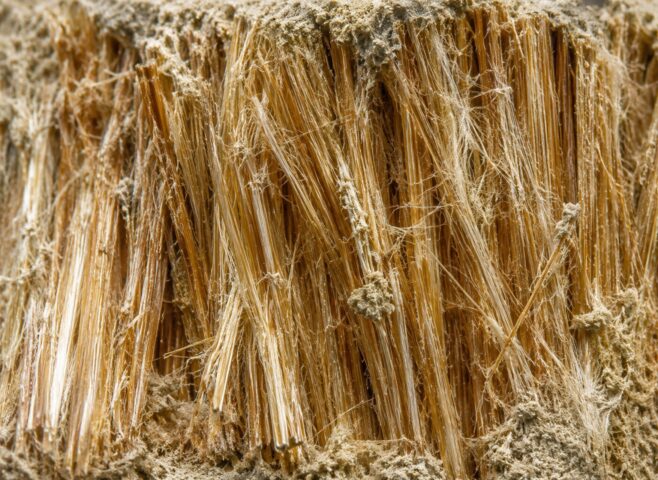
The word chrysotile comes from Greek terms associated with gold and fibre, reflecting the silky appearance of the mineral in its natural form. Although it is generally known as white asbestos, its actual colour can vary. Raw chrysotile may appear white, greyish, greenish or yellow-brown depending on its geological source and the presence of other minerals. Once incorporated into a manufactured product, its colour becomes an unreliable guide. A building material cannot be confirmed as chrysotile simply because it looks white.
Chrysotile forms naturally when certain magnesium-rich rocks undergo chemical and physical changes. It is particularly associated with serpentine rock formations. Inside these rocks, the mineral develops as extremely fine fibres arranged in bundles. Individual fibres are far thinner than a human hair and may separate into even smaller strands when handled, damaged or processed.
Chrysotile Fibres
Unlike the straighter fibres associated with amphibole asbestos, chrysotile fibres have a characteristically curved or curly structure. This flexibility made them suitable for spinning, weaving and mixing with other materials. Manufacturers could combine chrysotile with cement, rubber, plastic, resin, bitumen, plaster and textiles to create products with very different appearances and functions.
Chrysotile became commercially important because it offered several desirable properties at the same time. It resisted heat, provided electrical and thermal insulation, tolerated chemical exposure and added tensile strength to products. It was also relatively easy to mine and process compared with some other asbestos minerals. These advantages helped chrysotile become the dominant form of commercially used asbestos around the world.
Although asbestos had been known since ancient times, large-scale chrysotile production emerged during the industrial era. Growing factories, railways, shipyards and power systems created an intense demand for materials capable of insulating hot equipment and reducing the spread of fire. Chrysotile seemed ideally suited to this rapidly changing environment.
Mining operations expanded in countries with substantial natural deposits, particularly Canada and Russia. Raw chrysotile was exported around the world and supplied to manufacturers in enormous quantities. As industrial production increased, asbestos moved beyond specialist applications and entered ordinary workplaces, public buildings and homes.
The construction industry became one of its largest users. Chrysotile fibres could strengthen cement sheets without making them excessively heavy, producing durable components that were resistant to weather and fire. These products could be manufactured economically and installed quickly, making them attractive during periods of rapid urban growth and post-war reconstruction.
Asbestos Cement
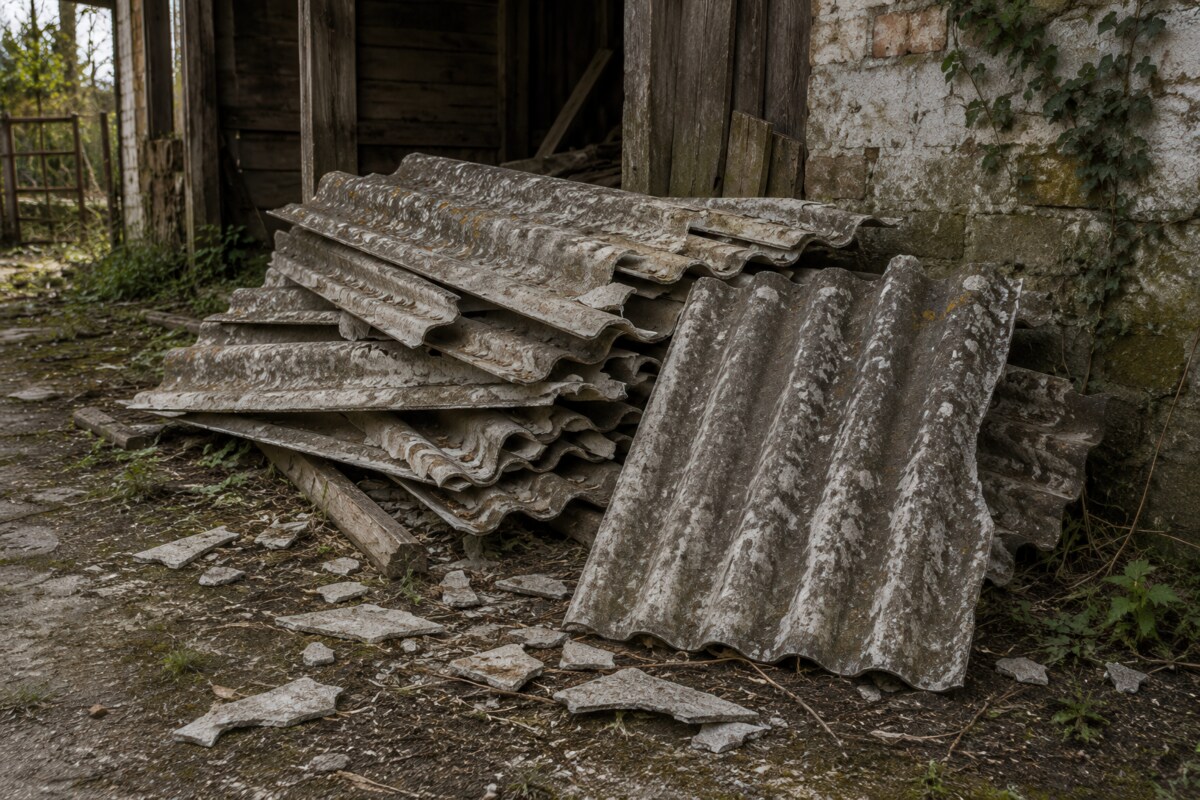
Asbestos cement was among the most common chrysotile-containing materials. It was used to manufacture corrugated roof sheets, flat panels, wall cladding, gutters, downpipes, flue pipes, water tanks and other moulded components. Garages, sheds, warehouses, workshops and agricultural buildings were frequently covered with corrugated asbestos cement roofing.
In asbestos cement products, the fibres were originally held within a hard cement matrix. This generally made the material less likely to release fibres than softer products such as sprayed coatings or loose insulation. However, lower risk did not mean no risk. Weathering, breakage, drilling, grinding, sawing and high-pressure cleaning could damage the cement and release asbestos fibres.
Chrysotile was also used in textured decorative coatings applied to walls and ceilings. These coatings became popular because they could create patterned finishes and conceal minor imperfections. The asbestos content was often relatively low, but sanding, scraping or mechanically removing the coating could still generate contaminated dust.
Vinyl floor tiles and their associated bitumen adhesives sometimes contained chrysotile. The fibres added strength and improved resistance to heat and wear. These products may remain hidden beneath newer carpets, laminate flooring or additional layers of tiles. Because the asbestos is usually tightly bound within the material, an intact floor tile may present a comparatively low risk. The risk increases if it is aggressively sanded, ground, snapped or removed using unsuitable methods.
Roofing Felt & Damp-Proof Materials
Other chrysotile applications included roofing felt, damp-proof materials, electrical components, gaskets, seals, brake linings, clutch components, fire-resistant fabrics and reinforced plastics. Some asbestos insulating boards and composite products also contained chrysotile, sometimes alongside other asbestos types. This variety is one reason visual identification is unreliable. Chrysotile may be found in products that look entirely unrelated to one another.
Its use was particularly extensive from the middle of the twentieth century onwards. Britain’s need for affordable homes, schools, hospitals, factories and commercial premises encouraged the adoption of materials that were durable and quick to install. Asbestos-containing products met these requirements and were frequently promoted as modern, safe and efficient.
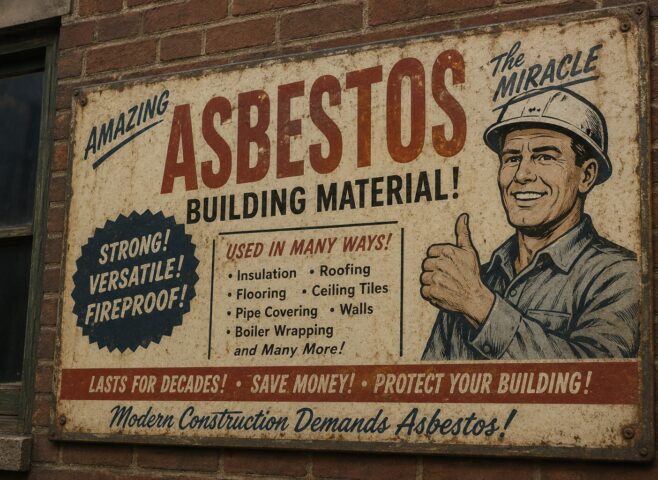
Advertising often presented asbestos as a miracle material. Its ability to resist fire received particular attention because building fires posed an enormous threat before the development of modern construction standards and detection systems. Asbestos could protect structural components, heating equipment and electrical installations, apparently improving safety while reducing costs.
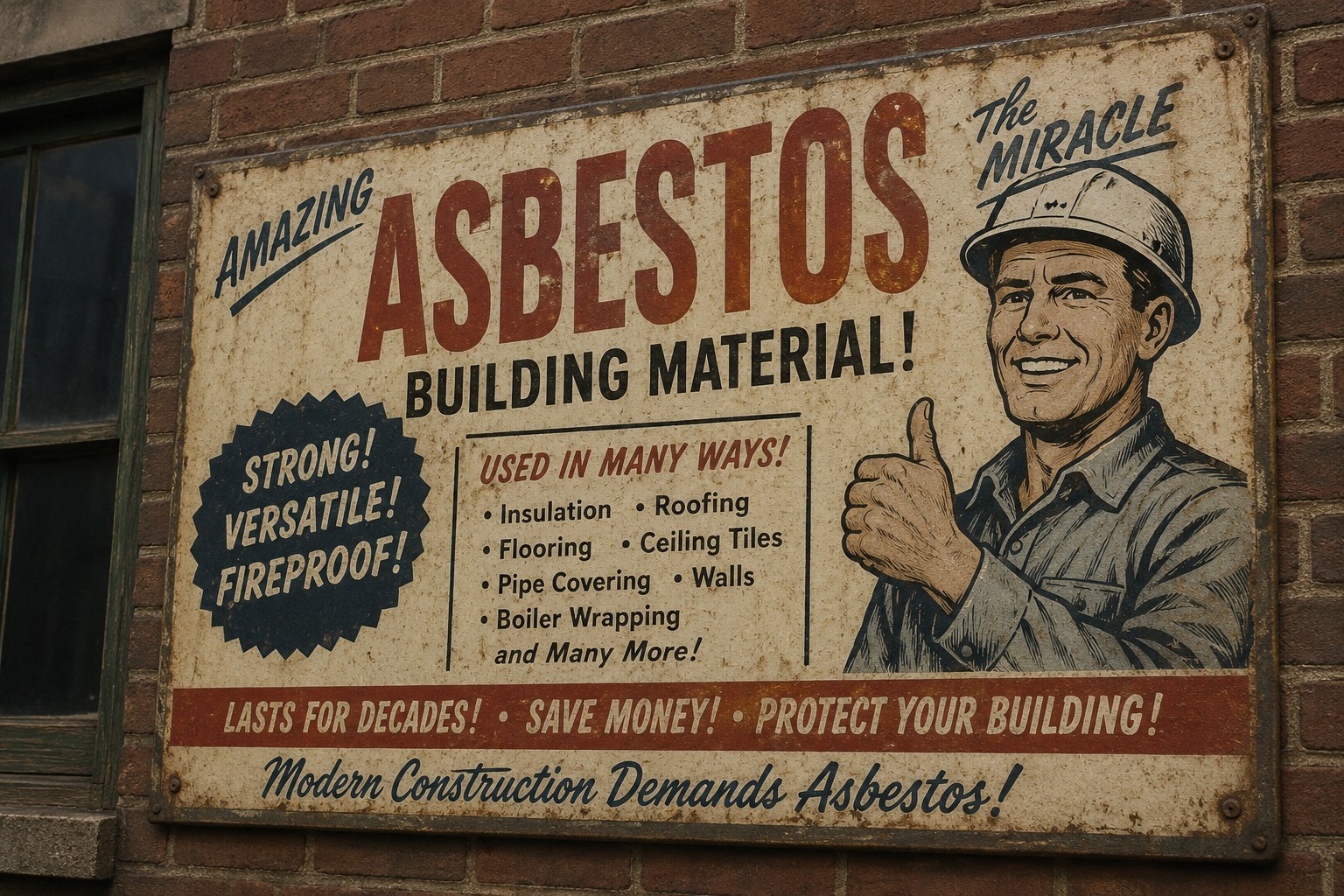
The health consequences were less visible. Diseases caused by asbestos exposure typically develop many years after fibres are inhaled. This long interval allowed the material to become deeply established before the full scale of the harm became widely recognised.
Chrysotile’s curly fibres differ physically and chemically from the needle-like fibres of amphibole asbestos. This distinction has sometimes been used to suggest that white asbestos is safe or harmless. That claim is incorrect. The World Health Organization states that every form of asbestos, including chrysotile, is carcinogenic to humans. Exposure to chrysotile can cause serious and fatal disease. World Health Organization
The principal route of harmful exposure is inhalation. When a chrysotile-containing product is disturbed, microscopic fibres can enter the surrounding air. These fibres cannot normally be seen, smelled or tasted. A person may therefore inhale contaminated dust without realising that exposure has occurred.
Some inhaled fibres can travel deep into the respiratory system. The body may struggle to remove them effectively, and their presence can contribute to inflammation, tissue damage and the development of disease. The risk is influenced by factors including the concentration of fibres in the air, the duration and frequency of exposure and the type of work being performed.
Asbestosis is one of the diseases associated with substantial asbestos exposure. It is a form of permanent lung scarring that can make breathing progressively more difficult. Symptoms may include breathlessness, persistent coughing, fatigue and chest discomfort, although such symptoms can have many other causes and require medical assessment.

Asbestos exposure can also cause lung cancer. Smoking is an independent cause of lung cancer, but smoking and asbestos exposure together create a particularly serious combined risk. Stopping smoking cannot reverse an earlier asbestos exposure, but it can reduce a significant additional source of lung cancer risk.
Mesothelioma is another major asbestos-related disease. It is an aggressive cancer most commonly affecting the lining around the lungs, although it can also develop in the lining of the abdomen. Mesothelioma is strongly associated with previous asbestos exposure and may appear several decades after that exposure occurred.
The World Health Organisation also identifies asbestos exposure as a cause of cancers of the larynx and ovaries. It estimates that occupational asbestos exposure causes more than 200,000 deaths around the world each year. This continuing disease burden reflects both present-day exposure and the effects of asbestos used many years ago.
Chrysotile Can Still Be Encountered in Properties Constructed or Renovated Before 2000
One of the most troubling features of asbestos-related disease is its latency period. The Health and Safety Executive advises that symptoms may take approximately 15 to 60 years to develop. Someone exposed during construction or maintenance work as a young adult may therefore remain unaware of the consequences until much later in life. Health and Safety Executive
Growing medical evidence eventually led to legal restrictions. The UK prohibited blue and brown asbestos before extending the ban to chrysotile. The supply and use of chrysotile and products to which it had intentionally been added were prohibited in 1999, subject to the detailed provisions of the legislation. The ban effectively ended the introduction of new white asbestos products, but it did not remove materials already installed in buildings.
As a result, chrysotile can still be encountered in properties constructed or renovated before 2000. Its continued presence does not indicate that a law has necessarily been broken. In many cases, the product was legally installed decades ago and has simply remained in position.
Finding or suspecting chrysotile does not automatically mean that a building is immediately unsafe. Asbestos-containing materials generally become dangerous when fibres are released into the air and inhaled. A sound, sealed and undisturbed product may present a much lower risk than a damaged or friable one.
Condition and location are therefore central to asbestos management. An intact cement roof that is unlikely to be touched presents a different situation from a broken panel beside a frequently used workspace. A sealed floor tile beneath another covering differs from one being removed with power tools. Each situation requires an assessment based on the product, its condition and the likelihood of disturbance.
Many Non-Asbestos Materials Were Designed to Resemble Asbestos Products
Attempting to identify chrysotile by colour or appearance can be misleading. White asbestos fibres are normally embedded inside another substance, and the finished product may be grey, black, brown, cream or almost any other colour. Many non-asbestos materials were designed to resemble asbestos products, while some asbestos-containing items look completely ordinary.
Laboratory analysis is the reliable way to establish whether a material contains asbestos and, where required, determine the asbestos type. Sampling should be planned carefully because removing a piece of a suspected product can itself release fibres. Untrained occupants should not break or scrape materials simply to obtain a sample.
Property surveys provide information for different circumstances. A management survey is intended to locate asbestos-containing materials that could be disturbed during normal occupation and routine maintenance. A more intrusive refurbishment or demolition survey is required when significant building work will disturb the fabric of a property.
Before starting work in a pre-2000 building, contractors should consider whether asbestos may be present. Drilling into an unknown panel, cutting through a soffit or removing an old textured coating without checking first can turn a previously stable material into an exposure hazard. Pausing to inspect the asbestos information or arrange an appropriate survey can prevent contamination, delay and additional expense.
If suspected material is discovered unexpectedly, work should stop in the affected area. The material should not be swept, vacuumed with ordinary domestic equipment or disturbed further. Movement through the area may spread contaminated dust onto clothing, footwear and tools. Competent advice should be obtained so the situation can be assessed properly.
Asbestos Removal Is Not Always the Only Appropriate Solution
Removal is not always the only appropriate solution. Depending on its condition and position, a chrysotile-containing material may be left in place and managed. It may be labelled, enclosed, sealed or monitored to reduce the likelihood of future disturbance. In other situations, removal may be the most suitable option, particularly when the material is damaged or will be affected by planned renovation.
Any work involving asbestos must be matched to the risk and conducted in accordance with the applicable regulations. Some asbestos work requires a licensed contractor, while certain lower-risk activities may fall outside licensing requirements but still demand appropriate training, controls, protective equipment, cleaning procedures and waste arrangements. “Non-licensed” does not mean casual, unregulated or safe for an inexperienced person.
Asbestos waste requires controlled handling and disposal. Pieces should not be placed in ordinary household or commercial waste, broken to fit into containers or transported without suitable packaging. Local facilities and contractors may have specific acceptance requirements, so arrangements should be confirmed before work begins.
Asbestos cement roofs create a particularly common chrysotile issue. Many remain in place on garages and outbuildings across the UK. Age alone does not necessarily require immediate removal, but the sheets may become fragile through weathering and deterioration. They also present a separate risk of falling through the roof, making walking on them extremely dangerous.
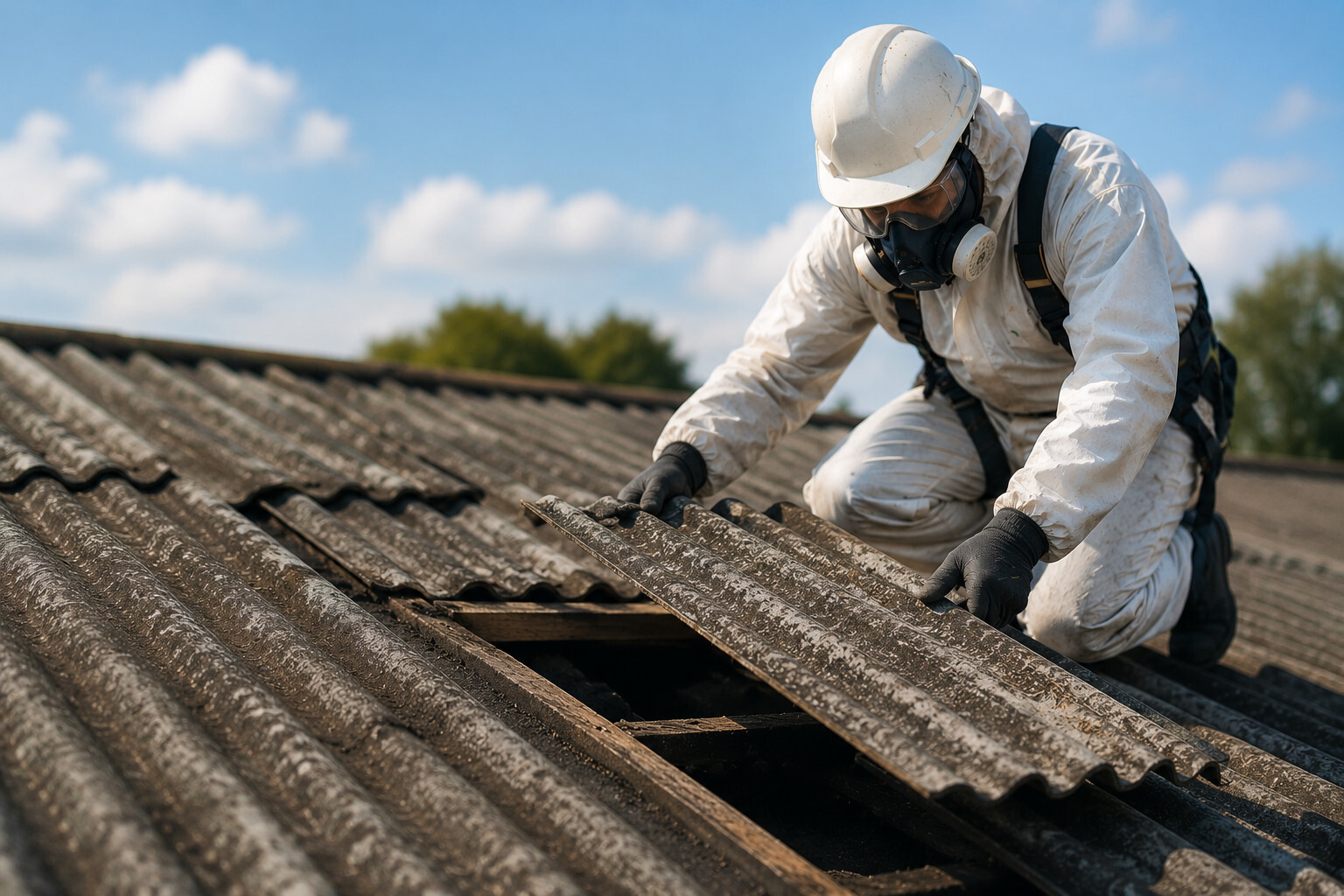
Pressure washing an asbestos cement roof can damage its surface and spread contaminated debris. Abrasive cleaning, wire brushing and mechanical cutting can create similar problems. If maintenance, coating or removal is being considered, the work should be assessed in advance and carried out using suitable methods.
Home renovation is another frequent source of accidental disturbance. Chrysotile-containing materials may be concealed behind newer finishes or underneath later alterations. Old floor tiles can sit below laminate, asbestos cement panels may be covered by modern cladding and textured coatings may have been painted repeatedly. The absence of an obvious asbestos product does not guarantee that none is present.
Commercial property owners and employers have additional responsibilities. Those responsible for maintenance in non-domestic premises must determine whether asbestos is present or likely to be present, assess its condition and manage the resulting risk. Accurate records are crucial because maintenance workers need to know what they may encounter before opening ceilings, drilling walls or entering service areas.
Good management is largely about preventing unexpected disturbance. An asbestos register has little value if contractors are not shown it or if it is not updated following building work. Information must be accessible, understandable and incorporated into maintenance planning.
Chrysotile continues to attract controversy internationally because it remains in use in some parts of the world. Arguments have sometimes focused on whether it is less persistent in the lungs than amphibole asbestos or whether exposure can be controlled. These discussions should not obscure the established conclusion that chrysotile can cause cancer. The World Health Organisation’s position is that stopping the use of all forms of asbestos is the most effective way to eliminate asbestos-related disease.
In the UK, the immediate challenge is not deciding whether chrysotile should be used in new products; that has already been prohibited. The challenge is managing the enormous quantity installed before the ban. Much of it is now several decades old and may be affected by weather, accidental damage or repeated refurbishment.
Calling Chrysotile “White Asbestos” Can Unintentionally Make It Sound Milder Than Blue or Brown Asbestos.
Public understanding remains essential. Calling chrysotile “white asbestos” can unintentionally make it sound milder than blue or brown asbestos. Although different asbestos types have different fibre characteristics, white asbestos must still be treated as a hazardous substance. Its widespread use also means it may be encountered more frequently than other forms.
At the same time, fear should not lead to impulsive action. Discovering a suspected asbestos-containing material does not justify breaking it apart or attempting immediate removal. Disturbance can create the very exposure that proper management is intended to prevent. The safest first step is usually to leave the material alone and seek competent advice.
Chrysotile’s story explains why asbestos remains such a complicated property issue. It was adopted because it was versatile, strong, cheap and resistant to fire. Those genuine practical advantages placed it inside thousands of different products and millions of structures around the world. The severe health consequences became fully visible only after years of exposure and decades of disease latency.
Today, chrysotile should be viewed neither as a harmless relic nor as a reason for automatic panic. It is a known carcinogenic material that demands informed, proportionate management. Identifying it before work begins, keeping reliable records, monitoring its condition and using properly trained professionals when disturbance is unavoidable can greatly reduce the risk.
The legacy of white asbestos will remain with the UK for many years. Buildings constructed before the end of the twentieth century will continue to be repaired, converted and demolished, bringing new generations of workers into contact with old materials. Awareness, careful planning and respect for the invisible nature of asbestos fibres are therefore vital. Chrysotile may no longer be installed, but managing what remains is an ongoing responsibility.