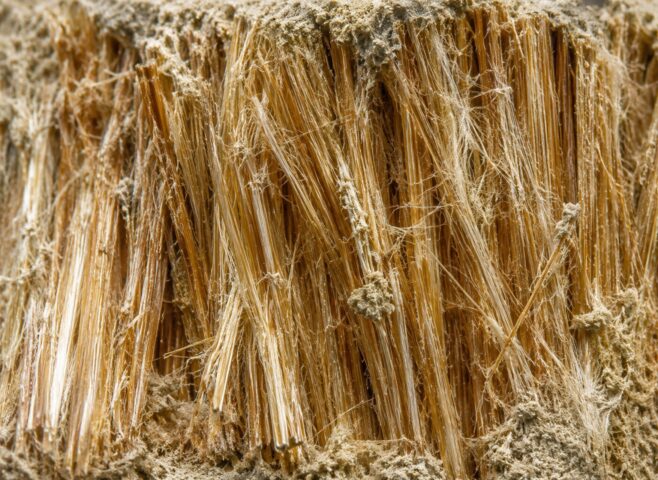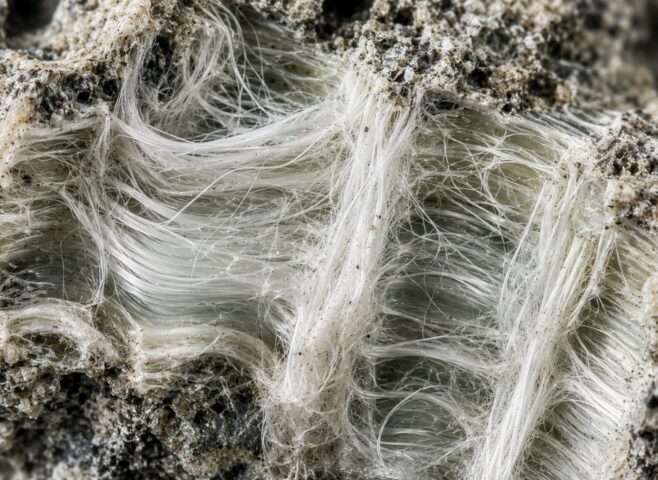
Crocidolite is one of the six recognised forms of asbestos and one of the three types most frequently discussed in connection with older UK buildings. Commonly known as blue asbestos, it was once prized for its strength, chemical resistance and ability to withstand extremely high temperatures. These properties led manufacturers to incorporate it into insulation, cement products, sprayed coatings, rope, gaskets and other specialist materials.
Although crocidolite was used less extensively than chrysotile, its extremely fine and durable fibres make it particularly hazardous when inhaled. Blue asbestos is strongly associated with mesothelioma and other serious asbestos-related diseases. Its importation and use were prohibited in the United Kingdom in 1985, but products installed before the ban remain inside some homes, workplaces and industrial structures.
Crocidolite may be concealed behind decorative surfaces, around old heating equipment or inside products that appear completely ordinary. Understanding what it is, where it was used and how it should be managed can help prevent accidental disturbance and exposure.
What Is Crocidolite Asbestos?
Asbestos is not a single substance. It is a commercial and regulatory term covering six naturally occurring fibrous silicate minerals. These minerals are separated into the serpentine and amphibole families.
Chrysotile, or white asbestos, is the only serpentine form.
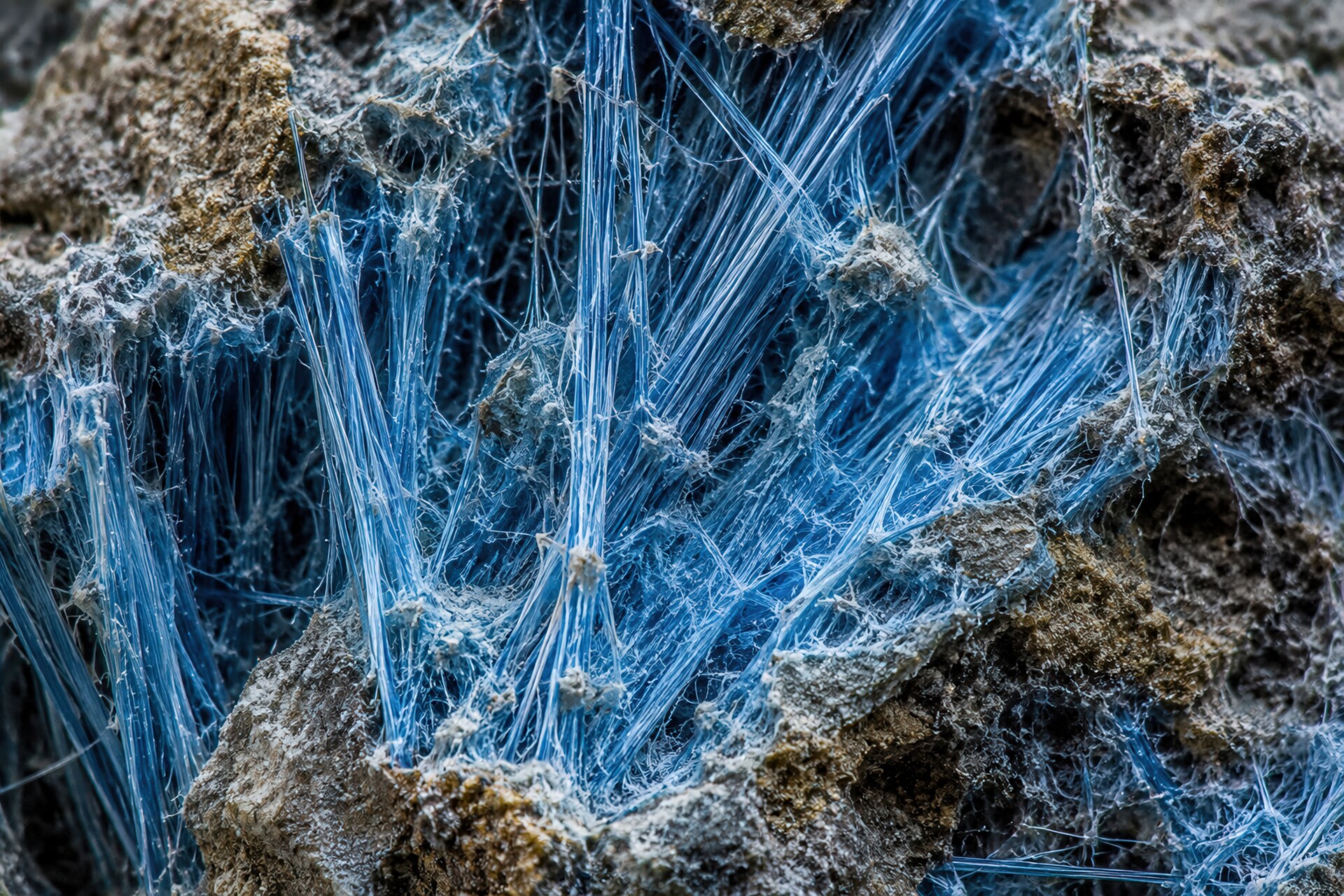
Amphibole asbestos minerals generally have straighter and more needle-like fibres than the curly fibres associated with chrysotile.
Crocidolite is the fibrous form of the mineral riebeckite. It usually developed within iron- and sodium-rich rock formations subjected to particular combinations of heat, pressure and chemical change. Commercial deposits were mined most notably in South Africa and Australia, although the mineral occurs naturally in other parts of the world.
In its unprocessed state, crocidolite can appear blue, blue-grey, lavender or dark grey. This colouring gave rise to the familiar name blue asbestos. Once mixed with cement, plaster or another binding material, however, the fibres may be impossible to see.
A finished asbestos product does not have to be blue to contain crocidolite. Paint, dust, ageing and other ingredients can completely disguise the mineral’s natural colour. Similarly, a blue building material is not automatically an asbestos product. Colour descriptions are not a safe substitute for professional analysis.
The Physical Structure of Blue Asbestos
Crocidolite fibres are usually fine, straight and relatively brittle. When disturbed, bundles can split lengthways into increasingly narrow fibres. Some are microscopic and can remain suspended in the air after the visible dust has settled.
The size and shape of these fibres influence how they behave when inhaled. Longer and thinner fibres can travel into the deeper regions of the lungs, where the body may struggle to clear them. Amphibole fibres are also highly resistant to chemical breakdown and can remain in lung tissue for extended periods.
This persistence is one reason crocidolite is regarded with particular concern. The UK Health Security Agency notes that amphibole fibres such as crocidolite are cleared less efficiently from the lungs than chrysotile and that crocidolite and amosite are generally considered more potent. GOV.UK toxicological overview
The danger cannot be assessed by looking for a cloud of dust. Airborne asbestos fibres are normally invisible to the naked eye. A person can inhale them without feeling an immediate reaction or realising that contamination is present.
Why Industry Valued Crocidolite
Crocidolite offered an unusual combination of tensile strength, heat resistance, chemical resistance and durability. These characteristics made it useful in demanding environments where conventional fibres or insulation products might deteriorate.
Its resistance to acids was especially attractive in chemical plants, laboratories and certain industrial processes. Manufacturers could incorporate it into products expected to experience heat, friction, corrosive substances or prolonged weather exposure.
The fibres could also reinforce cement and other matrices. Once mixed into a product, they added strength without creating excessive weight. This helped blue asbestos find its way into construction, transport, power generation and heavy industry.
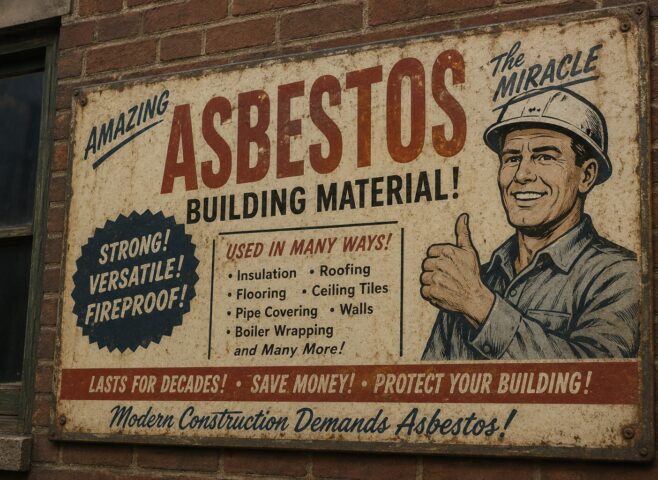
At the time, these qualities appeared highly beneficial. Fire was a constant danger in factories, ships, power stations and densely occupied buildings. A mineral that would not burn and could help protect hot equipment appeared to offer a practical safety improvement.
The delayed health effects were much less obvious. Workers could manufacture, cut or install crocidolite-containing products without becoming immediately ill. Diseases often emerged several decades later, making the relationship between exposure and harm harder to recognise during the material’s early commercial use.
Common Historical Uses of Crocidolite
Blue asbestos was used in some sprayed insulation coatings applied to structural steelwork, ceilings and other building surfaces. These coatings provided fire protection and thermal insulation but could contain a high proportion of asbestos.
Sprayed coatings are particularly concerning because they can be soft and friable. A friable material can be crumbled or reduced to powder relatively easily, allowing fibres to escape if it is struck, scraped or otherwise disturbed.
Crocidolite was also incorporated into certain pipe and boiler insulation products. Industrial heating installations required materials capable of tolerating sustained high temperatures, and asbestos-based lagging could be moulded or applied around complex shapes.
Older lagging may appear as a chalky or fibrous coating beneath fabric, paint or another protective covering. It may also be present in pre-formed pipe sections. Damage caused by leaks, vibration or maintenance work can expose the underlying insulation.
Some asbestos insulating boards and fire-protection panels contained crocidolite, occasionally in combination with amosite or chrysotile. Mixed fibre types were used to obtain particular manufacturing properties, which means a single product can contain more than one form of asbestos.
Crocidolite was also found in certain asbestos cement products. These included pipes, pressure pipes, roof components, sheets and moulded items. Its strength and resistance to chemicals made it useful where a cement product would face demanding service conditions.
Another well-known historical application was the manufacture of asbestos rope, yarn and textiles. These products were used for seals, packing and heat-resistant insulation around boilers, furnaces and machinery.
Some gaskets and jointing materials contained blue asbestos because they needed to resist heat, pressure and chemical attack. Such items were used in ships, power systems, engineering equipment and industrial pipework.
Crocidolite also appeared in certain plastics, mastics, filters and electrical products. This variety demonstrates why asbestos cannot be identified reliably from a short list of familiar building materials.
Anyone trying to understand what asbestos looks like should remember that the visible product is usually a mixture. The hazardous fibres may be embedded inside cement, insulation, resin or another substance and may not resemble raw asbestos at all.
Crocidolite in Construction and Industry
The use of crocidolite expanded alongside industrialisation. Steam power, electrical generation, shipbuilding and chemical manufacturing all created a need for effective insulation and fire-resistant components.
Large industrial sites were among the environments where blue asbestos offered the greatest practical advantages. Pipes, boilers, turbines, furnaces and processing equipment all generated heat. Chemical resistance made crocidolite especially attractive where corrosive substances were present.
Shipyards were another important source of occupational exposure. Vessels contained extensive networks of pipes and mechanical systems located within confined spaces. Insulators and other trades could work close together, allowing fibres released by one activity to spread through shared work areas.
Power stations, railway facilities and heavy engineering sites also used asbestos materials. Workers who cut insulation, repaired machinery or removed worn components could breathe fibres directly. Other employees may have been exposed simply because they worked nearby.
Construction workers encountered crocidolite in sprayed coatings, boards and cement products. Activities such as cutting, drilling, sanding and demolition could release contaminated dust. Suitable extraction, respiratory protection and controlled work methods were often absent during the decades of greatest use.
Fibres could settle on work clothes, hair, tools and vehicles. When dusty clothing was taken home, family members might be exposed while handling or washing it. This secondary or para-occupational exposure has been associated with asbestos-related disease in people who never worked directly with the material.
Why Crocidolite Is Considered So Dangerous
All forms of asbestos can cause cancer, but crocidolite is often regarded as one of the most hazardous types. Its thin amphibole fibres can penetrate deep into the respiratory system and remain there for long periods.
Once fibres reach the deeper parts of the lungs, the body’s normal clearance mechanisms may not remove them effectively. Their continued presence can trigger inflammation and biological damage over many years.
Crocidolite has a particularly strong association with mesothelioma. This does not mean that every exposure will result in disease, nor does it make other asbestos types safe. It means that blue asbestos has fibre characteristics and an exposure history that demand an especially cautious approach.
The likelihood of disease depends on several factors, including the intensity and duration of exposure, the number of fibres inhaled and the nature of the material being disturbed. Repeated exposure creates a cumulative risk because each incident can add to the total number of fibres breathed.
A single brief exposure is not equivalent to years of uncontrolled industrial work, but no accidental disturbance should be dismissed casually. The aim of asbestos management is to prevent avoidable exposure rather than attempt to define an acceptable incident after it has happened.
Health Conditions Associated With Exposure
Crocidolite exposure can cause mesothelioma, an aggressive cancer most commonly affecting the lining around the lungs. It may also affect the lining of the abdomen.
Mesothelioma often begins with non-specific symptoms. Breathlessness, chest pain, fatigue, weight loss or a persistent cough can have numerous causes, which means diagnosis may not occur until the disease is advanced.
Exposure can also cause lung cancer. Asbestos-related lung cancer develops within the lung tissue and may resemble lung cancer caused by other factors. An individual’s occupational and exposure history can therefore be an important part of medical assessment.
Smoking does not cause mesothelioma, but it independently increases lung cancer risk. When smoking and asbestos exposure occur together, the combined risk of lung cancer is particularly serious. Giving up smoking cannot erase a previous asbestos exposure, but it can remove a major additional risk.
Asbestosis is permanent scarring of the lung tissue caused by substantial exposure to asbestos fibres. The condition can reduce the lungs’ ability to transfer oxygen and may lead to progressive breathlessness, coughing and reduced physical capacity.
Diffuse pleural thickening affects the membrane surrounding the lungs. As this tissue thickens, it can restrict lung expansion and make breathing more difficult. Pleural plaques are another sign of previous asbestos exposure, although they are often symptomless.
The World Health Organisation states that every form of asbestos is carcinogenic to humans. It identifies asbestos exposure as a cause of mesothelioma and cancers of the lung, larynx and ovaries, as well as chronic respiratory disease. World Health Organisation
The Long Delay Between Exposure and Disease
Asbestos-related illnesses do not normally appear immediately. The Health and Safety Executive advises that symptoms can take approximately 15 to 60 years to develop. Health and Safety Executive
This latency period helps explain why the consequences of widespread asbestos use continued long after restrictions were introduced. A person diagnosed today may have been exposed while working in construction, manufacturing or shipbuilding many decades ago.
The delayed nature of disease also makes prevention especially important. There is no immediate warning that shows whether an inhaled fibre will contribute to illness later. Someone may feel completely well following exposure while biological damage develops silently over time.
Routine medical imaging immediately after a suspected incident cannot normally confirm whether fibres were inhaled or predict whether disease will develop. Anyone concerned about possible exposure should seek appropriate medical guidance and ensure that the incident and relevant occupational history are documented.
The UK Ban on Blue Asbestos
The dangers associated with asbestos became increasingly difficult to ignore during the twentieth century. Medical studies and worker deaths demonstrated that exposure could cause severe and fatal disease.
Restrictions were introduced progressively. In the United Kingdom, the importation and use of crocidolite and amosite were prohibited in 1985. Chrysotile remained permitted for longer and was prohibited in 1999.
The 1985 ban stopped the installation of new blue asbestos products, but it did not remove materials that were already part of buildings or equipment. Consequently, crocidolite may still be found in products manufactured or installed before the prohibition.
A building constructed before 2000 should generally be treated as potentially containing asbestos unless reliable information demonstrates otherwise. Crocidolite is especially associated with materials installed before the mid-1980s, but the full history of a building can be difficult to establish.
Products may have been stored and used after manufacture, transferred during earlier renovations or concealed behind later construction. Assumptions based solely on the apparent age of a room or surface can therefore be misleading.
Where Blue Asbestos May Remain Today
Crocidolite may still be present in older industrial buildings, power stations, boiler rooms, factories, workshops and chemical facilities. It can also occur in public, commercial and residential properties.
Sprayed coatings may remain above suspended ceilings or behind newer fire-protection systems. Pipe insulation can be concealed inside ducts, risers, basements and plant rooms. Boards may have been painted, boxed in or covered by plasterboard.
Older asbestos cement pipes and panels may remain in service or buried within the ground. Their location can make them easy to overlook until excavation, drainage work or redevelopment begins.
Gaskets, seals and engineering components containing crocidolite may remain inside old machinery. Maintenance workers can encounter them when opening equipment that has operated for decades without major alteration.
Building plans and asbestos registers can provide valuable information, but records may be incomplete. Earlier surveys may also have been limited to accessible areas. Intrusive work requires an investigation suited to the actual project.
Identifying Suspected Crocidolite
Blue asbestos cannot be identified safely through colour alone. The fibres may be microscopic and hidden within a product that appears grey, cream, brown or white.
Age, location and product type can indicate that asbestos is possible, but they do not provide definitive identification. A spray coating in an old boiler room may be suspicious, yet laboratory analysis is still required to determine its composition.
Sampling should be completed using an appropriate method because collecting a piece of material creates disturbance. An untrained person should not drill, break or scrape a suspected product to examine its fibres.
The sample must also be representative. Different sections of a material can occasionally contain different ingredients, and a replacement panel may sit beside an original asbestos product. Professional judgement helps determine how many samples are required and where they should be taken.
Managing Crocidolite Safely
Asbestos presents a risk when fibres become airborne and are inhaled. A sealed and undisturbed material may not create the same immediate danger as one that is damaged, friable or undergoing removal.
Management in place may sometimes be appropriate when a crocidolite-containing material is in sound condition, properly protected and unlikely to be disturbed. Its location and condition must be recorded and inspected.
Because many crocidolite products are friable or high risk, work involving them will often require a licensed asbestos contractor. The specific legal requirements depend on the material, its condition and the planned activity.
Encapsulation or enclosure may occasionally be considered. Encapsulation binds or seals the surface, while enclosure places a protective barrier around the asbestos. Both approaches leave the material in the building, so records must remain accurate.
Removal may be necessary when the material is damaged, likely to be disturbed or located within a planned refurbishment area. This work requires careful preparation, controlled access, suitable respiratory protection, specialist equipment and appropriate decontamination and waste procedures.
An asbestos survey should identify relevant materials before maintenance, refurbishment or demolition begins. A management survey supports the ordinary occupation and upkeep of a building, while a refurbishment or demolition survey investigates the areas that will be disturbed by more intrusive work.
What to Do After Accidental Disturbance
If a suspected blue asbestos product is damaged unexpectedly, work should stop immediately. People should leave the affected area without disturbing more dust or carrying contaminated materials through clean spaces.
The debris should not be swept or vacuumed using ordinary equipment. Dry sweeping can make fibres airborne again, while a conventional vacuum cleaner may spread contamination and become contaminated internally.
Tools and clothing used in the area should not be handled casually. A competent asbestos professional should assess the incident, determine the likely extent of contamination and recommend the appropriate response.
The affected area may need to be isolated while testing, cleaning or air monitoring takes place. The necessary measures will depend on the material, the disturbance and the possibility that fibres have spread.
Those involved should document what happened, including the material disturbed, the work performed and the time spent in the area. Anyone worried about possible exposure can discuss the incident with a healthcare professional.
The Duty to Manage in Non-Domestic Premises
Those responsible for maintaining non-domestic premises have a legal duty to manage asbestos. This involves determining whether asbestos is present or likely to be present, assessing its condition and preparing a plan to control the risk.
The asbestos register should record the known or presumed location and condition of asbestos-containing materials. This information must be made available to people who could disturb those materials.
A register is only effective when it is consulted before work starts. Contractors should understand the survey findings and know which areas were not inspected. Where information is missing, further investigation may be required.
Management plans should be reviewed as building conditions change. Water leaks, vibration, accidental impacts and unauthorised drilling can damage previously stable materials.
Crocidolite hidden above a ceiling or inside a service riser may remain untouched for years. A small electrical, plumbing or communications project can suddenly bring a worker into direct contact with it. Clear communication is therefore just as important as the original survey.
A Dangerous Legacy of the Industrial Age
Crocidolite became commercially valuable because it performed remarkably well in harsh conditions. It resisted fire, heat and chemicals while reinforcing products used in construction and engineering.
Those practical benefits led to its adoption before the full consequences of inhaling its fibres were understood or publicly accepted. The protection it offered against fire and equipment failure came with a hidden health cost.
Blue asbestos is no longer permitted for new use in the UK, but its legacy remains inside parts of the built environment. Ageing buildings, industrial redevelopment and routine maintenance can all create opportunities for previously concealed materials to be disturbed.
The appropriate response is not panic, but informed caution. A suspected crocidolite product should be left undisturbed until reliable information is obtained. Visual guesses, improvised sampling and uncontrolled removal can transform a manageable material into a contamination incident.
Professional surveys, laboratory testing, accurate registers and competent asbestos contractors provide the framework for safe management. These measures protect occupants as well as the tradespeople most likely to encounter hidden asbestos during their work.
Crocidolite’s history offers a powerful reminder that a material can be technically effective while carrying consequences that emerge much later. Blue asbestos once helped solve difficult industrial and fire-protection problems. Today, the priority is to manage what remains without creating new exposure.