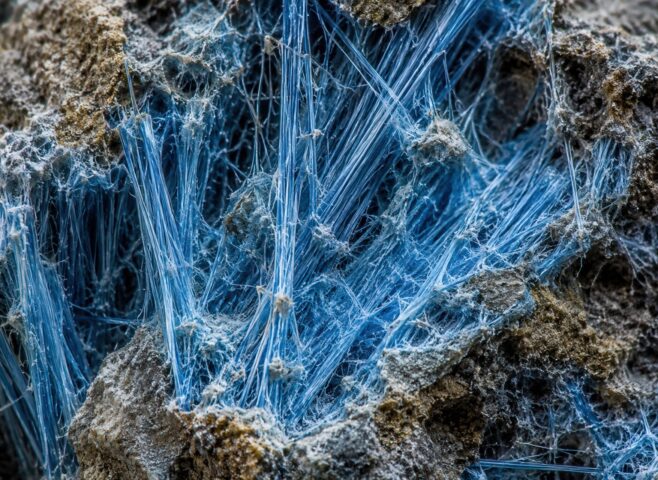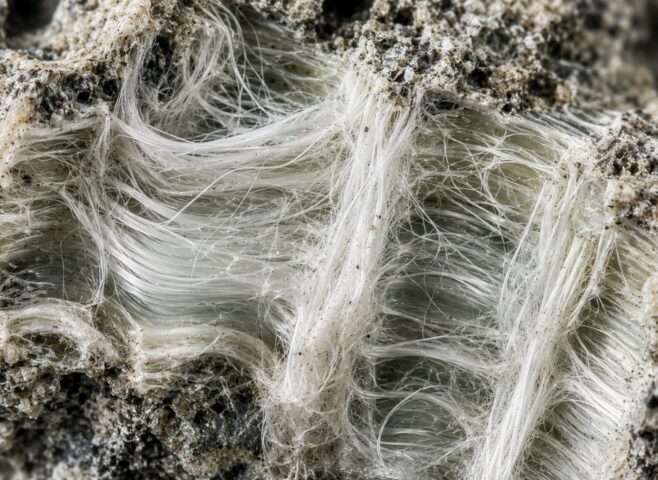
Amosite is one of the three asbestos types most commonly encountered in older buildings across the United Kingdom. Usually called brown asbestos, it was valued for its exceptional resistance to heat and fire. These qualities led to its extensive use in insulation products, ceiling tiles, fire protection systems and asbestos insulating board.
The installation of amosite-containing products has been prohibited in the UK for decades, but the material has not disappeared. It remains hidden within many houses, schools, hospitals, offices, factories and public buildings constructed or refurbished during the twentieth century. Anyone responsible for maintaining, renovating or demolishing an older property may therefore encounter it.
Amosite is particularly concerning because its brittle, needle-like fibres can become airborne when a material is damaged or disturbed. Once inhaled, those fibres may penetrate deeply into the lungs and contribute to life-changing or fatal diseases many years later.
What Is Amosite Asbestos?
Asbestos is the collective name given to six naturally occurring fibrous minerals. These minerals are divided into the serpentine and amphibole families. Chrysotile, commonly called white asbestos, is the only member of the serpentine group. Amosite, crocidolite, tremolite, actinolite and anthophyllite belong to the amphibole group.
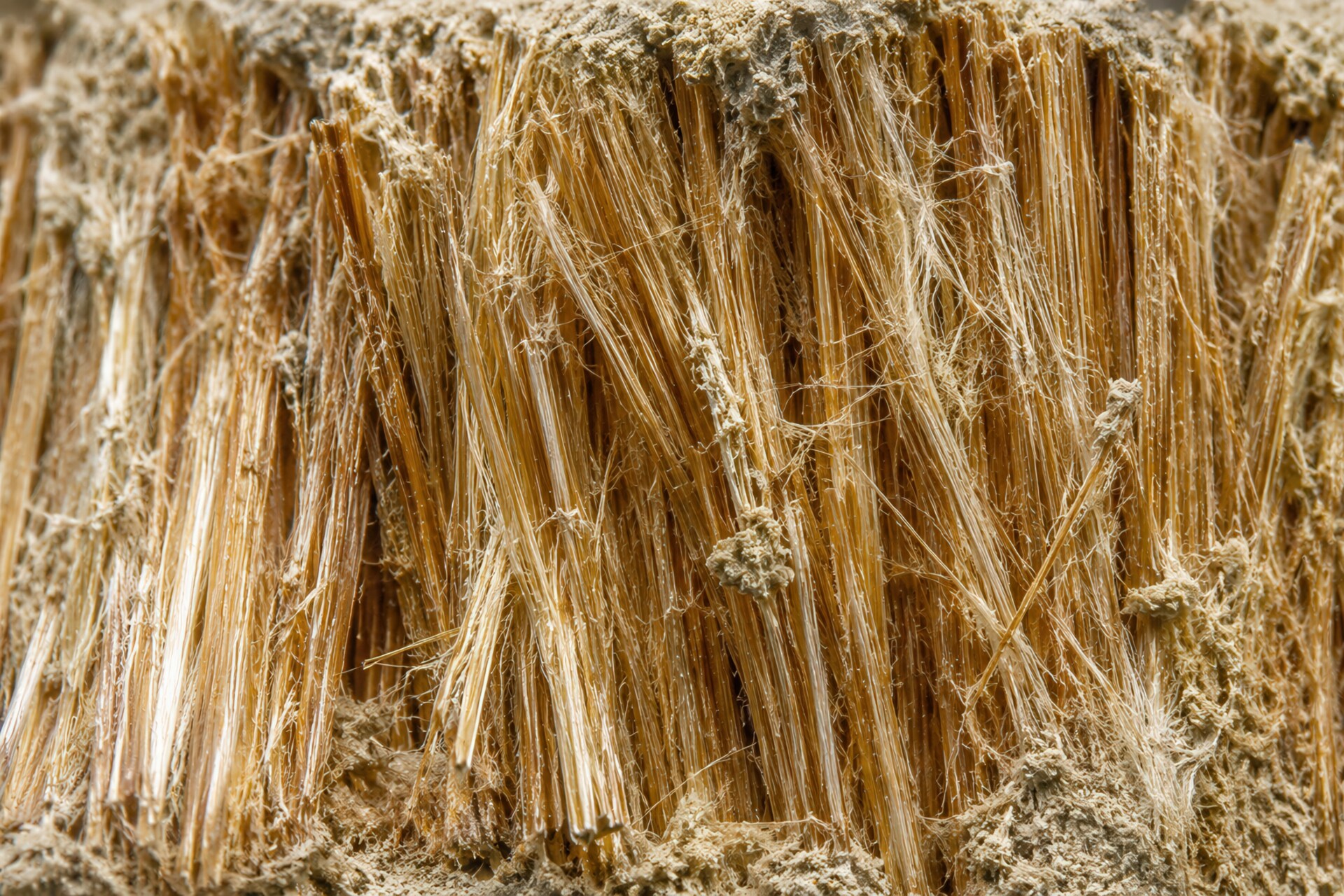
Amosite is therefore an amphibole asbestos. Its fibres are comparatively straight, stiff and brittle, rather than curly and flexible like those of chrysotile. They may split lengthways into increasingly fine strands, producing fibres small enough to remain suspended in the air and enter the respiratory system.
The name amosite was created from the initials of “Asbestos Mines of South Africa,” followed by the mineral suffix “ite.” Commercial amosite was mined principally in South Africa, where substantial deposits supported a major international asbestos industry.
In geological terms, commercial amosite was a fibrous variety of the mineral grunerite. It developed naturally within particular iron-rich rock formations through complex geological processes involving heat, pressure and chemical change.
Although widely referred to as brown asbestos, amosite was not always visibly brown. Raw fibres could range from pale grey and yellow-brown to darker brown shades. When mixed into a manufactured product, their appearance could be completely concealed by cement, plaster, paint or other ingredients.
Colour alone should never be used to identify asbestos. A brown board is not necessarily made with amosite, while a white, grey or painted product may still contain it. Only suitable analysis of a representative sample can reliably confirm whether asbestos is present and determine its type.
Why Amosite Became Commercially Valuable
Amosite possessed several properties that made it enormously attractive to twentieth-century industry. It tolerated high temperatures, resisted fire, provided effective insulation and helped strengthen otherwise fragile products.
Its resistance to heat was particularly important. Factories, power stations, ships and large buildings contained boilers, furnaces, heating systems and machinery operating at temperatures that ordinary insulation could not always withstand. Amosite offered manufacturers a practical and relatively affordable solution.
The fibres could be mixed with other substances to create boards, panels and moulded components. These products were easier to transport and install than many traditional forms of fire protection. They could also be cut and shaped on site, although this convenience exposed workers to potentially dangerous dust.
Amosite became especially useful where a rigid material needed to provide both thermal insulation and fire resistance. This combination led to its widespread incorporation into asbestos insulating board, commonly abbreviated to AIB.
Asbestos Insulating Board and the Spread of Amosite
Asbestos insulating board was among the most significant amosite-containing materials used in British construction. It was lighter, softer and more porous than asbestos cement, making it easier to cut and install. It was also more likely to release fibres when drilled, sawn, broken or deteriorated.
AIB appeared in partition walls, ceiling panels, service risers, ventilation ducts, boiler cupboards, lift shafts and fire-protection systems. It was used to line escape routes, protect structural components and separate areas where fire resistance was required.
Panels were commonly installed around heating equipment and electrical installations. In some buildings, AIB formed removable access panels that allowed workers to reach pipes, valves or cables. Repeated removal, drilling or accidental breakage could release fibres into surrounding spaces.
AIB was also used in fire doors. Amosite-containing panels could be hidden inside the door leaf or installed around the frame. A door may therefore contain asbestos even when its external surface appears to be made entirely from timber or another familiar material.
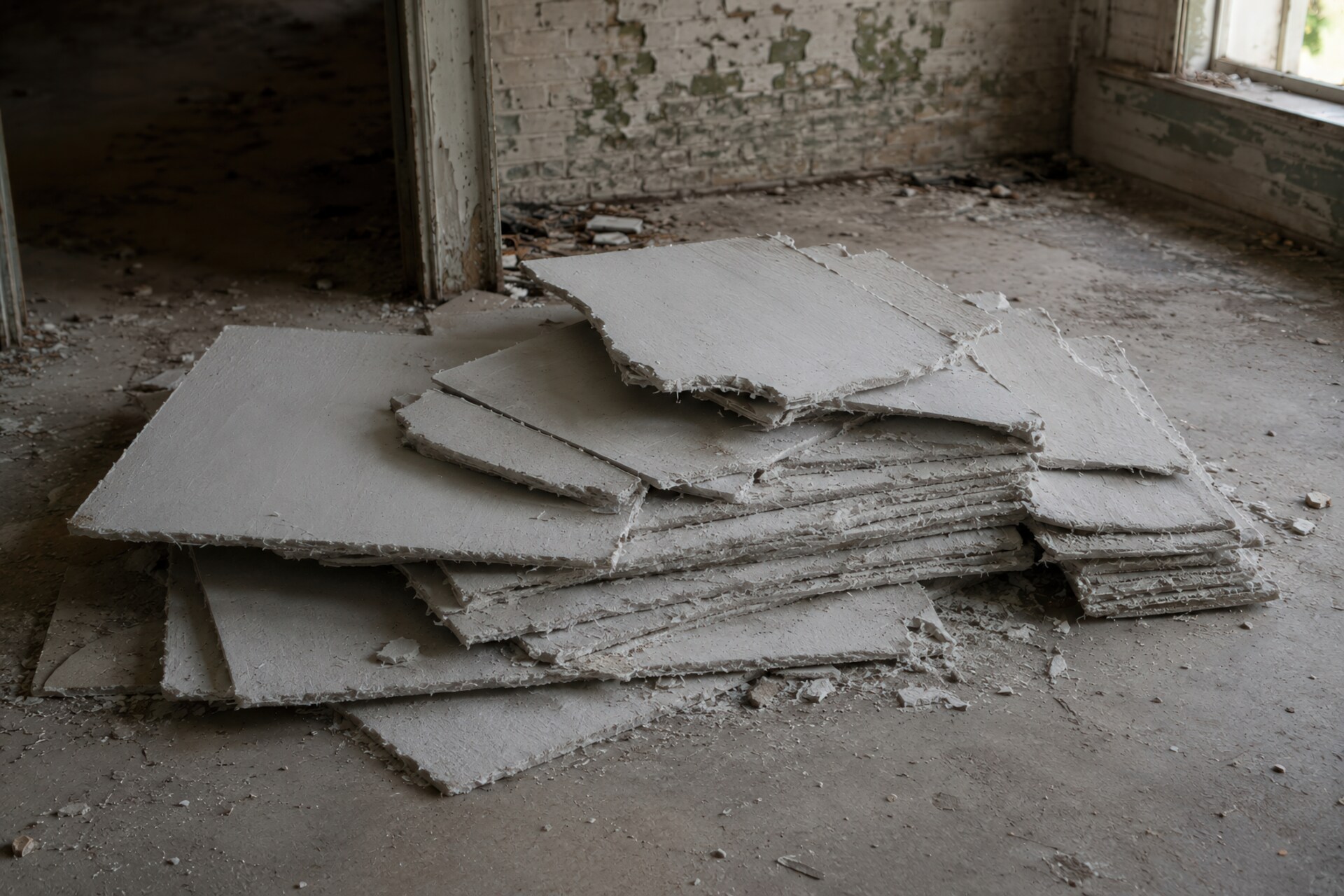
Soffits, wall linings and ceiling tiles were other common applications. The board could be painted, wallpapered or covered with decorative finishes, making it difficult to recognise during later refurbishment. Modern occupants may have no idea that an ordinary-looking panel installed decades earlier contains brown asbestos.
Some suspended ceiling systems incorporated amosite-containing tiles or panels. Work above these ceilings could disturb damaged edges, accumulated debris or hidden insulation. Electricians, alarm installers, plumbers and telecommunications engineers may encounter such materials when accessing ceiling voids.
Additional Uses of Brown Asbestos
Although strongly associated with insulating board, amosite was used in other products. It appeared in certain pipe-insulation systems, thermal lagging, sprayed coatings, ceiling products and fire-resistant composites.
Amosite fibres could be combined with other asbestos types to obtain particular manufacturing properties. A product might therefore contain brown asbestos alongside chrysotile or crocidolite. Mixed-asbestos materials complicate visual identification and may present a serious exposure risk when disturbed.
Thermal insulation around pipes, boilers and industrial equipment sometimes contained amosite. Depending on its design, the material could be formed into pre-shaped sections, applied as a mixture or incorporated into insulating mattresses and coverings.
Amosite was also used in some moulded products and electrical components that required resistance to heat. Its presence was not confined to large industrial sites. Commercial buildings, blocks of flats and domestic properties could all contain products manufactured with brown asbestos.
The Peak Period of Amosite Use
Asbestos consumption expanded rapidly during the twentieth century as towns, transport networks and industrial facilities grew. Amosite was particularly useful in large buildings where architects and engineers needed to control fire risks and protect structural elements.
Demand intensified during and after the Second World War. Britain required rapid construction of factories, housing, schools, hospitals and public infrastructure. Affordable materials that could be installed quickly and provide long-term fire protection were heavily favoured.
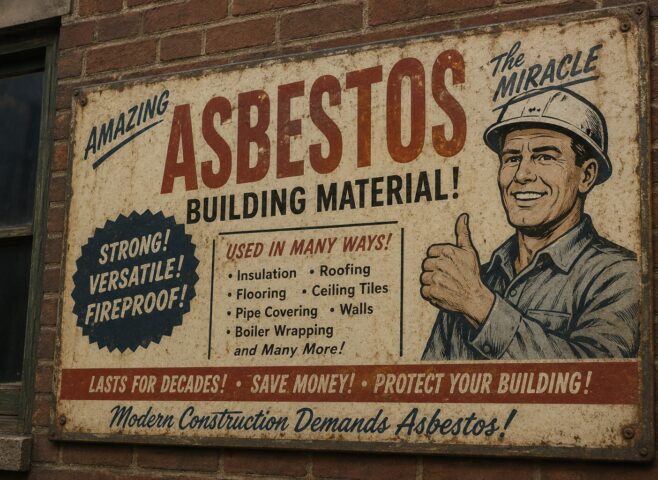
Asbestos products were marketed as modern and dependable. Their resistance to fire provided a persuasive safety argument, while their low cost made them attractive to builders working under tight financial and time constraints.
For many years, workers handled asbestos boards in much the same way as conventional building sheets. They cut panels with hand saws and power tools, drilled fixing holes, sanded rough edges and swept away the dust. Suitable respiratory protection and effective dust controls were often absent.
Carpenters, joiners, builders, electricians, heating engineers, shipyard employees and maintenance workers were among the trades likely to disturb amosite-containing materials. People working nearby could also breathe contaminated air, even if they did not handle the asbestos directly.
Fibres carried home on work clothes may have exposed family members. This type of secondary exposure contributed to asbestos-related disease among people who had never worked in the industries traditionally associated with asbestos.
Why Amosite Is Considered Particularly Hazardous
All asbestos types can cause serious disease, but amosite’s physical characteristics make it especially concerning. Its amphibole fibres are straight and needle-like, enabling them to penetrate deep into the lungs when inhaled.
Amphibole fibres are also highly biopersistent, meaning they may remain within lung tissue for extended periods. Their presence can contribute to inflammation, cellular damage and the gradual development of disease.
Amosite-containing insulation products are often more friable than dense asbestos cement. Friable materials can be crumbled or reduced to powder more easily, increasing the possibility of fibre release. A damaged piece of AIB may therefore create a substantially different risk from an intact, firmly bonded asbestos cement sheet.
Risk depends on more than the asbestos type alone. The material’s condition, asbestos content, surface treatment and likelihood of disturbance are all important. The method of work also makes a major difference. Drilling a single hole may release fibres, while mechanical sawing or uncontrolled demolition can produce far greater contamination.
There is no reliable way to judge airborne fibre concentration by sight. Even when little dust is visible, microscopic asbestos fibres may be present. Conversely, ordinary dust may look alarming without containing asbestos. Proper identification and risk control must be based on evidence rather than appearance.
Diseases Associated With Amosite Exposure
The World Health Organization classifies every major form of asbestos as carcinogenic to humans. Exposure to asbestos, including amosite, can cause mesothelioma and cancers of the lung, larynx and ovaries. It can also cause chronic respiratory disease, including asbestosis. World Health Organization
Mesothelioma is an aggressive cancer most commonly affecting the lining around the lungs. It can also develop in the lining of the abdomen. The disease is strongly associated with earlier asbestos exposure and often appears many years after the fibres were inhaled.
Asbestos-related lung cancer develops within the lung tissue itself. Its symptoms can resemble those of lung cancer caused by other factors, and it may not be possible to distinguish cases solely from their clinical appearance.
Smoking and asbestos exposure are separate lung cancer risks, but together they create a particularly dangerous combination. A person with previous asbestos exposure can still benefit from stopping smoking because doing so removes an additional major risk factor.
Asbestosis is permanent scarring of the lungs associated particularly with substantial or prolonged exposure. As the scarring progresses, the lungs become less effective at transferring oxygen. The condition may cause increasing breathlessness, coughing and fatigue.
Asbestos exposure can also cause pleural thickening, in which the lining around the lungs becomes enlarged and restricts their movement. Pleural plaques may indicate previous exposure, although they do not normally cause the same degree of disability as diffuse pleural thickening.
These conditions do not usually become apparent immediately after exposure. According to the Health and Safety Executive, asbestos-related disease symptoms can take approximately 15 to 60 years to develop. This long latency period means that disease diagnosed today may result from work performed several decades ago. Health and Safety Executive
The absence of immediate symptoms should not be interpreted as proof that exposure was harmless. Asbestos fibres do not normally cause an instant reaction that warns someone to leave an area. This is one reason prevention is so important.
The UK Ban on Amosite
Medical evidence connecting asbestos exposure with fatal disease accumulated throughout the twentieth century. Regulations became progressively stricter as the scale of the occupational health crisis emerged.
The UK prohibited the importation and use of blue and brown asbestos in 1985. Chrysotile remained permitted for longer and was not fully prohibited until 1999. Government toxicological guidance confirms these principal dates while recognising that asbestos-containing materials installed before the bans remain present in older products and buildings. GOV.UK toxicological overview
The ban prevented new amosite products from being lawfully introduced, but it did not require the automatic removal of every previously installed material. As a result, brown asbestos remains a legacy issue throughout the UK building stock.
A product discovered today may have been installed legally when the building was constructed. Its age and continued presence do not necessarily indicate wrongdoing. The responsibility now is to prevent exposure by identifying, recording and managing it appropriately.
Where Amosite May Still Be Found
Buildings constructed or refurbished before the year 2000 should be treated as potentially containing asbestos. Amosite is particularly likely to be associated with properties built or altered during the decades when asbestos insulating board was commonly used.
Schools may contain AIB in ceilings, wall panels, heater cupboards, service ducts and fire-protection systems. Hospitals and public buildings may have it within plant rooms, risers, partitions and older ventilation systems.
Offices and shops can contain amosite above suspended ceilings, around structural columns or inside fire-resistant compartments. Blocks of flats may have asbestos boards in communal corridors, stairwells, meter cupboards, bin stores and service areas.
Factories, warehouses and power facilities may contain amosite insulation around equipment, steelwork and heating systems. Domestic properties can also contain brown asbestos in garage ceilings, airing cupboards, internal partitions, soffits and panels around boilers.
The material is not always visible. It may be concealed behind paint, wallpaper, plasterboard, timber, newer ceiling systems or replacement fixtures. Previous occupants may have covered the original surface rather than removing it.
Building records can provide useful clues, but documentation is often incomplete. Product names may have changed, drawings may be missing and later alterations may not have been recorded. A physical survey is generally required when reliable information is unavailable.
Why Visual Identification Is Not Enough
Descriptions such as brown, blue and white asbestos can create false confidence. The terms refer to the traditional appearance of raw fibres, not necessarily the colour of completed building products.
Amosite-containing board may appear pale grey, off-white, beige or brown. Paint and decorative coverings can disguise it further. Non-asbestos boards may look almost identical.
The age of a building can indicate whether asbestos is possible, but it cannot confirm the composition of a particular panel. Similarly, the manufacturer’s name or product location may suggest a likely material without providing certainty.
Professional laboratory analysis is the reliable method of confirmation. A representative sample is examined to identify any asbestos fibres present. Because taking a sample requires disturbing the material, it should be completed using appropriate controls.
People should not snap off a corner, scrape a surface or drill into a suspected board to see what is inside. Such actions can release fibres and contaminate tools, clothing and surrounding surfaces.
Managing Amosite in an Occupied Building
Discovering amosite does not always mean that immediate removal is required. An asbestos-containing material that is undamaged, sealed and unlikely to be disturbed may sometimes be managed safely in position.
Management can involve recording the material, labelling it where appropriate, protecting it from accidental impact and inspecting its condition periodically. Everyone who may perform maintenance work must be given access to accurate information before beginning.
A management plan should not be treated as a document that is prepared once and then forgotten. Buildings change, materials deteriorate and contractors carry out alterations. Records need to be reviewed and updated when circumstances change.
Removal may become necessary if the material is badly damaged, located where repeated disturbance is likely or directly affected by refurbishment. The decision should reflect a suitable assessment of its condition and the proposed work.
Because many amosite materials are comparatively friable and can release significant quantities of fibres, work involving them frequently requires a licensed asbestos contractor. Licensing requirements depend on the material and activity, so competent advice must be obtained before work starts.
Enclosing or encapsulating an amosite product may sometimes be appropriate. Encapsulation involves applying a suitable protective treatment that helps bind the surface and prevent fibre release. Enclosure places a physical barrier around the material. Neither approach removes the asbestos, so its presence must remain clearly recorded.
Amosite and Refurbishment Work
Renovation creates a major risk because asbestos-containing materials may be hidden inside the parts of a building due to be altered. A refurbishment project can disturb walls, ceilings, ducts and service areas that have remained untouched for decades.
An ordinary management survey may not be sufficiently intrusive for this purpose. A refurbishment or demolition survey is designed to investigate the areas affected by the proposed work, including concealed spaces where reasonably practicable.
The survey must cover the actual project scope. If the planned work expands into an area that was not inspected, further assessment may be necessary. Assuming that an unexamined panel matches a previously tested product can be dangerous.
Contractors should receive asbestos information early enough to plan their methods and costs. Discovering amosite after demolition begins can stop a project, expose workers and require expensive decontamination.
Careful planning is particularly important when removing ceilings or partitions. AIB may form part of the structure being dismantled, sit behind another board or be present as packers and smaller strips. These less obvious pieces can easily be overlooked.
What to Do if Suspected Amosite Is Disturbed
If work unexpectedly damages a material that may contain brown asbestos, the activity should stop immediately. People should leave the immediate area while avoiding unnecessary movement that could spread dust.
The material should not be swept with a broom or cleaned using an ordinary vacuum cleaner. Dry sweeping can send fibres back into the air, while a domestic vacuum may spread contamination through its exhaust and become contaminated internally
Tools, clothing and footwear should not be carried casually through clean areas. A competent asbestos professional should assess what happened, determine the likely extent of contamination and advise on the necessary response.
Not every accidental contact produces the same level of exposure. The condition of the material, duration of the incident and type of disturbance all matter. Nevertheless, the event should be taken seriously and documented appropriately.
Anyone concerned about possible exposure can seek medical advice. Routine chest X-rays immediately after an incident generally cannot show whether fibres were inhaled or predict a future asbestos-related disease, but a healthcare professional can provide individual guidance and ensure relevant occupational history is recorded.
The Importance of the Duty to Manage
Those responsible for maintenance in non-domestic premises have a legal duty to manage asbestos risks. This involves determining whether asbestos is present or likely to be present, assessing its condition and preparing a plan to manage the risk.
The duty commonly affects employers, landlords, building owners, managing agents and others with responsibility for maintenance. The precise allocation depends on contractual and practical control over the premises.
An asbestos register is a central part of management, but the register must be used actively. Maintenance workers should consult it before starting, and it should contain enough information to help them locate the recorded materials.
Warning labels can support management but should not replace proper records and communication. Labels may be removed, painted over or hidden by later alterations. Contractors also need information about asbestos that is concealed from view.
Regular inspections help identify deterioration, water damage, accidental impact and unauthorised alterations. A previously stable AIB panel can become hazardous if its surface breaks down or someone drills through it.
Why Brown Asbestos Remains a Serious Legacy
Amosite presents a lasting challenge because it was installed precisely where buildings require regular maintenance. Ceiling voids, service risers, plant rooms, heating systems and fire compartments are all areas that tradespeople may need to enter.
The material can remain hidden and undisturbed for years before a cable installation, heating upgrade or redevelopment brings someone into contact with it. Workers born long after the UK ban may therefore still face exposure from products installed before they entered the industry.
This makes training and awareness essential. Experience with modern construction materials does not necessarily prepare someone to recognise an old asbestos board. Young workers, temporary staff and self-employed tradespeople must all understand the need to check before disturbing the fabric of an older building.
Building owners also need to appreciate that asbestos management is not achieved simply by commissioning a survey. Survey findings must influence real decisions about maintenance, access and refurbishment.
Amosite earned its place in construction because it performed extremely well as an insulating and fire-resistant material. Those benefits were immediate and easy to observe. Its health effects were delayed, invisible and often separated from exposure by several decades.
That contrast allowed brown asbestos to become widespread before its consequences were fully recognised. The material helped protect buildings from fire while creating a different danger for the people who manufactured, installed, maintained and eventually removed it.
Today, amosite is recognised as a potent carcinogenic hazard. Its UK use ended decades ago, but the products already fitted into buildings remain part of the built environment. Safe management depends on knowing where those products are, understanding their condition and preventing uncontrolled disturbance.
Suspected brown asbestos should never be drilled, cut, sanded or broken merely to investigate it. The appropriate response is to stop, obtain reliable information and involve competent professionals where necessary.
The legacy of amosite will continue as older buildings are repaired, converted and demolished. Thorough surveys, clear records, effective communication and properly controlled work can prevent the mistakes of the past from creating new exposures today.