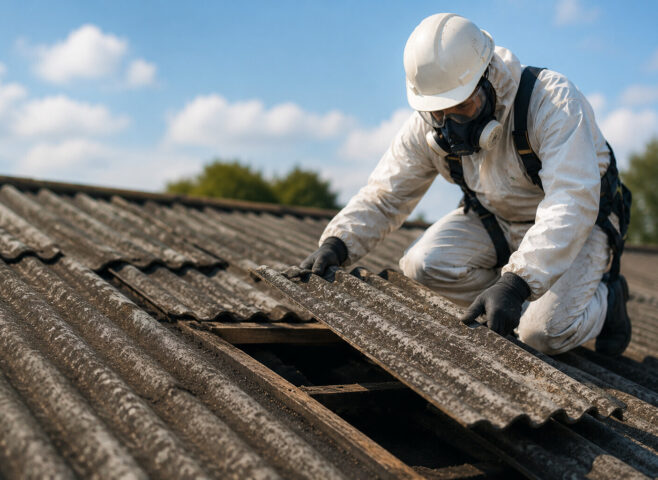
Garden offices and detached workspaces are now common improvement projects across Exeter. Removing one can look straightforward, especially when the building is lightweight or already in disrepair. However, if it was built or refurbished before the early 2000s, asbestos-containing materials may be hidden in sheets, panels, insulation, roofing products, adhesives or old electrical components. The safest way to plan the work is to arrange asbestos testing before anything is disturbed.
Asbestos is not always obvious from its appearance. A cement sheet, textured coating or insulating board can resemble an ordinary modern material, while different products can contain different asbestos fibres and require different controls. Cutting, drilling, breaking or sweeping debris can release fibres into the air. Testing gives homeowners, landlords and contractors reliable information before demolition begins, helping them decide whether the structure can be removed normally or needs specialist controls.
Why garden offices can contain asbestos
Older garden offices were often assembled from materials chosen for durability, fire resistance and low cost. Asbestos cement may be present in roof sheets, wall panels, soffits, flues or eaves details. Inside the building, asbestos insulating board could have been used around heaters, electrical equipment or service penetrations. Vinyl floor tiles, bitumen-backed products, textured coatings and old sealants are other possibilities, particularly where a shed or outbuilding has been converted into a more comfortable workspace.
Previous repairs can make the picture less clear. A newer roof may have been fitted over older sheets, or plasterboard may cover an original lining. Materials can also be hidden behind cabinets, around windows or under flooring. This is why a quick visual check is not enough. A competent surveyor can identify suspect materials, take controlled samples where appropriate and arrange laboratory analysis. The result is a clear record of what has been tested and what should remain untouched until the work plan is agreed.
Choose the right type of asbestos survey
If the garden office is being removed completely, a refurbishment or demolition survey may be needed rather than a basic management survey. The correct scope depends on the planned work, the age and construction of the building, and whether materials will be broken into or removed. A survey should consider the whole area affected by the project, including connecting paths, service routes and any adjoining garage or store where demolition activity could spread dust.
For a smaller project, targeted asbestos testing may still be appropriate when the exact materials to be disturbed are known. For example, samples might be required from roof sheets, floor tiles, a flue or a panel around an electrical fitting. The important point is that the testing plan should follow the proposed work, not just the easiest materials to reach. If the scope changes after testing, the assessment should be reviewed before additional demolition starts.
What happens during asbestos testing?
The surveyor will first discuss the planned removal and inspect the garden office and its surroundings. Suspect materials are assessed for their condition, location and likelihood of being disturbed. Where sampling is justified, a small sample is taken using controlled methods designed to minimise the release of dust. The sample is then sent to an appropriate laboratory for analysis, with the findings recorded in a written report.
A negative result for one material does not automatically confirm that every other product is asbestos-free. Different materials need separate consideration, and areas that were inaccessible may need to be treated as presumed to contain asbestos until they can be assessed. Ask for the report to identify sample locations clearly, explain any limitations and distinguish confirmed materials from areas that were not inspected. That information is valuable to the contractor who will plan the removal.
Plan removal around the test results
Once the results are available, do not begin dismantling until the removal method has been agreed. Some lower-risk asbestos cement products may be removed under controlled conditions, while damaged boards, insulation or contaminated debris may require licensed specialist work. The decision depends on the material, its condition, the way it will be disturbed and the surrounding risks. A contractor should be able to explain how the work area will be controlled, how waste will be packaged and how the site will be left clean.
It is also sensible to share the report with everyone involved, including builders, electricians, landscapers and waste carriers. Clear information prevents another person from drilling into a suspect panel or loading unlabelled debris into a vehicle. If the work uncovers an unexpected material, stop and seek advice. Do not rely on colour, texture or a previous builder’s assumption to decide that it is safe.
Arrange advice before work begins
Testing before removing an older Exeter garden office can prevent avoidable exposure, delays and extra disposal costs. It gives the project a measured starting point and helps contractors price the work based on evidence rather than guesswork. For broader guidance, see our asbestos testing advice for older outbuildings, read about testing before work on an older garage roof, and review our information on testing before disturbing older flooring.
Westcountry Asbestos Removal can help you understand what needs to be checked before an outbuilding is altered or removed. Arrange an assessment early, before contractors arrive and before materials are disturbed. A short conversation about the building’s age, construction and planned work can help identify the right next step and keep the project moving safely.