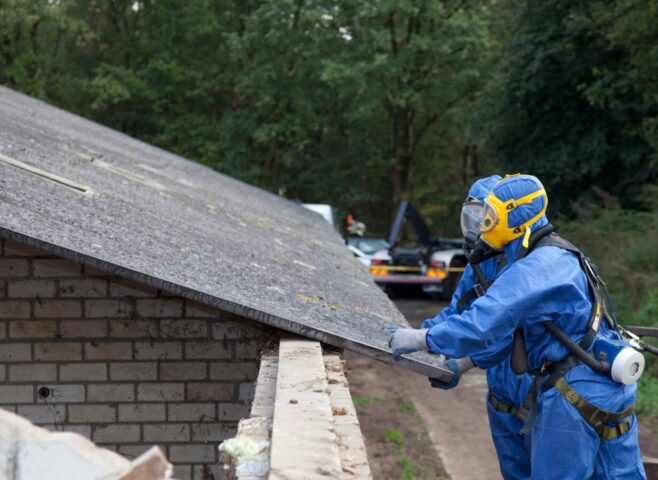
Replacing an older garage roof can look like a straightforward building job, but properties built or refurbished before the asbestos restrictions introduced in the late twentieth century may contain asbestos cement sheets, soffit boards, fascias, insulation products or debris beneath the roof covering. The age and appearance of a sheet are not enough to confirm what it is made from. Before anyone drills, cuts, removes fixings or starts dismantling, asbestos testing gives the project a reliable starting point.
Why an older garage roof deserves a proper asbestos check
Garage roofs were often constructed with corrugated cement sheets because the material was durable, weather resistant and relatively affordable. Some sheets contain chrysotile asbestos, while older garages may also have asbestos-containing boards used around eaves, gables, ceilings and adjoining walls. A roof can therefore present more than one potential material, particularly where it has been repaired, extended or lined over the years.
Visual inspection alone cannot safely identify asbestos. A modern fibre-cement sheet may resemble an older asbestos cement panel, and paint, moss, dirt or weathering can hide important details. Even when a material appears intact, replacing the roof can disturb it through impact, vibration and the removal of rusted fixings. The safest approach is to arrange a professional survey or targeted asbestos test before the roofing contractor begins work. This is especially important if the garage is attached to the house, close to a boundary, or used for storage that will need to be cleared.
Testing also helps prevent a common project problem: discovering a suspect sheet halfway through the job. Work may have to stop, trades may need to leave site and replacement arrangements can add cost and delay. A planned test provides information early enough to choose the right contractor, method and disposal route. For wider renovation planning, our guide to asbestos testing before a refurbishment project explains why early information is useful when several trades will be working in sequence.
What an asbestos testing visit may involve
A competent surveyor will first discuss the proposed work and the age, construction and use of the garage. They may review accessible areas such as the roof sheets, internal ceiling, soffits, gutters, wall panels and any old insulation. The aim is not simply to take one sample from the most obvious sheet; it is to consider which materials could be disturbed by the roof replacement and whether visually different products need separate assessment.
Where sampling is appropriate, the surveyor takes a small representative sample using controlled procedures and suitable protective measures. The sample is sent to an accredited laboratory for analysis. The laboratory result can identify whether asbestos is present and, where relevant, the material type. You should receive a written report or certificate that can be shared with the roofing contractor, helping them understand the constraints before they price or schedule the job.
Sampling should not be treated as permission for an untrained person to break pieces from a sheet. Drilling, snapping or sweeping fragments can release fibres and spread contamination. If the roof is damaged, crumbling or leaking, keep people away from the affected area and explain the condition to the asbestos professional when arranging the visit. If you are unsure whether a ceiling, wall lining or old flooring inside the garage is also affected, a broader inspection may be more suitable than a single-material test.
How the test result changes the roof replacement plan
A negative result for the tested material does not automatically clear every part of the garage. It applies to the material and sample represented by the report, so the contractor should still avoid disturbing untested suspect products. If asbestos cement is confirmed and remains in good condition, the work may be planned around controlled removal by a suitably experienced contractor, with appropriate packaging, transport and disposal arrangements.
If the material is damaged or likely to break during removal, the method statement needs to reflect that risk. The roofing contractor may need to isolate the work area, control access, protect nearby surfaces and prevent fragments entering drains, gardens or the garage interior. Asbestos-containing waste must not be placed in ordinary skips or left for a general waste collector. Our explanation of what happens from sampling through to clearance covers the importance of planning each stage rather than treating removal as ordinary demolition.
The report can also show that a different approach is sensible. In some situations, leaving an intact material undisturbed may be safer than unnecessary removal, provided it is managed and the planned work does not affect it. In others, removal before the new roof is installed may be the practical long-term choice. The decision should be based on the test result, condition of the material and the exact work proposed—not on guesswork or the cheapest initial quote.
Preparing for a safer Exeter garage roof project
Before the appointment, make a note of the garage’s approximate construction date, previous repairs and the parts the roofer intends to replace. Photograph the roof from a safe distance, but do not climb up to inspect it yourself. Keep children, pets and other trades away from damaged areas, and tell the testing professional if the garage is attached to living accommodation or close to neighbours.
Once the result is available, give the complete report to every contractor who may disturb the roof. Ask how they will control access, handle waste and protect adjacent areas. If removal is required, choose a contractor with relevant asbestos experience and make sure the scope includes the sheets, fixings, trims and associated materials identified by the assessment. A clear plan at the start helps prevent unsafe improvisation later.
For homeowners planning several improvements at once, our advice on testing before replacing an older roof shows how asbestos information can be built into the wider schedule. Arranging testing before the first panel is touched gives your Exeter garage project a safer, more predictable route from inspection to completed roof.