A professional asbestos project is a sequence of controlled decisions, not simply a contractor arriving to remove a material. From the first sample through to final clearance, each stage is designed to establish the facts, choose the correct controls and leave the property with clear records of what was done.
Understanding that sequence helps homeowners, landlords and businesses in Exeter plan work with fewer surprises. It also makes it easier to recognise when testing, removal and independent checks are being handled properly.
Stage one: assess the suspected material
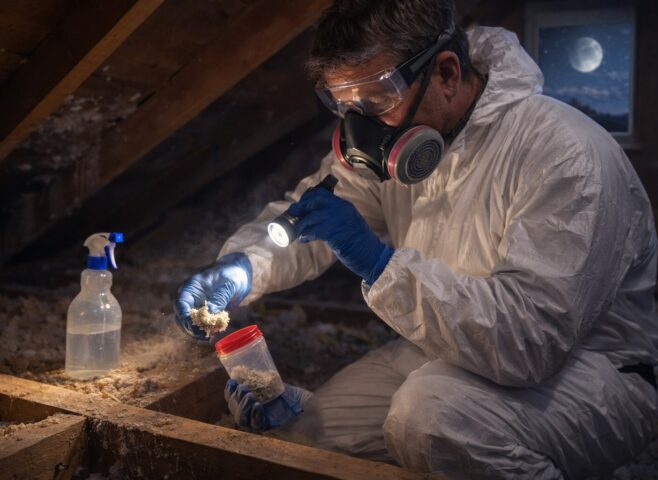
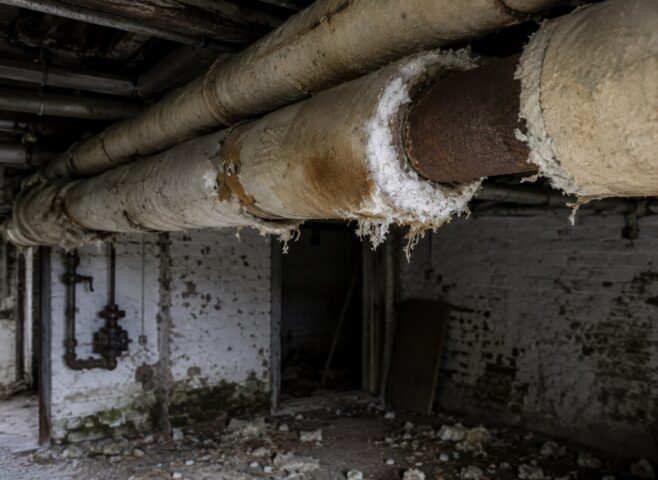
The process begins by considering the building, the material and the work being proposed. A competent professional will look at the property’s age, construction and condition, then identify materials that may contain asbestos and could be disturbed.
Appearance alone is not enough to confirm asbestos. When sampling is appropriate, a small representative piece is collected using controlled methods, sealed and sent for laboratory analysis. Our guide to asbestos testing and removal in Exeter explains why reliable identification must come before decisions about removal.
Stage two: interpret the laboratory result
The result confirms whether asbestos is present and may identify the asbestos type. This is combined with information about the product’s condition, accessibility and likelihood of disturbance.
Not every positive result leads to immediate removal. Sound material that will remain untouched may sometimes be managed in place, recorded and inspected periodically. Material that is damaged, deteriorating or directly affected by planned work is more likely to require encapsulation or removal.
Stage three: decide the work category
The contractor must determine which legal and practical controls apply. Certain higher-risk materials and activities require licensed asbestos work. Some lower-risk tasks may be non-licensed, but they still require training, suitable protective equipment, controlled methods and correct waste handling.
Property owners can learn more about the difference between licensed and non-licensed asbestos removal. A quotation should state what work is included, which category applies and what documentation will be provided.
Stage four: prepare the plan of work
Before removal begins, the contractor plans how the area will be isolated and how exposure will be prevented. Depending on the material, this may involve an enclosure, negative pressure equipment, controlled access, respiratory protective equipment and decontamination arrangements.
The plan also considers how waste will leave the property without contaminating clean areas. Other trades should be kept outside the work zone, and everyone involved in the wider project should understand when the area will be available again.
Stage five: remove and package the material
Removal methods are selected to minimise breakage and fibre release. The material is handled carefully, then double-bagged or wrapped as appropriate and labelled as asbestos waste.
This is not a suitable task for improvised household equipment. Ordinary masks and vacuum cleaners do not reproduce professional controls, and dust can be transferred to clothing, tools, vehicles and neighbouring rooms. The risks are explored further in why you should never remove asbestos yourself.
Stage six: cleaning and clearance
After removal, the work area is thoroughly cleaned and visually examined. For licensed work, the formal clearance process may include staged checks and air testing by an independent analyst before an enclosure is dismantled.
Clearance is an important distinction: completion of physical removal does not by itself demonstrate that an area is ready for normal occupation. The required inspection and testing provide evidence that the controlled area can be returned to use.
Stage seven: transport and documentation
Asbestos waste must be transferred by an authorised carrier and taken to an appropriate licensed facility. Waste consignment records provide a traceable account of where the material went.
The property owner should retain the original survey or sampling result, the plan of work, contractor information, waste documentation and any clearance certificate. If asbestos remains elsewhere in the building, its location and condition should stay on the property record.
A clear process supports a safer outcome
A well-managed asbestos project replaces uncertainty with evidence at each stage. Testing identifies the material, risk assessment defines the response, controlled work addresses the hazard and clearance provides confidence before reoccupation.
For an Exeter property, asking the contractor to explain this sequence is a practical way to understand the service being provided. Clear responsibilities, careful controls and complete records make the result safer for current occupants and for anyone working on the building in future.