Conservatory gutters can look like a straightforward maintenance job, but work on an older structure may involve disturbing more than the guttering itself. Fascia boards, soffits, roof trims, wall panels and older sealant can contain asbestos in properties built or refurbished before asbestos use was fully controlled. If a ladder, scaffold or replacement materials will touch those areas, testing is a sensible first step before work begins.
Asbestos is not dangerous simply because it is present. The greater concern is releasing fibres by drilling, cutting, scraping, breaking or removing a suspect material. A conservatory repair can create that risk unexpectedly: a contractor may need to remove a trim to reach a fixing, lift a roof edge to trace a leak, or cut through a board that appears to be ordinary cement. Testing gives the project a clear starting point and helps prevent an avoidable disturbance.
Why conservatory gutter work can disturb hidden materials
Gutters are usually fixed to a fascia or edge detail, so replacing them may require access to the boards behind the gutter. Older conservatories can also have asbestos-containing cement panels, soffits or packers around the roof perimeter. These materials may be weathered, painted or covered by later plastic components, which makes visual identification unreliable. A surface that looks modern does not prove that the material behind it is asbestos-free.
The condition of the conservatory matters as well. Water ingress, repeated painting and previous repairs can make edges brittle. If a leaking gutter has caused dampness, a contractor may propose replacing adjacent timber or removing sections of cladding at the same time. That expands the scope from routine guttering into work that could disturb hidden building materials. Testing before the quote is finalised can make responsibilities, controls and costs much clearer.
It is also worth considering nearby work. If the gutter replacement is part of a larger refurbishment, the same survey can help inform decisions about the roof, ceiling, wall panels and older flooring. Previous projects involving conservatory roofs and internal surfaces show why a small repair should be considered in context, rather than assessed as an isolated piece of plastic or metal.
What asbestos testing involves
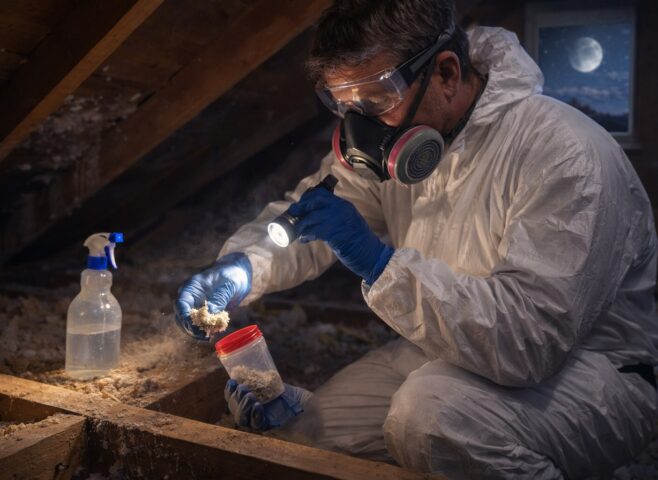
A competent asbestos professional will discuss the planned work and identify materials that could be disturbed. Depending on access and the construction, this may involve taking small representative samples from fascia boards, soffits, cement panels, textured coatings, adhesive or other suspect products. Sampling should be controlled carefully so that the process itself does not spread contamination. Samples are then examined by a suitable laboratory and the findings are recorded in a report.
The report should identify what was sampled, where it was found and whether asbestos was detected. It may also describe the material type and condition, although a laboratory result does not replace a site-specific method statement. If the result is negative, the contractor still needs to work safely and follow the agreed scope. If asbestos is present, the report helps determine whether the material can remain undisturbed, requires enclosure or needs removal by an appropriately qualified contractor.
Testing is different from a general visual inspection. You cannot confirm the absence of asbestos just by looking at a gutter, fascia or roof edge. Equally, a positive-looking surface should not be scraped or broken to investigate it. When access is limited, the testing plan should explain any assumptions and identify areas that could not be inspected. That limitation is useful information for anyone pricing or supervising the work.
How the result changes the replacement plan
If no asbestos is identified in the materials affected by the work, the guttering contractor can plan access and fixings with more confidence. The report can be shared with the people carrying out the job so that the agreed materials and locations are not changed casually on site. A clear written scope is particularly helpful when a repair uncovers rotten timber or a hidden trim that was not visible during the initial quotation.
If asbestos-containing material is found, the safest option is not always immediate removal. Some sound materials can remain in place if the new guttering can be installed without disturbing them, provided the work is planned around them. In other cases, removal or encapsulation may be needed before the gutter can be replaced. The right approach depends on the product, its condition, the proposed disturbance and the people who will carry out the work.
Any asbestos removal should be arranged with a contractor who is competent for the material and task. Do not ask a general roofer or builder to cut through a suspect board simply to keep the job moving. If the project changes after testing—for example, the gutter contractor decides to replace a fascia that was not included—pause and reassess whether the original report covers that additional disturbance.
Planning a safer Exeter conservatory repair
Before requesting a quote, gather any records about the property, previous alterations and earlier asbestos surveys. Tell the tester exactly what the contractor intends to remove, drill or replace. Photographs, measurements and the proposed sequence of work can help the assessment focus on the materials that matter. You may also need to consider how the conservatory will be isolated from the rest of the house while work takes place.
Keep the report with the job paperwork and give it to everyone who needs it. A useful handover should state the tested locations, the result, any areas not accessed and the precautions that still apply. Do not assume that a test of one conservatory roof or panel automatically covers a different part of the property; materials can vary between extensions and phases of construction. For broader background, see our guidance on testing before replacing an older conservatory roof.
It is equally important to keep the work proportionate. If the proposed repair involves only external gutter brackets, the testing plan may be narrower than a full conservatory refurbishment. However, the boundary should be agreed before tools arrive. Our articles on older conservatory wall panels and conservatory rooflights illustrate how different components can require different decisions.
For Exeter homeowners, landlords and contractors, asbestos testing is a practical way to replace an older conservatory gutter with better information and fewer surprises. It does not remove every project risk, but it helps identify what must be protected, what can be left alone and when specialist removal is needed. If you are unsure whether planned access could disturb an older material, arrange professional advice before starting the repair.