Replacing a conservatory roof can transform a tired, uncomfortable space into a useful room, but older conservatories may contain asbestos-containing materials in places that are easy to overlook. Roof sheets, soffits, panels, cement products, insulation boards and older sealants can all affect how work needs to be planned. If the property was built or refurbished before asbestos use was phased out, testing should be considered before any drilling, cutting, removal or roof replacement begins.
The safest approach is to treat uncertainty as a reason to pause rather than a reason to guess. A professional asbestos survey or targeted asbestos test can identify materials that need controls and help the roofing contractor understand what can and cannot be disturbed. That early information protects occupants, tradespeople and the project itself, while reducing the risk of unexpected delays and specialist disposal costs.
Why conservatory roof work can disturb asbestos
Conservatories often join several generations of construction together. An original structure may have been altered with replacement roof panels, plasterboard, electrical work or a later insulated ceiling. Even when the visible roof looks modern, hidden boards, backing materials or older components around the perimeter may remain. Work that appears limited to lifting panels can therefore involve fixings, trims, soffits and adjoining surfaces.
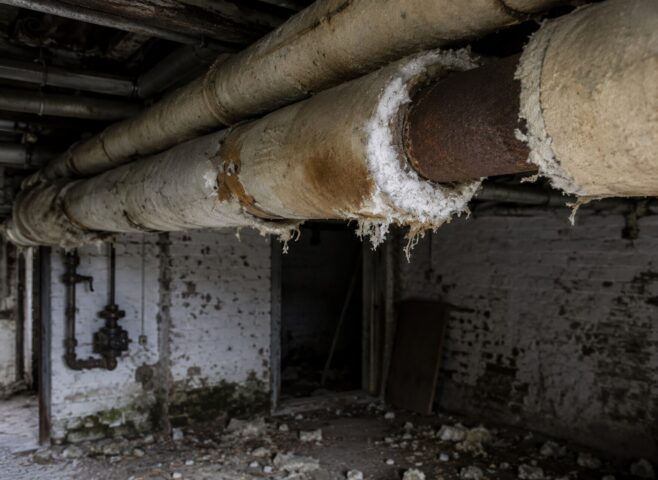
Damage is not limited to large-scale demolition. Drilling through a panel, snapping a brittle sheet, sanding a painted surface or using power tools on a joint can release fibres if asbestos is present. Weathering can also make cement products more fragile. This is why a visual inspection alone cannot confirm that a material is safe to disturb. Asbestos can be mixed into products in small amounts and may not have an obvious appearance.
What asbestos testing should establish before work
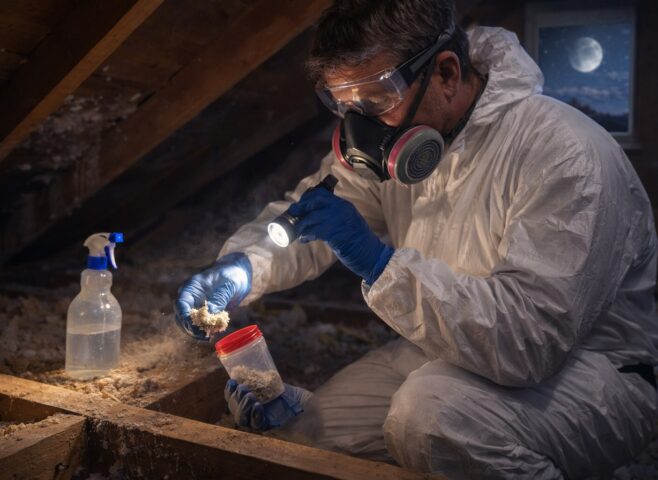
A suitable asbestos professional will consider the age and construction of the conservatory, the proposed work sequence and the materials that could be affected. Where appropriate, representative samples can be taken for laboratory analysis. The resulting report should make clear which materials were examined, where they are located and whether asbestos was detected. It should also explain any limitations, such as areas that were inaccessible without opening up the structure.
Testing is most useful when the scope of work is shared in advance. Replacing only the roof covering may present different risks from removing the entire ceiling, altering the wall junctions or installing new lighting. Give the surveyor the quotation, drawings or contractor’s method outline if available. This helps ensure that the assessment answers the practical question: what may the contractor encounter while carrying out this specific roof replacement?
For wider renovation planning, our guidance on asbestos testing before replacing an older Exeter roof explains why roof-related work should be assessed before materials are removed. A conservatory may be smaller, but the same principle applies: the risk depends on the materials and the proposed disturbance, not simply on the size of the building.
How test results affect the roofing plan
If testing does not identify asbestos in the materials within the agreed scope, the result still provides useful evidence for planning. Keep the report with the project records and make sure the roofing contractor knows exactly what was tested. A negative result for one panel or one location should not automatically be treated as clearance for every adjoining material, especially if the construction changes around the conservatory.
If asbestos is identified, the next step is not necessarily full removal of the entire roof. The appropriate response depends on the material’s condition, location and the work required. Some materials may be left undisturbed with controls, while others may need removal or specialist management before the roof replacement can proceed. A competent asbestos contractor can plan enclosure, protective measures, controlled removal and waste disposal where those measures are necessary.
Do not allow a roofing team to improvise around a positive result. Stop the affected activity, keep people away from the area and obtain advice on the correct control measures. Trying to save time by breaking, sweeping or loading suspect materials into ordinary waste can create a larger contamination problem and may expose everyone nearby.
Questions homeowners should ask before booking
Ask what areas and materials the testing will cover, whether samples will be analysed by a suitable laboratory and when the written report will be available. It is also sensible to ask how inaccessible materials will be treated and whether the proposed roof design requires additional intrusive inspection. These questions help prevent a report that is technically correct but too narrow to support the actual building work.
Check that everyone involved understands the result before the first tool is used. Homeowners, roofing contractors, electricians and other trades may each approach the conservatory from a different angle. Share the report, mark any confirmed materials where appropriate and include the findings in the job instructions. For related renovation work, our article about asbestos testing before replacing an older Exeter bathroom shows how early information can help different trades coordinate safely.
A calmer, safer way to replace the roof
Testing is a small step compared with the disruption and cost of stopping a roof replacement after suspect material is discovered. It gives the project a clearer starting point, supports sensible contractor decisions and helps protect people who may otherwise be exposed without realising it. If the conservatory is attached to an older home, consider the surrounding ceilings, walls and service routes as part of the planning conversation rather than looking only at the roof panels.
Westcountry Asbestos Removal can advise on asbestos testing and the next steps where asbestos is found in or around an Exeter property. If you are planning work in another part of the building, our guide to testing before removing an older Exeter outbuilding provides another example of how project-specific assessment can support safe decisions. Arrange advice before disturbance begins, keep suspect materials intact and make the test report part of the contractor’s brief.