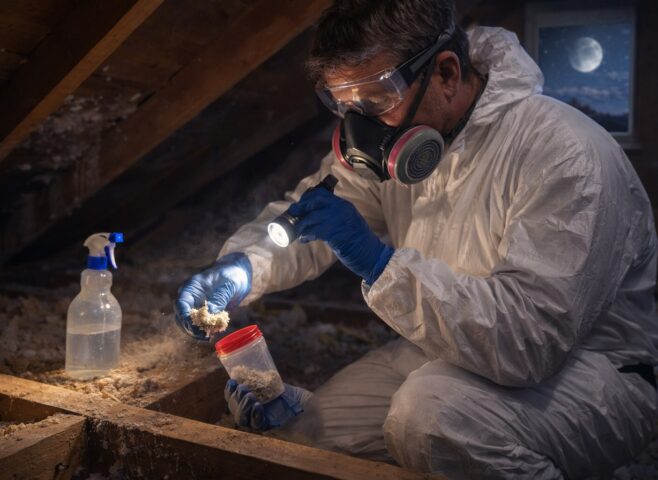
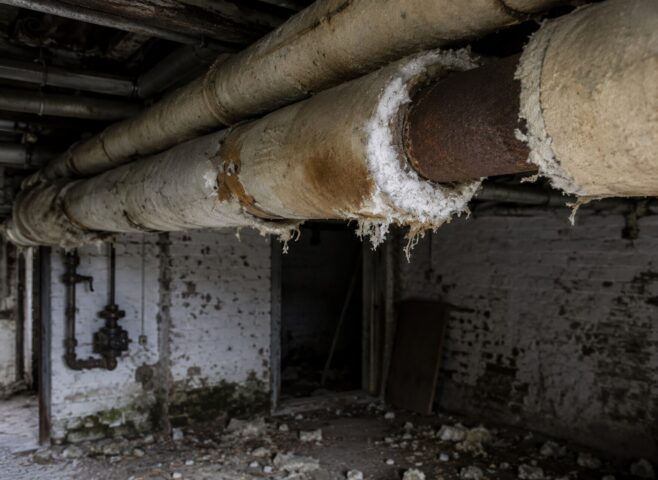
Bathroom renovations often involve more disturbance than homeowners expect. Floors may be lifted, boxing may be opened, old panels may be removed and pipework may be chased into walls. In an older Exeter property, some of those materials could contain asbestos. The safest time to investigate is before the first tile is loosened or the first fixture is removed.
Why bathroom renovations can uncover asbestos
Asbestos was used in many building products because it was durable, heat resistant and able to strengthen cement, board and insulation. In a bathroom, it may be present in places that are easy to overlook, including textured coatings, bath panels, service ducts, airing-cupboard linings, floor tiles, adhesive, pipe insulation and older cement-based sheets. The material may be hidden beneath later improvements, so a modern-looking bathroom does not necessarily mean that every underlying product is modern.
Older homes can also contain several layers of work completed at different times. A 1960s bathroom may have been retiled in the 1980s and refitted again more recently, leaving original flooring, backing boards or pipework insulation behind newer finishes. Drilling, sanding, cutting or breaking those layers can release hazardous fibres. This is why a visual inspection alone cannot confirm that an area is asbestos-free. Professional asbestos testing before flooring work is a useful example of the same precaution applied to another common renovation task.
What asbestos testing should cover
A suitable assessment starts with the proposed work, not just the room itself. The tester needs to understand whether the bathroom is being stripped back completely, whether walls will be opened for new plumbing, whether the ceiling will be repaired and whether adjoining areas such as a landing, airing cupboard or loft space will be disturbed. That context helps identify materials that might otherwise be missed.
Where suspect materials are accessible and safe to sample, representative samples can be taken and sent to a competent laboratory for analysis. The results should identify whether asbestos is present and, where applicable, the material type. A clear written report then gives the homeowner and contractor something practical to work from. It can identify areas that require licensed or non-licensed removal, areas that can remain undisturbed and any controls needed before the refurbishment begins.
Testing is not a licence to start work immediately. If a sample is damaged during collection, or if another similar material is found later, the plan may need to be reviewed. The report should therefore be shared with the bathroom installer, plumber, electrician and any other tradesperson who may disturb the structure. Everyone needs to know which surfaces are safe to work on and which must be left alone.
When removal may be needed
If asbestos-containing material is sound and will not be disturbed, leaving it in place can sometimes be the safest option. A bathroom renovation may be redesigned around it, or the material may be managed and protected. In other situations, removal is necessary because the work will involve cutting through it, taking it out or exposing it to repeated impact. The correct decision depends on the material, its condition, its location and the planned method of refurbishment.
Removal should be planned around the entire job rather than treated as a quick preliminary task. The work area may need to be isolated, surfaces protected and contaminated waste handled through the appropriate route. A competent contractor will also consider how to prevent dust travelling into bedrooms, hallways and ventilation routes. Similar planning is important when older roof features are being changed, as shown in this guide to testing before replacing an Exeter chimney.
How homeowners can prepare before the visit
Before arranging testing, gather any information available about the property and the renovation. Tell the surveyor when the building was constructed, whether previous owners carried out alterations and exactly which fixtures, walls, floors or ceilings will be changed. Photographs, old invoices and renovation plans can help explain the intended scope, but they cannot replace sampling where a material remains uncertain.
Do not scrape textured coatings, pull up old tiles, drill exploratory holes or remove panels simply to make the inspection easier. Keep the room as undisturbed as possible and explain any areas that are already damaged or damp. If a suspect material has been accidentally broken, stop work, keep people away from the area and seek professional advice before cleaning or continuing.
A safer start to an Exeter bathroom refit
Good planning can prevent a bathroom project from being delayed by an unexpected discovery. Testing before refurbishment gives tradespeople clear information, helps separate ordinary renovation work from specialist asbestos work and reduces the chance of an avoidable disturbance. It also creates a record that can be retained for future repairs, especially in a property where later owners may not know what is beneath the finishes.
If your Exeter bathroom is in an older property, arrange an asbestos assessment before stripping out the room. Where asbestos is found, use the report to plan the work with a suitably competent removal contractor. The same principle applies to other outbuildings and external structures, including older Exeter garden sheds, where hidden cement products and damaged panels can present similar risks.