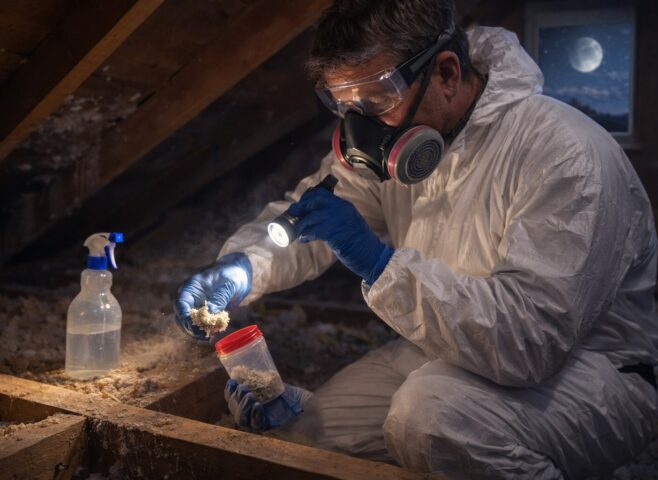
Each year from the 1st to the 7th of April, Asbestos Awareness Week serves as an important reminder that asbestos is not just a problem of the past. Although it was banned in the UK many years ago, it remains present in a huge number of properties, particularly those built or refurbished before 2000.
Across the South West, it is still regularly encountered in domestic homes, commercial buildings, garages and outbuildings. For many property owners, the risk often goes unnoticed until work begins — and by that point, the material may already have been disturbed.
The Ongoing Reality of Asbestos in the UK
There is a common belief that asbestos is no longer an issue, but the statistics tell a very different story. Thousands of people in the UK continue to lose their lives each year due to asbestos-related illnesses, making it one of the leading causes of work-related deaths in the country.
What makes asbestos particularly dangerous is the delayed impact it has on the body. Exposure today may not result in symptoms for decades, which is why the effects are still being seen from materials used many years ago. This long latency period means the problem is ongoing, not historical.
Why Asbestos Is Still Found in So Many Properties
The continued presence of asbestos is largely due to how widely it was used in construction throughout the twentieth century. Its strength, durability and resistance to heat made it a popular material in everything from insulation to roofing.
Even now, it can still be found in everyday parts of a property, including ceilings, wall panels, pipe insulation, textured coatings and external structures like garage roofs. In many cases, these materials remain undisturbed and pose little immediate risk. However, once they are damaged or interfered with, the situation changes quickly.
Understanding the Risk
Asbestos becomes hazardous when its fibres are released into the air. These fibres are extremely small and cannot be seen or smelled, making exposure easy without realising it.
When inhaled, they can lodge deep in the lungs and remain there permanently. Over time, this can lead to serious conditions such as mesothelioma, lung cancer and asbestosis. The fact that these illnesses can take decades to develop is what makes asbestos particularly insidious — people often have no idea they were exposed until much later in life.