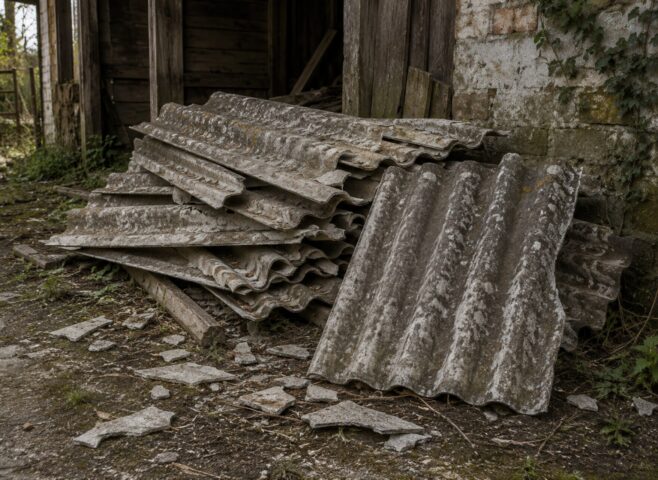
Solar panels can reduce energy costs and improve the efficiency of a home or commercial building, but installation work may involve more than fixing equipment to a roof. Contractors may need to drill roof coverings, enter loft spaces, route cables and work around soffits, boards or service areas. On an older property, some of those materials may contain asbestos.
Testing before installation helps the project team understand the building safely. It can prevent accidental disturbance, give installers reliable information for their risk assessments and reveal whether specialist removal or an alternative installation method is needed.
Roofing materials are not the only consideration
Asbestos cement roof sheets are a familiar concern, especially on garages, workshops and agricultural-style outbuildings. However, other possible locations include soffits, rainwater goods, insulation board panels, textured coatings and materials around old electrical equipment. Cable routes can also pass through areas that were not examined during the initial solar survey.
A targeted asbestos testing service in Exeter can focus on the parts of the property that the proposed installation will affect.
Why appearance alone is not enough
Many asbestos-containing products resemble modern alternatives, and age or colour cannot provide a dependable answer. A competent surveyor assesses the relevant locations and takes controlled samples where appropriate. Those samples are analysed by a laboratory to confirm whether asbestos is present.
The installer should provide details of planned fixing points, access routes and cable runs before the assessment. This makes the survey more useful and reduces the chance that a concealed material will be encountered after work begins.
What happens when a sample is positive
A positive result does not always mean the whole roof or surrounding area must be removed. The correct response depends on the material, its condition and whether the installation can proceed without disturbing it. Options may include altering the design, managing sound material in place, encapsulation or controlled removal.
If removal is required, its classification determines the competence, controls and notifications involved. Understanding the difference between licensed and non-licensed asbestos work helps owners appoint a suitable contractor and plan a realistic timetable.
Coordinate asbestos and solar contractors early
Clear communication is essential. The asbestos report should be shared with the solar designer and installation team, with affected locations shown accurately. Where remediation is necessary, it should be completed before installers enter the controlled area or begin drilling.
Owners should not try to remove a small sheet, soffit or panel simply to keep the project moving. Improvised methods can release fibres and contaminate tools, clothing and nearby spaces. Our advice on why you should not remove asbestos yourself explains why specialist planning matters.
Build testing into the project schedule
The most efficient approach is to investigate suspect materials before accepting a final installation design and start date. Early results give contractors time to adapt their methods, obtain specialist quotations and arrange any necessary asbestos removal without an unexpected pause on site.
For older buildings in Exeter, a focused asbestos check is a practical step toward a safer solar installation. It protects installers and occupants while helping the renewable-energy project move forward with fewer surprises.