Replacing a boiler can improve heating reliability and energy efficiency, but the work may involve removing old equipment, opening service cupboards, drilling walls and altering pipe routes. In properties built or refurbished before 2000, those activities can bring heating engineers into contact with asbestos-containing materials.
A targeted asbestos check before installation provides clear evidence about suspect products. It helps the project team choose safe methods, identify any specialist removal required and avoid an unexpected stop once the old boiler has been disconnected.
Where asbestos may affect boiler work
Legacy heating installations can include asbestos insulation around pipes, heat-resistant boards behind boilers, rope seals, cement flues and panels inside airing or service cupboards. Textured coatings and old floor coverings may also be disturbed when new pipes or controls are fitted.
Arranging professional asbestos testing in Exeter before the engineer starts work can focus attention on the precise equipment locations and proposed service routes.
Why a visual check is not enough
Many asbestos-containing products look similar to modern alternatives, especially after they have been painted or enclosed. Age and appearance can raise suspicion, but only laboratory analysis can confirm whether a sampled material contains asbestos.
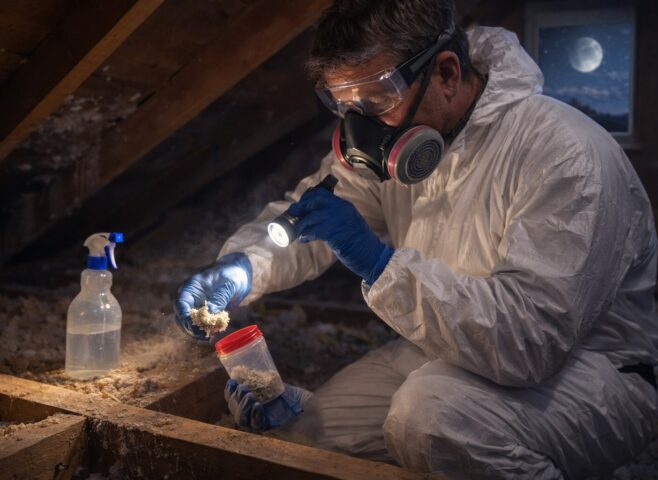
The surveyor should be told which boiler, flue, pipework and surrounding finishes will be removed or drilled. Small samples can then be collected using controlled methods, with the findings recorded clearly for the heating contractor and property owner.
Choosing a safe response to positive results
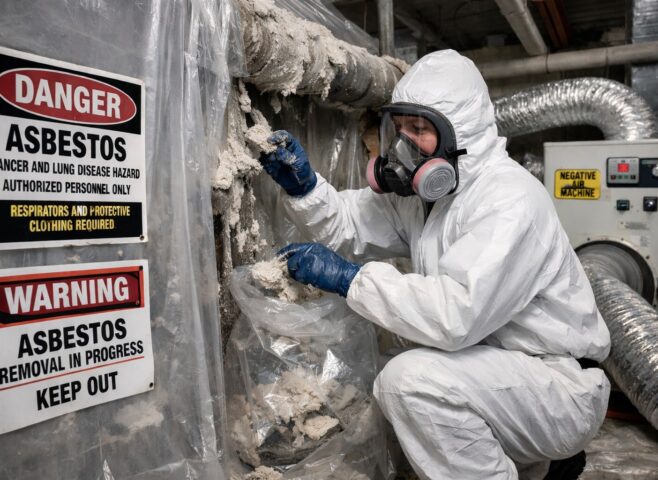
A positive test does not always require extensive removal. Sound material may sometimes remain in place if the new design avoids disturbing it. Where access or installation work will damage the product, controlled removal or specialist treatment may be necessary before the heating upgrade begins.
The material type and work method determine which legal controls apply. Information about licensed and non-licensed asbestos removal helps owners understand why the contractor must be matched carefully to the task.
Do not remove suspect materials to save time
A small panel or length of insulation can appear easy to move, particularly when the property is already without heating. Improvised removal can release fibres into cupboards, living spaces, tools and clothing. It may also create contaminated waste that cannot be handled through normal household disposal.
Our advice on why you should not remove asbestos yourself explains how rushed work can turn a limited issue into a much wider problem.
Coordinate testing with the heating quotation
The best time to investigate is before the replacement date is confirmed. Early results allow the heating engineer to finalise safe routes and give an asbestos contractor time to complete any necessary remediation. This creates a clearer programme and reduces the risk of leaving a property without heat for longer than expected.
For older homes and commercial premises in Exeter, asbestos testing is a sensible part of boiler planning. It protects engineers and occupants while helping the new heating system be installed with fewer surprises.