Asbestos remains one of the most misunderstood construction materials still found within older UK properties. Many homeowners and business owners assume every asbestos-containing material automatically requires the same removal process, but the reality is far more nuanced. Different asbestos products present different levels of risk depending on their condition, how easily fibres can be released, and whether the material has become damaged or disturbed over time.
At West Country Asbestos, the focus is on providing safe, compliant asbestos testing and non-licensed asbestos removal services throughout Exeter and the surrounding South West region. The company regularly works with domestic, commercial and industrial properties containing lower-risk asbestos materials including garage roofs, asbestos cement sheets, wall cladding, flues, soffits, gutters and bonded roofing products.
For decades, asbestos was incorporated into UK buildings because of its durability, insulating performance and resistance to heat and fire. Although asbestos use was banned in the UK in 1999, countless buildings constructed or refurbished before this period may still contain asbestos within roofing systems, floor tiles, pipe boxing, textured coatings, ceiling materials, insulation products and service ducts.
Problems typically arise when asbestos-containing materials become damaged, weathered, broken, drilled, cut or disturbed during renovation and refurbishment work. Once fibres are released into the air they may be inhaled, creating potentially serious long-term health concerns. This is why asbestos handling, testing and removal is tightly regulated under Health & Safety Executive guidance throughout the UK.
Licensed asbestos removal in Exeter
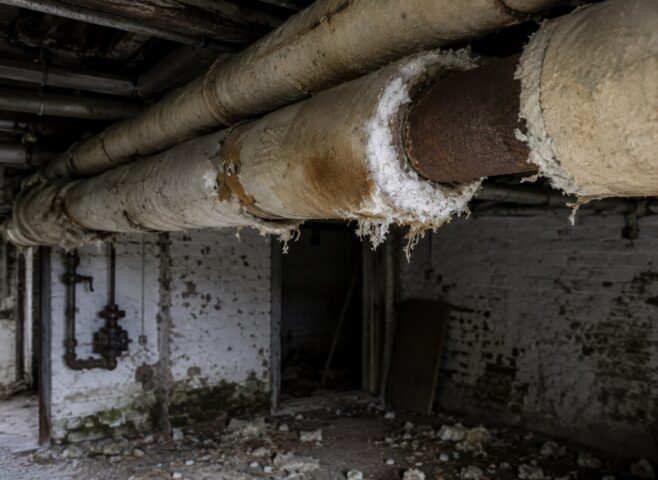
Licensed asbestos removal usually applies to higher-risk asbestos materials that can release airborne fibres far more easily when disturbed. These products are often friable in nature, meaning the fibres are not securely bonded into the material itself. Common examples include sprayed coatings, pipe lagging, loose-fill insulation, deteriorated insulation board and certain forms of blue asbestos (crocidolite) or brown asbestos (amosite).
Due to the increased risks involved, licensed asbestos removal requires specialist contractors operating under strict controlled conditions. This can include sealed working environments, advanced respiratory equipment, specialist decontamination procedures, air monitoring systems and formal notification to the HSE before removal work can legally begin.
Non-licensed asbestos removal in Exeter
Non-licensed asbestos removal generally relates to lower-risk asbestos-containing materials where the fibres are firmly bound into the product matrix itself. This commonly includes asbestos cement garage roofs, corrugated roofing sheets, cement panels, water tanks, gutters, downpipes and certain flue systems.
Although these materials are classed as lower risk compared to friable asbestos products, they still require professional handling and compliant disposal procedures. Incorrect removal techniques can easily damage the material and unnecessarily release fibres into the surrounding area. For this reason, controlled removal methods, PPE, waste handling procedures and site safety measures remain critically important even for non-licensed asbestos work.
Many property owners are surprised to learn that large volumes of bonded asbestos materials are legally removed across the UK every year by trained non-licensed asbestos specialists. The key factor is not simply whether asbestos is present, but the condition of the material and the likelihood of fibre release during handling.
Asbestos garage roof removal in Exeter
One of the most frequently encountered forms of non-licensed asbestos within domestic properties is asbestos cement garage roofing. These roofs became extremely common throughout the UK due to their strength, affordability and weather resistance. While asbestos cement products are generally considered lower risk because the fibres are bonded into the cement structure, deterioration over time can still create concerns if sheets become cracked, broken or heavily weathered.
Pressure washing, drilling or attempting DIY removal can significantly increase the likelihood of fibre release. Professional asbestos contractors instead use carefully controlled dismantling procedures designed to minimise disturbance while protecting surrounding areas and neighbouring properties throughout the removal process.
Specialist asbestos removal procedures also include compliant waste handling and transportation. Asbestos materials cannot simply be placed into skips or mixed with standard building waste. Hazardous waste regulations require asbestos products to be sealed, labelled and transported to authorised disposal facilities using approved procedures.
Asbestos surveys and asbestos testing Exeter
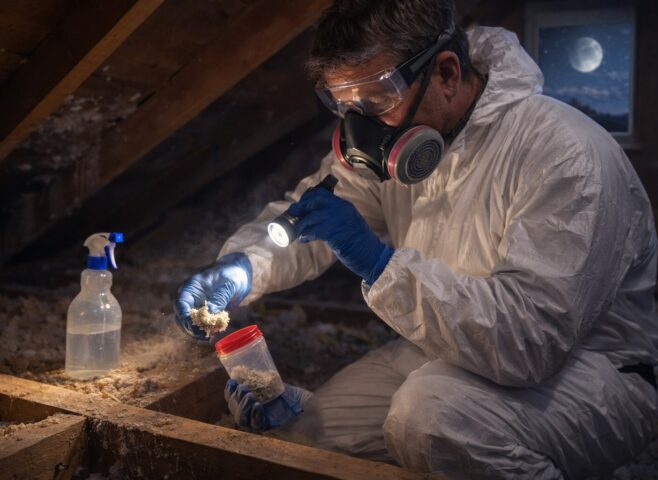
Asbestos surveys and testing play a major role in identifying potential risks before refurbishment, demolition or maintenance work begins. Many asbestos-containing products cannot be accurately identified through appearance alone, making professional testing essential where asbestos is suspected.
Asbestos sampling involves carefully controlled collection methods before laboratory analysis is carried out to determine whether asbestos fibres are present. This allows informed decisions to be made regarding management, encapsulation or removal.
Refurbishment and demolition surveys are particularly important because asbestos materials are often concealed within ceilings, partition walls, floor systems, loft spaces and service risers. Identifying these materials early helps prevent accidental exposure and ensures projects remain compliant with UK asbestos regulations.
Commercial asbestos responsibilities
Commercial buildings carry additional legal responsibilities under UK asbestos legislation. Duty holders responsible for non-domestic premises are legally required to identify and manage asbestos risks within workplaces and shared environments. This applies to offices, warehouses, schools, retail units, factories and industrial facilities where asbestos-containing materials may still be present.
Regular asbestos management plans, surveys and condition monitoring may be required depending on the type and condition of the materials identified within the property.
Professional asbestos removal services Exeter
At West Country Asbestos, all non-licensed asbestos removal work is carried out in accordance with current HSE guidance and UK asbestos regulations. The company specialises in lower-risk asbestos removal, asbestos cement disposal, garage roof removal and asbestos testing throughout Exeter and the wider South West region.
All projects are approached with a strong focus on safety, compliant waste handling and minimising disruption to surrounding properties and occupants. Whether dealing with a suspected asbestos garage roof, refurbishment project or older commercial premises, obtaining professional advice early can help reduce risk and ensure asbestos materials are handled correctly from the outset.
For many property owners, discovering asbestos initially sounds alarming. However, asbestos does not automatically mean a building is unsafe. The key is identifying the material correctly, understanding the level of risk involved and ensuring any required work is carried out professionally and compliantly.