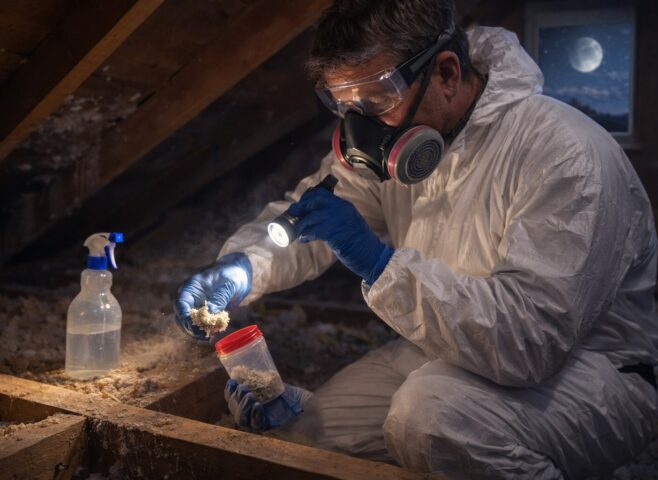
Asbestos is usually discussed as a problem found in older buildings. It may be concealed beneath a garage roof, inside a fire door, around heating pipes or behind a textured ceiling coating. Today, the material is closely associated with serious illness, specialist surveys and tightly controlled removal work.
Yet asbestos did not begin as a manufactured building product. It is a group of minerals formed naturally within the Earth over millions of years. Its unusual fibres were valued by ancient civilisations and later transformed into one of the industrial age’s most widely used materials.
The history of asbestos helps explain both its extraordinary popularity and the scale of the problem inherited by modern property owners.
What Is Asbestos?
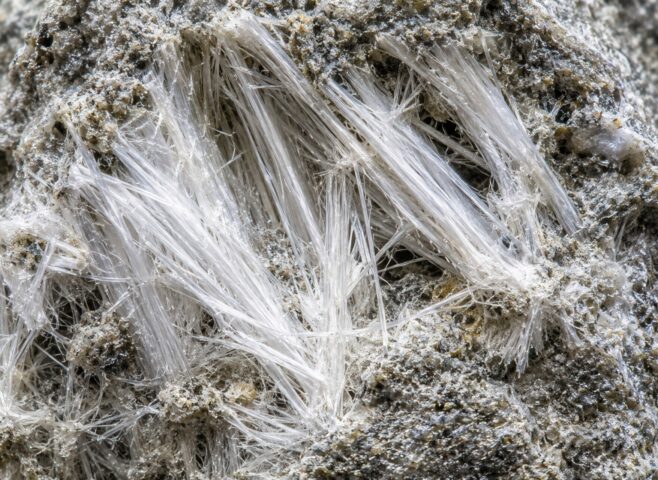
The term “asbestos” describes several naturally occurring silicate minerals with a fibrous structure. Instead of forming ordinary solid crystals, these minerals can separate into extremely fine strands.
Those fibres combine several useful characteristics. They are strong, flexible and resistant to heat, fire and many chemicals. They can also be divided repeatedly into smaller fibres while retaining much of their strength.
For manufacturers, this was an exceptional combination. Asbestos could reinforce another material, provide insulation and improve fire resistance without adding excessive weight. It was also durable enough to remain in place for decades.
Unfortunately, the same structure that made asbestos commercially valuable created its greatest danger. When asbestos-containing materials are damaged or disturbed, microscopic fibres may be released into the air. If inhaled, some can travel deep into the lungs and remain in the body.
How Asbestos Formed Beneath the Earth
Natural asbestos deposits developed through geological processes involving particular rock types, intense heat, pressure and chemical change. In suitable conditions, magnesium-rich rocks were gradually transformed, producing minerals with a fibrous internal structure.
This process took place over immense periods of geological time. Tectonic movement and volcanic activity helped create and expose deposits in different parts of the world.
Commercially important asbestos reserves were eventually identified in countries including Russia, Canada, China, Brazil and South Africa, as well as in parts of Europe. Once industrial mining became possible, some of these deposits supported enormous operations that continued for generations.
Asbestos was therefore not invented for use in buildings. Industry took an unusual natural mineral and processed it into a vast range of commercial products.
The Six Recognised Forms of Asbestos
Six minerals are generally recognised as types of asbestos. Of these, chrysotile, amosite and crocidolite were the forms most extensively used in construction.
Chrysotile, commonly called white asbestos, belonged to the serpentine mineral group. Its fibres were comparatively curly and flexible, making the material suitable for products such as cement sheets, roofing components, textiles, gaskets and floor coverings. It represented the largest proportion of commercially used asbestos.
Amosite, or brown asbestos, had straighter and more brittle fibres. Its resistance to heat made it useful in insulating board, ceiling tiles, fire-protection products and thermal insulation.
Crocidolite, known as blue asbestos, consisted of particularly fine, sharp fibres. It was used in some insulation and cement products but is regarded as especially hazardous because its fibres can penetrate deeply into lung tissue.
The remaining recognised types are tremolite, actinolite and anthophyllite. They were not used commercially on the same scale, although they could occur as contaminants in other mined minerals and manufactured products.
The colour descriptions are familiar shorthand rather than a dependable method of identification. An asbestos-containing material cannot safely be classified simply by looking at it. Proper sampling and laboratory analysis are required.
An “Inextinguishable” Material
Human interest in asbestos stretches back thousands of years. Ancient societies were fascinated by fibres that appeared capable of surviving direct exposure to flames.
The word “asbestos” has Greek origins and is commonly associated with the idea of something unquenchable or inextinguishable. Historical accounts describe fibres being woven into lamp wicks, ceremonial fabrics and burial cloths. Unlike ordinary textiles, these materials could endure heat without being consumed in the usual way.
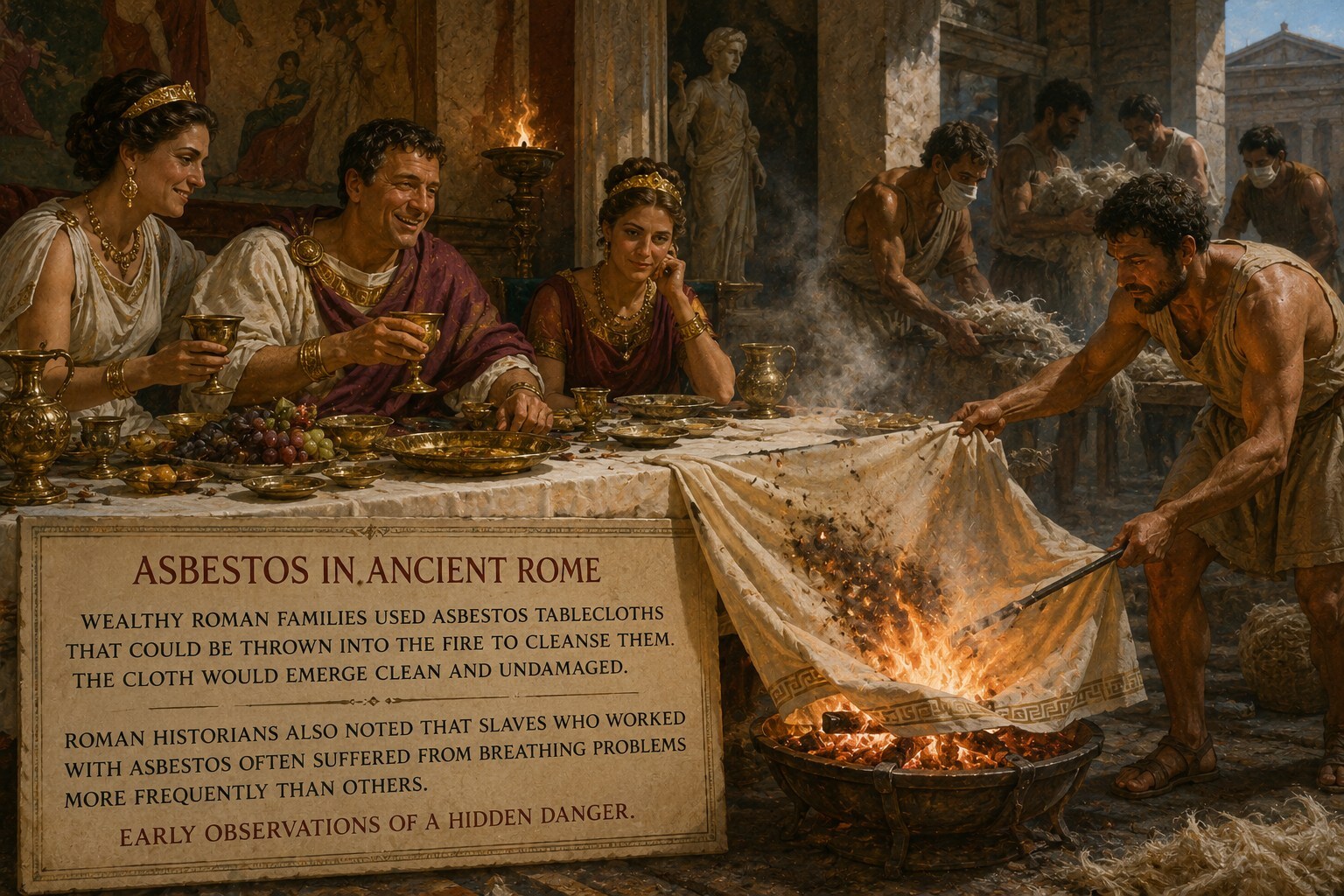
The Romans also reportedly used asbestos for specialist household and ceremonial purposes. Stories describe reusable tablecloths being cleaned by placing them in a fire, where food and other residue would burn away without destroying the fabric.
Ancient writers even recorded breathing problems among people who worked with the mineral. They could not have understood airborne fibres or occupational disease in modern medical terms, but such observations suggest that asbestos-related harm may have been noticed remarkably early.
Despite this interest, asbestos remained uncommon for centuries. Mining it was difficult, processing it required considerable labour and only limited quantities were available. It was largely confined to specialist or decorative uses until industrial technology made mass production possible.
The Industrial Revolution Changed Everything
The expansion of factories, railways, steamships and mechanised industry created an urgent need for effective insulation and fire protection. Boilers, engines, furnaces and steam pipes operated at high temperatures, while densely constructed towns faced the constant threat of devastating fires.
At the same time, improvements in mining and transport made it possible to extract asbestos on an industrial scale and distribute it around the world.
Manufacturers discovered that asbestos fibres could be incorporated into cement, plaster, fabric, plastic, paper, adhesives and many other substances. These mixtures were often stronger and more resistant to heat than the original materials. They were also relatively inexpensive to manufacture.
Asbestos consequently moved from being a geological curiosity to a major industrial commodity. Its use spread through ships, railway equipment, power stations, factories and public infrastructure before becoming deeply embedded in ordinary construction.
Why the Construction Industry Embraced Asbestos
Fire was one of the greatest threats facing buildings during the nineteenth and early twentieth centuries. Timber structures could burn rapidly, while industrial sites contained machinery, fuels and electrical systems capable of starting or accelerating a fire.
Asbestos appeared to offer an affordable solution. It could protect structural components, insulate heating equipment and reduce the flammability of numerous building products.
Its versatility was equally attractive. Depending on the product, asbestos could be moulded, woven, sprayed or mixed with other substances. It was used in roof sheets, wall panels, soffits, ceiling tiles, insulation boards, pipe lagging, sprayed coatings, floor tiles and textured finishes.
The resulting products were often tough, weather-resistant and easy to install. Some could be manufactured in large sheets, helping builders complete projects quickly and economically.
From the perspective of the period, asbestos was not merely convenient. It appeared to solve several major engineering problems at once.
Wartime and Post-War Construction Drove Demand
Asbestos production and consumption accelerated around the Second World War. Military vessels, factories and equipment required extensive heat insulation and fire protection.
Demand remained high during the post-war rebuilding programme. Britain needed houses, schools, hospitals, factories and other public buildings to be constructed quickly and affordably. Materials that were durable, readily available and suitable for mass production were heavily favoured.
Asbestos cement sheets became a familiar sight on garages, sheds, warehouses, farms and industrial buildings. Asbestos insulating board was installed in partitions, ceiling systems, service ducts and fire doors. Sprayed asbestos protected structural steel, while lagging helped control heat loss from boilers and pipes.
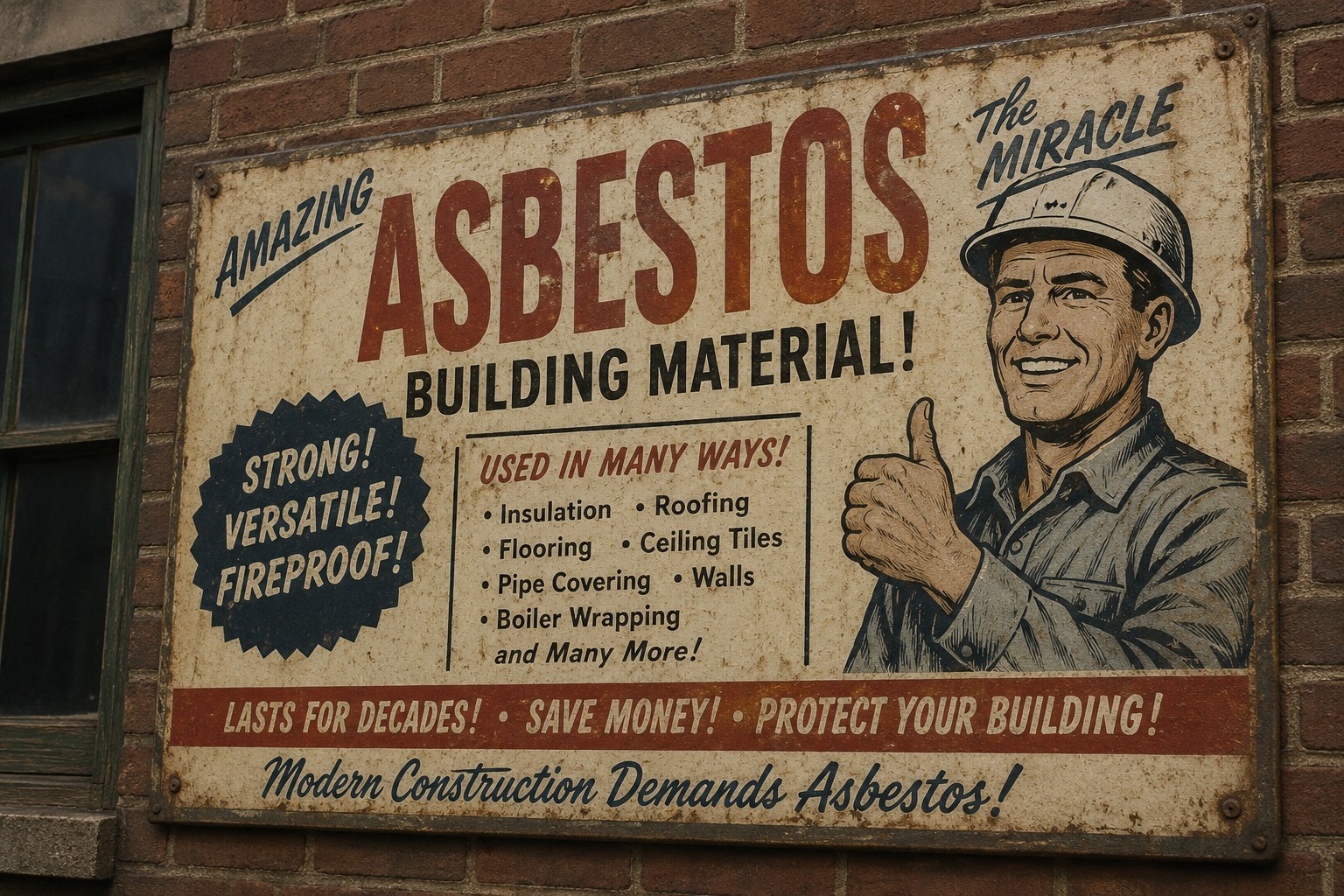
By the middle of the twentieth century, asbestos was frequently presented as a “miracle material.” Advertising concentrated on its durability, affordability and resistance to fire. Its presence became so routine that many people working with asbestos-containing products gave little thought to their potential health effects.
That confidence persisted even as medical evidence of harm continued to accumulate.
The Health Risks Became Impossible to Ignore
Concern about asbestos exposure was not a late discovery. During the nineteenth and early twentieth centuries, doctors observed respiratory illness among people employed in mines and asbestos-processing factories.
Research eventually demonstrated that inhaled fibres could cause permanent damage. Asbestosis—scarring of the lung tissue associated with substantial asbestos exposure—was formally recognised during the early twentieth century.
Further evidence established links between asbestos and lung cancer. Exposure was also connected to mesothelioma, a rare and aggressive cancer affecting the lining of the lungs and, less commonly, the lining of the abdomen or other organs.
One reason the danger remained hidden for so long was the delay between exposure and illness. Asbestos-related diseases frequently take decades to become apparent. Someone exposed while working in a factory, shipyard or building site might not experience symptoms until 20, 30, 40 or even 50 years later.
This lengthy latency period allowed widespread use to continue while the eventual consequences were still developing.
From Restrictions to a Complete UK Ban
As the evidence strengthened, governments introduced increasingly strict controls. The transition was gradual rather than immediate, and different asbestos types were prohibited at different times.
In the United Kingdom, blue and brown asbestos were banned before chrysotile, or white asbestos. The final prohibition on the importation and use of all asbestos types came into force in 1999.
The ban stopped new asbestos products from being legally introduced, but it did not remove materials already installed. By that point, asbestos had been used in construction for generations.
Consequently, buildings erected or refurbished before the ban may still contain it. This includes houses, blocks of flats, offices, schools, hospitals, shops, agricultural structures and industrial premises.
Why Asbestos Remains a Modern Property Issue
The presence of asbestos does not automatically mean that people are being exposed. Many asbestos-containing materials present a relatively low risk while they remain sealed, undamaged and undisturbed.
The situation can change when a material deteriorates or when refurbishment, drilling, sanding, cutting or demolition work disturbs it. These activities may release fibres that are too small to be seen and can remain airborne long enough to be inhaled.
Appearance alone is rarely sufficient to confirm whether a product contains asbestos. Materials that look identical may have been made with entirely different ingredients. For this reason, suspected asbestos should be assessed through appropriate professional investigation rather than guesswork.
Depending on the material’s condition, position and likelihood of disturbance, the correct response may be to monitor it, protect it, encapsulate it or arrange controlled removal. Removal is not automatically required in every case, but informed management is essential.
An Industrial Success With a Lasting Cost
The story of asbestos is filled with contradictions. It was a natural mineral that became a manufactured hazard; a fire-resistant material that protected buildings while endangering workers; and a celebrated technical solution that created a public-health problem lasting far beyond its commercial life.
Its useful properties were genuine. Asbestos helped insulate machinery, improve fire resistance and make durable construction products available at relatively low cost. Those advantages explain why it appeared in so many different materials and why the building industry adopted it so enthusiastically.
But its microscopic fibres carried consequences that were not visible when the products were installed. Decades later, those consequences are still being felt.
Asbestos is now treated as a legacy material requiring knowledge, caution and competent management. Surveys, laboratory testing and specialist removal services allow older buildings to be maintained or renovated without creating unnecessary exposure.
Understanding the mineral’s origins and history provides an important lesson. Asbestos was not widely used because its dangers were obvious; it was widely used because its benefits appeared remarkable. Recognising both sides of that history helps explain why asbestos remains present in so many buildings—and why disturbing a suspected material should never be approached casually.