Older outbuildings can look straightforward to remove, especially when they are made from familiar materials such as corrugated sheets, cement panels or painted board. In Exeter and across Devon, however, buildings constructed or altered before the year 2000 may contain asbestos in places that are not obvious from a visual inspection. A small garage, shed, workshop or garden store can include asbestos cement roofing, soffits, guttering, wall panels, insulation board or old textured coatings.
Testing before dismantling gives homeowners, landlords and contractors a clear plan. It helps identify materials that can remain safely in place, those that need controlled removal and the precautions required before work starts. It also prevents an apparently simple demolition job from disturbing hidden fibres and spreading contamination through the garden, nearby rooms or a vehicle used to remove waste.
Why older Exeter outbuildings can contain asbestos
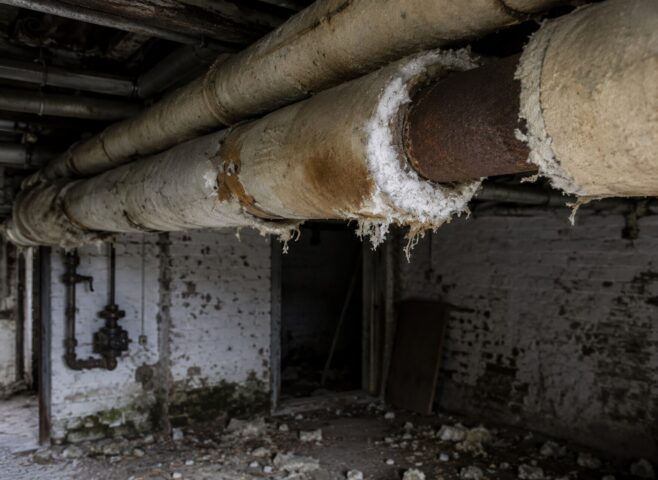
Asbestos was widely used because it was strong, heat resistant and relatively inexpensive. In outbuildings, it was particularly common in cement products. Roof sheets, ridge caps, wall cladding and water tanks could all be manufactured with asbestos fibres bound into cement. Other products were less obvious: insulating board may have been used around heaters or electrical equipment, while old doors, partition panels and eaves materials can contain asbestos board.
The age and appearance of a material are not enough to confirm what it is. Weathering can make asbestos cement look like ordinary grey concrete, while layers of paint, moss or dirt can conceal joints and fixings. Some outbuildings have also been repaired over the years, leaving a mixture of original asbestos-containing materials and newer replacements. Treating every suspicious material as asbestos until it has been assessed is a sensible way to protect everyone involved.
Even when the main structure is asbestos cement, removal can create risk if sheets are broken, drilled, cut or dropped. A testing plan considers the work you intend to do, not just the material in isolation. If the outbuilding will be dismantled completely, samples may need to cover roof panels, wall sheets, linings, soffits and any suspect insulation or adhesive.
What an asbestos test can establish
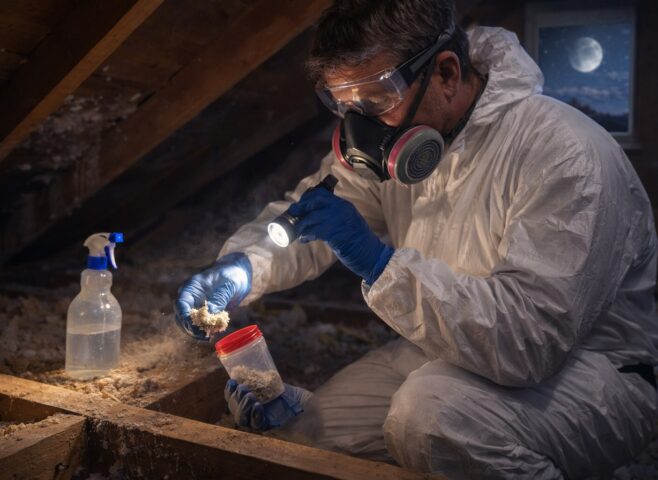
A competent surveyor or asbestos professional will discuss the scope of the project before taking samples. The aim is to select representative materials without causing unnecessary damage. Samples are then sent to a laboratory for analysis, with the results identifying whether asbestos is present and, where appropriate, the type of asbestos found.
For a planned removal, the results can support a method statement and waste plan. They may show that the roof is asbestos cement and can be removed using controlled techniques, while a hidden board lining requires a different approach. If no asbestos is detected in the sampled materials, you still have useful evidence for the project file rather than relying on an assumption based on appearance.
It is important to remember that a single negative result does not automatically clear every material in an outbuilding. Different products can sit next to one another, and later alterations may have introduced additional risks. The sampling strategy should reflect the areas that will actually be disturbed. If the work changes after testing, ask whether the original assessment still covers the new scope.
Planning removal without spreading contamination
Once asbestos has been identified, stop unplanned dismantling and keep people away from the work area. Children, visitors and pets should not enter the space, and anyone who has already worked on the building should avoid sweeping, blowing dust or shaking contaminated clothing. Power tools and aggressive cleaning methods can turn a manageable material into a much more difficult contamination problem.
Removal should be planned around the condition and type of asbestos product, its location, access to the outbuilding and the amount of waste expected. Asbestos cement is less friable than insulation board, but it still needs careful handling. Sheets should be kept intact wherever possible, dampened appropriately and packaged and transported as asbestos waste. Waste must go to a site authorised to accept it; it should never be placed in an ordinary skip or household bin.
Our asbestos removal service can help property owners understand the practical steps after a positive result. The right process may involve a controlled removal, an enclosure or specialist equipment depending on the material. Good planning also protects neighbouring gardens, shared access routes and the interior of the main house from avoidable dust.
Questions to ask before work begins
Before appointing someone to remove an older Exeter outbuilding, ask which materials will be tested, where samples will be taken and how the laboratory results will be recorded. Confirm who will isolate the area, how asbestos waste will be packaged and where it will be taken. You should also ask what happens if an unexpected material is discovered during dismantling. A clear stop-work procedure is a sign that the contractor understands the risk.
If you are still deciding whether sampling is needed, our asbestos testing guidance explains why visual checks cannot provide certainty. Testing is particularly important when the building is old, the history is unknown or the planned work involves drilling, cutting, stripping or demolition.
Keep the report, photographs and waste documentation with the property records. These documents can help if the building is renovated again, sold or inspected in the future. They also give contractors better information before they price follow-on work. If you need to discuss a suspected material or arrange an assessment, you can contact Westcountry Asbestos Removal for advice about the next safe step.
Removing an outbuilding should not become a race to get the structure down. A short period of testing and planning can prevent much more serious disruption, protect the people nearby and ensure that asbestos waste is handled responsibly. For older Exeter properties, checking first is the practical foundation for a safer project.