Replacing or altering a chimney on an older Exeter property can look like a straightforward building job, but the work may disturb asbestos-containing materials that are not obvious from the room below. Flue surrounds, roof products, cement panels, insulation, decorative boards and old fire-opening materials can all require careful consideration before a contractor starts cutting, drilling or dismantling. A sensible asbestos testing plan gives the project a clearer starting point and helps protect residents, tradespeople and neighbours.
Why chimney work can disturb hidden asbestos
Chimneys pass through several parts of a building, so a replacement can involve more than the visible stack. Work may include opening up a breast, removing an old liner, altering a loft enclosure, taking off roof flashing or replacing cement-based sections above the roofline. In a property built or refurbished before the year 2000, asbestos may have been used in heat-resistant boards, rope seals, flue components, soffits, roofing products or protective panels around fireplaces.
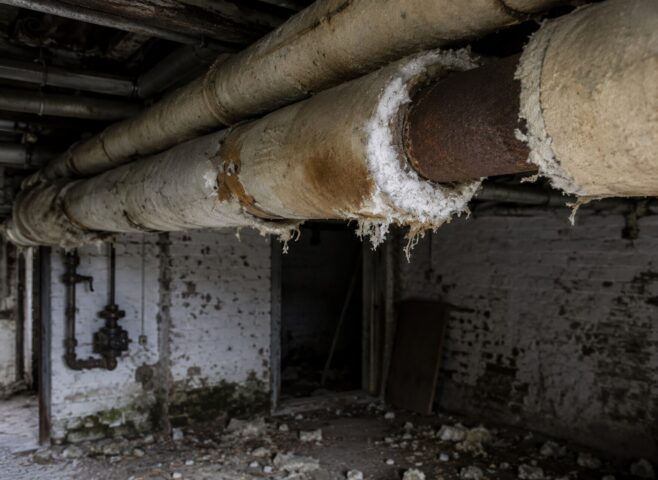
Age and appearance are not reliable ways to identify these materials. Some asbestos-containing products look like ordinary cement sheet, grey board or insulation, while others may be hidden behind plaster, paint or later decorative finishes. Even a small amount of damage can release fibres if a material is sawn, snapped, sanded or scraped. That is why visual checks alone should not be used to decide that a chimney is safe to disturb.
What asbestos testing should cover
A qualified surveyor or asbestos professional can review the planned work and identify which materials need sampling. The scope should follow the work rather than stopping at the easiest visible surface. For example, if a roofer will remove tiles around the stack, samples may be needed from nearby cement products, flashing details or backing boards. If the chimney breast is being opened internally, the inspection should consider the fireplace surround, service voids and any board or insulation concealed behind the finish.
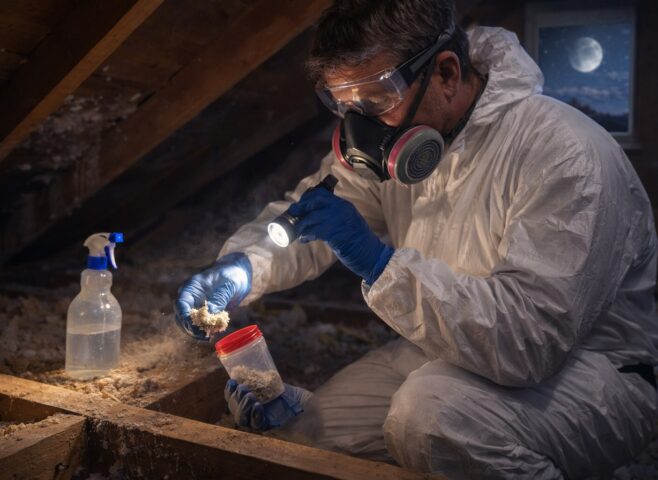
Sampling is controlled and targeted. A professional takes representative samples using suitable precautions, records where each sample came from and sends them for laboratory analysis. The resulting report can distinguish between materials that contain asbestos and those that do not. Where the planned work is extensive or hidden construction is particularly uncertain, a more intrusive survey may be appropriate before the contractor finalises the method and price.
How the result changes the work plan
A negative result for the tested materials can allow the project to proceed with greater confidence, while still requiring normal dust control and safe construction practice. A positive result does not necessarily mean the whole chimney must be removed. The next decision depends on the material’s condition, its location, the proposed work and whether it can be left undisturbed, protected or removed by a competent contractor.
Where asbestos is present, the work plan should explain how the area will be isolated, how access will be controlled, what protective equipment and cleaning arrangements are needed, and how waste will be packaged and transported. A specialist asbestos removal contractor can advise on the appropriate control measures and provide the relevant documentation. The main contractor should not improvise by breaking out suspect boards or sweeping up debris after the fact.
Common mistakes to avoid before the chimney contractor arrives
One common mistake is asking for a quote based only on photographs. Images may help with an initial discussion, but they cannot confirm what is inside a wall, behind a surround or under a roof detail. Another mistake is starting strip-out work before the test results have been reviewed. Removing plaster, boxing-in or old fittings can destroy evidence and spread contamination before the correct controls are in place.
It is also worth avoiding vague instructions such as “be careful of asbestos”. Contractors need clear information about the materials tested, the areas included and the boundaries of the work. If the project changes after the survey—for example, if the chimney opening becomes larger or the roof repair expands—the asbestos assessment should be revisited rather than assumed to cover the new work.
Plan testing before booking the replacement
Early testing helps keep an Exeter chimney project predictable. It allows homeowners, landlords and commercial property managers to budget for any specialist work, coordinate trades and reduce the chance of an unexpected stop once the roof or chimney breast has been opened. It also creates a written record that can be passed to everyone involved in the job.
If you are planning related work elsewhere in an older building, our guide to opening up walls safely explains why hidden materials need checking before intrusive work. You may also find our advice on older roof replacement useful where chimney access forms part of a wider repair. For projects involving a fireplace or flue, see our guide to testing before removing an old fireplace.
Testing is a practical first step, not an obstacle to renovation. By identifying asbestos before chimney materials are disturbed, you can choose the right people, sequence the work properly and move forward with a safer plan.