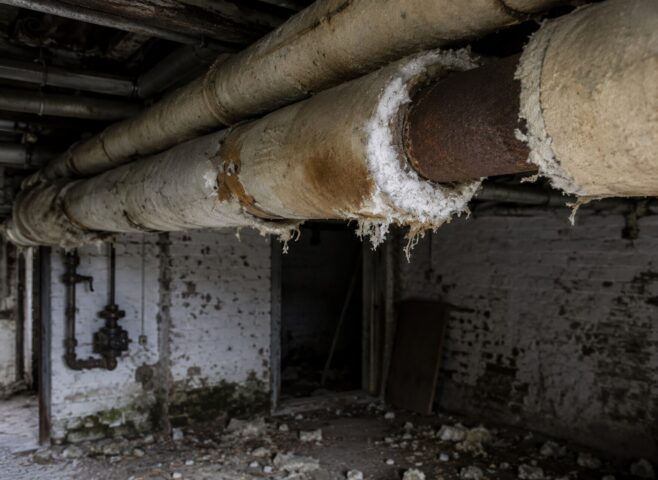
Taking down an old garden shed or workshop can look like a straightforward weekend job, particularly when the building is already damp, leaning or no longer useful. In older Exeter properties, however, apparently ordinary materials may contain asbestos. Cement sheets, soffits, panels, insulation products and textured finishes can all be difficult to identify by sight alone. Breaking them during dismantling can release fibres and turn a small clearance job into a serious safety and disposal issue.
The safest approach is to make asbestos testing part of the planning stage, before anyone starts removing panels, drilling fixings or sweeping debris. A survey or targeted assessment gives you a clearer answer about what is present, where it is located and whether the proposed work needs a specialist removal plan. It also helps prevent an avoidable pause halfway through the project.
Why older sheds and workshops deserve careful attention
Garden buildings were often altered over many years. A timber shed may have gained a cement-fibre roof, a workshop may have been lined with boards, or a lean-to may include old guttering, flues or electrical backboards. Some materials are obviously weathered, while others are painted, dusty or hidden behind newer coverings. Age and appearance are useful clues, but neither proves that a product is asbestos-free.
Roof sheets are a common concern because they can become brittle around screw holes and edges. Wall panels and soffits may also crack when a structure is dismantled in the wrong order. Even when the asbestos-containing material is bonded within cement, cutting, snapping or grinding it can create dust. The risk is not limited to the person doing the work: fibres can be carried on clothing, tools and footwear into the house or across neighbouring areas.
Previous repairs can make the picture more complicated. A shed may contain newer replacement panels beside original materials, or old fragments may have been buried beneath soil and vegetation. Testing helps distinguish a manageable, defined item from a wider contamination problem and supports sensible decisions about access, protection and waste handling.
What asbestos testing can establish before dismantling
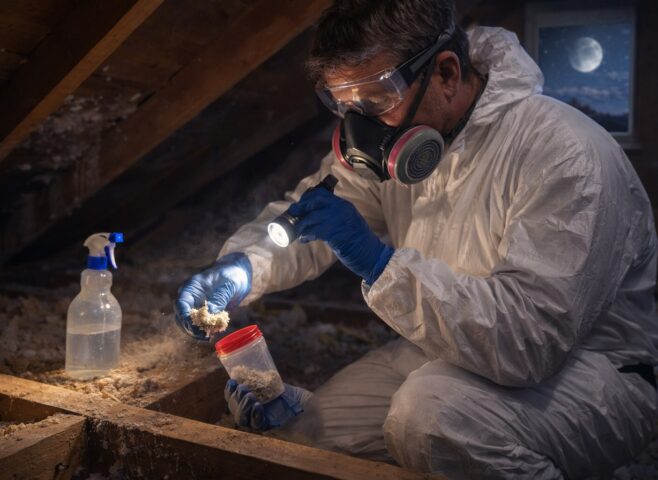
A competent asbestos professional will consider the age and construction of the building, inspect accessible materials and identify representative samples where appropriate. Laboratory analysis can confirm whether a suspected product contains asbestos and, where relevant, identify the material type. The result is more useful than a guess because it can be tied to specific locations such as the roof, external cladding, internal lining or an old flue.
Testing does not automatically mean the whole shed must be removed by the same method. The condition of the material, its position, the proposed work and the likelihood of disturbance all matter. A sound sheet that can be removed intact may require a different control plan from a cracked panel that has already shed fragments. The assessment should also consider how the structure will be taken apart without passing through or dropping materials unnecessarily.
For homeowners, landlords and contractors, written findings provide a clear record for the next decision. If asbestos is not identified in the sampled materials, that is still valuable information, provided the scope and limitations of the inspection are understood. If asbestos is confirmed, the result gives a removal contractor something practical to work from rather than leaving them to make assumptions on site.
How to plan the work after a positive result
Stop any activity that could disturb the suspect material until the next steps are agreed. Do not sweep dust, pressure-wash surfaces, break sheets into smaller pieces or place fragments in a general skip. Keep children, pets and other trades away from the area, and avoid moving loose debris unless a professional has advised how it should be handled.
The removal plan should set out the work area, sequence, protective measures, equipment, packaging and disposal arrangements. It should also explain what happens if hidden material is discovered once the shed is opened up. That contingency matters because older outbuildings often contain layers that are not visible from outside. A controlled plan reduces the temptation to improvise when the job is already underway.
Waste must go through the correct route. Asbestos waste is not ordinary building rubble, even when it looks like broken cement board. It needs suitable packaging, labelling, transport and disposal at an authorised facility. Keeping paperwork for the work and waste can be particularly important for landlords, property sales and future maintenance.
Make testing the first appointment, not the last
Early asbestos testing can keep an Exeter garden project moving by replacing uncertainty with a defined scope. It may show that a planned removal is relatively contained, or it may reveal that the shed should be dealt with by a specialist team. Either way, the information is most useful before tools arrive and materials start to break.
If you are planning to remove an older outbuilding, arrange professional advice before disturbing the roof, wall panels or internal linings. Westcountry Asbestos Removal can help with asbestos testing and explain what the findings mean for the proposed work. You can also review the wider asbestos removal service and read about testing before removing an older Exeter outbuilding when planning the next step.