Staircase work can look like a straightforward improvement, particularly when worn treads, loose coverings or dated handrails are being replaced. In an older Exeter property, however, the work may disturb materials that were installed decades ago. Adhesive beneath stair coverings, textured coatings on walls, backing boards, landing cupboards and even some older insulation products can contain asbestos. The material may remain harmless when left alone, but cutting, sanding, drilling or pulling it apart can release hazardous fibres.
That is why asbestos testing should be part of the planning process before a staircase is stripped back. A test gives homeowners, landlords and contractors reliable information about what is present, where it is located and what controls are needed. It also helps prevent a rushed decision on the first day of the project, when unexpected materials can cause delays, extra cost and unnecessary exposure.
Where asbestos may be found around a staircase
Staircases have several surfaces and components that may have been altered during previous refurbishments. Older vinyl or thermoplastic tiles on landings can be fixed with asbestos-containing adhesive, sometimes referred to as black adhesive or bitumen adhesive. Stair nosings, underlay, felt and older sheet flooring may also need assessment before removal. A covering that looks modern does not necessarily mean the material beneath it is modern too.
Decorative finishes can create another area of uncertainty. Textured coatings on stairwell walls or ceilings may contain asbestos, as can certain boards used around understairs storage, service risers or fire protection features. Some properties also have older panels fitted beneath stairs or around the landing to improve fire resistance or sound insulation. These materials cannot be identified safely by colour or appearance alone, and a visual inspection is not a substitute for sampling.
Even small jobs can disturb a surprisingly wide area. Replacing a handrail may involve drilling into a wall; removing a cupboard can damage panels; and lifting a floor covering can pull up adhesive across the landing. The correct testing plan therefore considers the whole work area rather than focusing only on the part that looks worn.
Why a sample should be taken before work starts
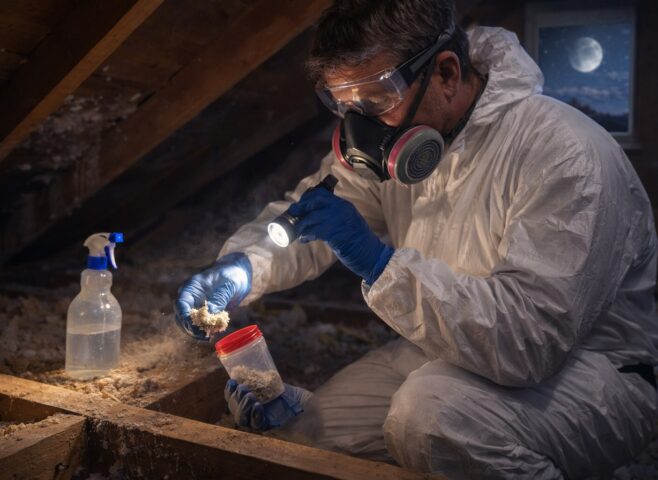
Professional asbestos testing involves selecting representative samples from suspect materials and sending them to a suitable laboratory for analysis. The aim is not to take unnecessary samples, but to make sure that materials likely to be disturbed by the proposed work are properly characterised. If several layers are present, the surveyor needs to consider the surface finish, adhesive, backing and substrate rather than testing only the top layer.
Sampling should be planned around the method of work. A contractor replacing a carpet may need different information from a joiner removing a staircase enclosure or a builder opening the underside of a flight. Sharing the planned scope with the asbestos professional helps them identify hidden or adjacent materials that could otherwise be overlooked.
Until results are available, suspect materials should be treated as though they could contain asbestos. Do not sand textured coatings, scrape adhesive, break boards or use power tools to investigate a layer. Avoid sweeping or vacuuming debris from exploratory work with ordinary household equipment, as this can spread contamination rather than resolving the risk.
What happens if asbestos is identified
A positive result does not always mean the staircase project must stop permanently. The next step depends on the material’s condition, location and the amount of disturbance involved. Some materials may be left in place and protected, while others may need controlled removal before the refurbishment continues. A competent asbestos professional can explain the options and set out the precautions needed for the particular job.
Where removal is necessary, the work should be planned around containment, controlled access, suitable protective equipment, careful waste handling and thorough cleaning. Household members, tenants and other trades should not enter the work area until it has been made safe. Trying to save time by removing suspect materials yourself can create a larger problem, especially in a narrow stairwell where dust can travel between floors.
Clear test results also help contractors price work accurately. They can allow the correct sequence to be scheduled, prevent trades from arriving before an area is ready and reduce the chance that a project will be paused after materials are exposed. Good information at the start is usually less disruptive than discovering a potential asbestos problem halfway through the job.
Planning staircase work safely in an older Exeter property
Before arranging a staircase replacement or refurbishment, list every material that may be disturbed: floor coverings, adhesives, wall and ceiling finishes, boards, cupboards, insulation and fixings. Include the landing and nearby rooms, not just the steps themselves. Give the tester and contractor details of the intended work, including whether the project involves drilling, lifting, cutting or opening enclosed spaces.
For broader advice about arranging professional work, see our asbestos removal service in Exeter. If the project involves an older commercial or shared building, our commercial asbestos survey guidance may also be relevant. Homeowners can also read about asbestos testing in Exeter before deciding how to proceed.
Testing is a practical first step, not an unnecessary complication. It gives everyone involved a clearer understanding of the building and allows staircase work to be planned with the right controls from the outset. If you are unsure about a material, pause the work and arrange professional advice before disturbing it.