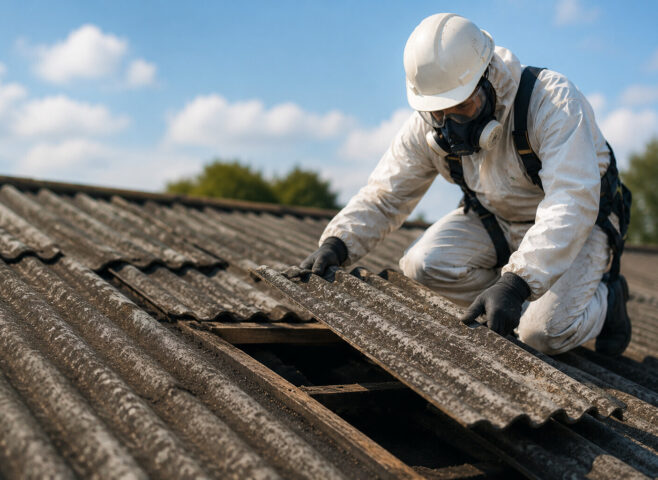
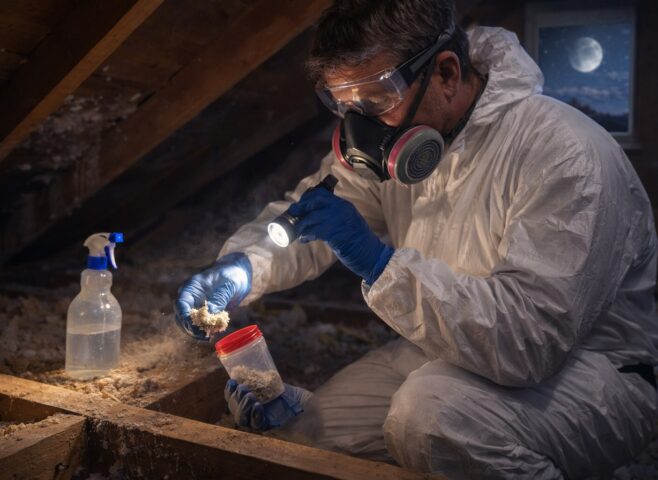
Older garages around Exeter can contain asbestos materials in places that look ordinary, including eaves soffits, fascia strips and boxed-in roof edges. These components may have been installed to protect timber, hide roof construction or create a neat external finish. When they begin to crack, sag or obstruct planned repairs, removing them safely becomes an important part of the work rather than a simple DIY maintenance job.
Why garage eaves need careful removal
Garage eaves are exposed to changing weather, condensation and occasional impact from ladders, tools or stored items. Age can leave panels brittle, while repeated painting may conceal surface damage. Cutting, drilling, snapping or sanding the material can release hazardous fibres into the surrounding area. Dust can settle on roof timbers, paving, vehicles and garden equipment, making a small-looking task much harder to control.
A removal plan should consider the full length of the eaves, adjoining fascias, roof edges, gutters and any internal lining behind the visible panel. It should also allow for safe access, controlled handling and suitable packaging. A narrow strip is not automatically a low-risk job: the position above head height and the need to work around fixings can increase the chance of breakage.
Preparing the garage and surrounding area
Before work begins, the garage should be cleared of movable belongings and the immediate outside area kept free from people, pets and unnecessary traffic. Vehicles, garden furniture and equipment should be moved away where practical. Doors, windows and vents may need to remain closed during the removal, while neighbours should be given reasonable notice if access or temporary barriers affect a shared drive.
Professional contractors plan the sequence from access to final clean-down. They use appropriate protective clothing, respiratory protection and controlled methods suited to the material and its condition. The objective is to keep disturbance low, prevent debris from spreading and maintain a clear separation between the work area and clean areas of the property.
How controlled removal is approached
The work normally starts with a visual review of the eaves assembly and its fixings. Contractors identify where panels meet, how the roof edge is supported and whether gutters or trims must be removed first. They then establish a controlled work zone and use methods designed to avoid unnecessary breaking. Hand tools and careful sequencing are preferred where they reduce vibration and prevent fragments falling onto hard surfaces.
Removed pieces are kept intact wherever possible, lowered carefully and placed directly into compliant, labelled waste packaging. Debris is not swept into ordinary bins or left beside the garage. The work area, access equipment and nearby surfaces receive a thorough clean using suitable controlled techniques before barriers are removed.
Planning around roof and garage improvements
Many Exeter homeowners arrange eaves removal alongside roof repairs, gutter replacement, re-roofing or conversion work. Coordinating the jobs can reduce repeated access and avoid disturbing a newly finished roof edge. It is sensible to share the wider project plan with the removal contractor so the work can be sequenced safely and the replacement detail agreed in advance.
If the garage is being altered as part of a larger project, related guidance on older roof-edge removal planning may help identify access and protection issues. Advice about coordinating work around an older garden-room roof can also be useful where several small outbuildings are being improved together.
Choosing a suitable removal contractor
Ask for clear details of the proposed method, protective measures, waste arrangements and completion paperwork. A responsible contractor should explain what areas are included, how access will be controlled and what happens if concealed material is found behind the visible soffit. They should also be able to provide evidence of appropriate training, insurance and lawful waste arrangements.
For homeowners comparing options, the article on preparing an older garage for related removal work offers a useful reminder that doors, frames and adjoining surfaces may need to be protected during access and clean-down.
Leaving the garage ready for its next stage
Once the eaves material has been removed and the area cleaned, the garage can move on to its next planned stage with fewer hidden risks. Replacement soffits, fascias and gutter details should be installed only after the removal area has been released for follow-on work. Careful planning protects the household, the tradespeople who come next and the wider Exeter property from avoidable contamination.