Older conservatories can contain asbestos in more places than many homeowners expect. While roof sheets and insulation boards are often the first materials people think about, window surrounds, backing panels, cement trims, sealant lines and older composite frames may also need careful consideration. If you are planning to replace a window frame in an Exeter conservatory, asbestos testing should be arranged before any cutting, drilling or removal begins.
Why a conservatory window frame needs checking
Conservatories have commonly been altered over several decades. A frame may have been replaced, enclosed or repaired without the surrounding materials being renewed, leaving a mixture of original and newer products around the opening. Asbestos-containing boards were used in construction because they were durable, resistant to heat and relatively easy to shape. That means a window replacement can disturb a hidden lining, packer, sill, backing board or adjacent panel even when the visible frame itself looks modern.
The risk is not limited to large, obvious sheets. A small amount of asbestos-containing material can release fibres if it is broken, abraded or cut with power tools. Dust may settle on the conservatory floor, furniture, garden items and adjoining rooms, then be carried elsewhere on clothing or equipment. Treating an uncertain material as ordinary timber, plasterboard or cement can therefore create an avoidable contamination problem and cause delays to the planned work.
A professional asbestos testing service can identify which materials need sampling and help establish a safe sequence before the installer arrives.
What testing can establish before work starts
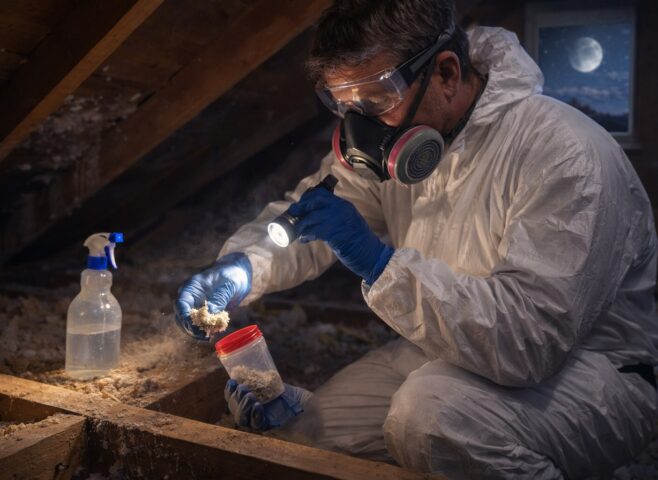
Testing is designed to answer a practical question: can the window frame be removed using the planned method, or do asbestos controls need to be introduced first? A competent surveyor will consider the age and construction of the conservatory, inspect accessible materials around the frame and take representative samples where appropriate. Samples are sent for laboratory analysis, providing a clear result rather than relying on colour, texture or appearance.
The assessment should look beyond the face of the frame. It may include the internal and external cill, surrounding boards, soffit or roof junction, mastic and adhesive residues, panel sections, insulation and any boxed-in services. If the frame is being enlarged or the opening altered, the survey scope should also cover the materials that will be cut back. This is particularly important when a conservatory has been converted into a year-round living space or connected to the main house.
Where the result is negative for the materials tested, the report still has value because it records what was checked and what assumptions were made. If asbestos is identified or the material cannot be safely accessed, the findings can be used to plan controlled removal or an alternative method that avoids disturbing it.
How the result affects the replacement plan
An asbestos finding does not automatically mean that the entire conservatory must be dismantled. The correct response depends on the material, its condition, its location and the work required. Some materials may be left in place and protected if they are sound and will not be disturbed. Others may need to be removed before the window contractor can proceed. In either case, the decision should be based on the testing information and a method statement, not on an improvised approach once the frame is already being taken out.
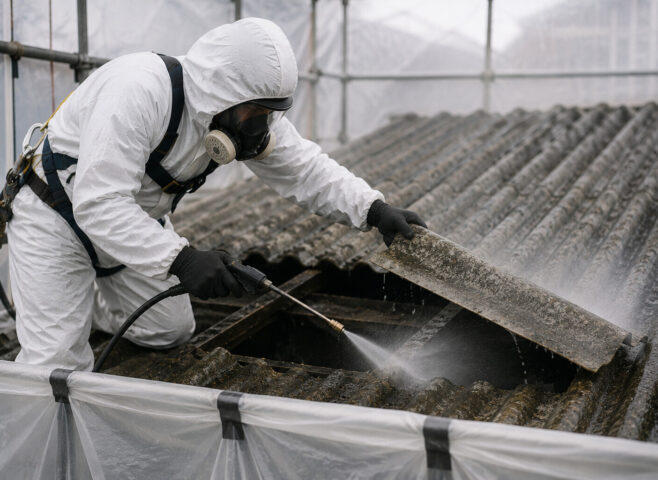
If licensed asbestos removal is required, the removal contractor can plan enclosure, controlled access, suitable personal protective equipment, waste packaging and decontamination arrangements. Non-licensed work may still require strict controls, suitable training and careful waste handling. The important point is that the responsibilities are understood before the project starts, so the window installer is not placed in a position where they may unknowingly disturb hazardous material.
It is also wise to tell every contractor involved about the survey result. A replacement window company, electrician, builder and decorator may each work near the same opening at different stages. Keeping the report available prevents information being lost between the survey, removal and reinstatement work.
Making the project safer and easier to manage
Arrange testing while the replacement is still being priced, rather than after the old frame has been stripped out. Early information allows quotations to include any necessary removal, specialist waste disposal, making-good and temporary weather protection. It also reduces the chance of a last-minute cancellation when an installer discovers an unfamiliar board or adhesive.
Before work begins, keep the area clear, identify adjoining rooms that may need to remain closed and agree who will control access. Do not sweep suspected debris or use a household vacuum. If a material is accidentally damaged, stop work, keep people away from the area and seek professional advice. A careful survey followed by a written plan is usually far less disruptive than dealing with an uncontrolled release after the project has started.
For wider renovation work, an asbestos survey in Exeter can provide a broader picture of the property before several trades begin. If asbestos is confirmed and needs to be removed, an experienced asbestos removal team can explain the appropriate controls and next steps.
Arrange asbestos testing before removing the frame
An older conservatory window frame should never be judged safe solely by its appearance. Testing helps distinguish ordinary building materials from products that require specialist controls, while giving homeowners and contractors a documented basis for the work plan. By arranging the assessment before dismantling starts, you can protect occupants, reduce delays and make sure any asbestos-related work is handled by people with the right competence and equipment.