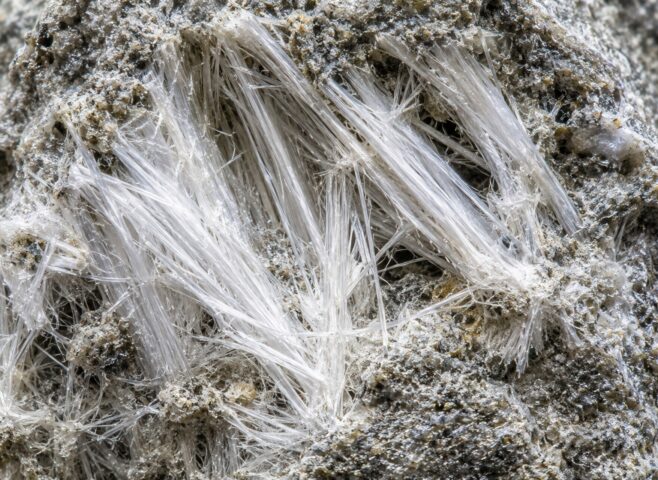
Replacing an old porch door can look like a straightforward improvement, but work on older Exeter properties sometimes disturbs materials that contain asbestos. Fibres may be present in cement panels, textured finishes, soffits, packers, threshold materials, or boards fitted around the original entrance. These products can remain undisturbed for decades, yet cutting, drilling, sanding or levering them during a door replacement can release hazardous dust.
Asbestos cannot be identified reliably by colour, texture or appearance alone. The safest approach is to treat suspect materials cautiously and arrange professional asbestos testing before the installer starts work. A small, carefully collected sample can provide useful information about the material and help determine whether it can stay in place, needs controlled removal, or should be managed through a different work plan.
Why a porch door replacement can disturb asbestos
A door opening is made up of more than the door leaf and frame. Older porches may contain cement-based cladding, asbestos insulating board behind linings, panels beneath a canopy, or decorative coatings that have been painted repeatedly. A replacement project may involve removing architraves, widening an opening, taking out a sill, fixing a new frame, or routing cables for lighting and security equipment. Each activity can affect a different hidden layer.
The risk is higher when the original construction date and later alterations are unclear. A property may have had a porch added in one period, enclosed in another and repaired with reclaimed or leftover materials. Even where the visible door surround looks modern, the backing board or adjacent ceiling may be older. This is why a visual check by a builder is not the same as an asbestos survey or laboratory analysis.
What asbestos testing should establish
Testing should focus on the materials that the planned work could disturb. Depending on the porch design, this might include panels around the frame, soffit boards, textured coatings, floor tiles, adhesive, cement sheets and internal lining boards. A competent asbestos professional will consider the work sequence, identify representative suspect materials and take samples using controlled methods designed to minimise disturbance.
The sample is then examined by an appropriately equipped laboratory. The report should identify whether asbestos is present and, where relevant, the type of asbestos found. That information is valuable because it replaces guesswork with a documented result. If the result is negative, the contractor can proceed with greater confidence while still following ordinary dust-control practices. If asbestos is confirmed, the result helps define the next safe step instead of leaving the installer to make assumptions on site.
How the result changes the work plan
A positive result does not automatically mean that the entire porch must be removed. The material may be capable of remaining in place if the design can be adapted and the work can avoid disturbing it. For example, a frame may sometimes be replaced with a method that does not cut through a suspect panel, or a damaged section may be isolated and managed as part of a controlled removal project. The correct decision depends on the material’s condition, location and the precise work required.
Where removal is necessary, the sequence should be agreed before the door installer begins. The area may need to be segregated, access limited and suitable control measures put in place. Waste must be packaged, labelled and transported through the correct disposal route. Planning this in advance avoids the common problem of a joiner discovering an unexpected board halfway through the job and stopping work without knowing who can make the area safe.
Questions to ask before arranging the replacement
Ask the contractor exactly which materials they expect to remove, drill, cut or retain. A clear method statement or work description makes it easier to decide whether targeted testing is suitable or whether a broader survey is needed. It is also useful to share photographs, previous refurbishment details and any information about the age of the porch, while remembering that photographs cannot replace sampling where asbestos is suspected.
If the project also includes roofline work, read our guidance on testing before replacing an older Exeter porch roof gutter, as adjoining materials may need consideration. For larger changes around an entrance, our article on testing before replacing an older Exeter porch lintel explains why structural work should be planned around confirmed material information. Where the porch connects to a wider boundary alteration, our boundary wall testing guidance provides another useful example of how asbestos decisions fit into a staged project.
Keep the porch undisturbed until you have an answer
Do not sand, scrape, break or drill a suspect porch material simply to see what is behind it. Keep children, visitors and unplanned trades away from the area, and tell anyone involved in the project that testing is being arranged. If material has already been damaged, stop work, avoid sweeping or using a domestic vacuum, and seek professional advice about the next steps.
Arranging asbestos testing before an older Exeter porch door replacement is a practical part of project preparation. It gives the property owner and contractor better information, reduces the chance of an uncontrolled disturbance and helps the work proceed with an appropriate plan. When asbestos is present, professional assessment and controlled handling protect the people carrying out the improvement as well as everyone who uses the property afterwards.