Managing asbestos in a rental property is an ongoing responsibility rather than a one-off task. Landlords and property managers need reliable information about suspect materials, clear records for contractors and a sensible process for responding when damage or maintenance work changes the risk.
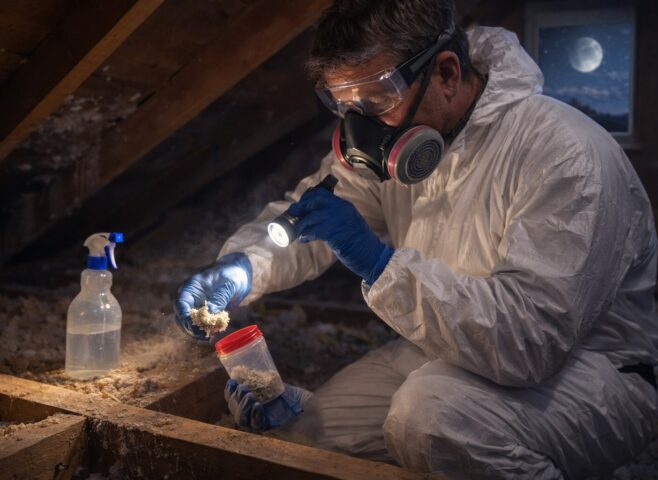
In older Exeter properties, asbestos testing can remove uncertainty before repairs, refurbishment or tenant changeovers. The result helps everyone understand which materials can remain safely managed and which require professional attention.
Know where suspect materials may be found
Asbestos was used in a wide range of building products, including insulation board, textured coatings, floor tiles, pipe insulation, cement sheets, roofing products and service cupboards. Some materials are visible, while others remain hidden behind panels or finishes until maintenance begins.
A property assessment should reflect how the building is used and which areas contractors are likely to disturb. Communal spaces, plant rooms, garages and external stores deserve the same attention as occupied rooms.
Use testing to replace assumptions
Age and appearance can suggest that a material may contain asbestos, but they cannot provide confirmation. Controlled sampling and laboratory analysis give the landlord evidence on which to base maintenance and refurbishment decisions.
Where access needs to work around occupants, flexible evening and weekend asbestos testing in Exeter and across Devon can help reduce disruption while still obtaining dependable results.
Create records contractors can actually use
An asbestos report is only effective when the right people can find and understand it. Keep a clear record of the material’s location, condition and assessment date, together with photographs or plans where useful.
Before instructing maintenance, provide the relevant information to the contractor and confirm that the proposed work will not disturb a recorded material. This is particularly important when several letting agents, facilities teams or tradespeople share responsibility for the same property.
Respond promptly to damage
A leak, impact or unplanned repair can change the condition of a previously stable material. If a suspect product is damaged, stop work, restrict access and avoid ordinary sweeping or vacuum cleaning.
Arrange competent advice so the area can be assessed. The response should be proportionate to the material and the extent of the damage, but delaying action can allow further disturbance or accidental access.
Decide between management and removal
Sound material that is unlikely to be disturbed may sometimes remain in place under a management plan. This could include labelling, access controls and periodic condition checks.
Removal is more likely when material is deteriorating, regularly exposed to maintenance activity or directly affected by planned refurbishment. Our guide to licensed and non-licensed asbestos removal explains why the product and work method determine the controls required.
Coordinate work with tenants
Tenants need practical information without unnecessary alarm. Explain which area will be affected, any temporary access restriction and when specialist work is expected to finish. Avoid giving technical assurances that are not supported by the survey, test result or contractor.
Where removal is needed, schedule it so the work zone can be properly isolated. Other maintenance should not continue inside the controlled area, and reoccupation should follow the appropriate cleaning and clearance process.
Do not ask general trades to improvise
A contractor who is not prepared for asbestos work should not be encouraged to “take a small piece out” or finish a task quickly. Improvised handling can spread dust to tools, clothing, vehicles and occupied areas.
Landlords considering informal removal should first read why you should never remove asbestos yourself. Specialist planning can prevent a limited problem from becoming a wider clean-up.
Retain evidence after the work
Keep sampling results, surveys, plans of work, waste consignment records and any clearance certificates with the property file. Update the asbestos record to show what was removed and what remains.
These documents support future maintenance, demonstrate a considered response and reduce the risk of the same material being rediscovered without context by another contractor.
Review the plan when circumstances change
An asbestos management record should be revisited when materials deteriorate, tenants report damage or new refurbishment is planned. A document that never reflects changes in the property cannot guide safe decisions.
For rental properties in Exeter, the most reliable approach combines professional testing, accessible records and clear communication. That turns asbestos management into a practical part of property maintenance rather than an unexpected crisis.