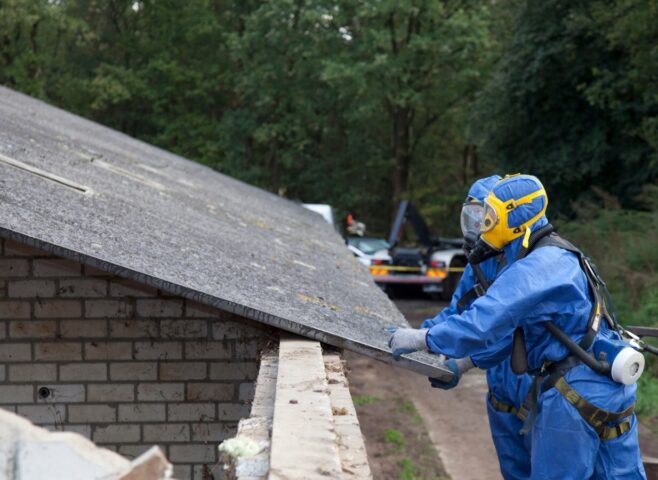
Replacing an older roof can involve more than choosing new tiles or arranging a contractor. Properties built or refurbished before the asbestos ban may contain asbestos cement roofing sheets, soffits, fascias, insulation boards or other asbestos-containing materials. Testing before work starts helps identify the risk while the materials are still undisturbed.
Why roof replacement can disturb asbestos
Roofing work often involves drilling, cutting, lifting sheets and removing fixings. Those activities can release fibres if asbestos-containing materials are damaged or handled incorrectly. A roof may look like ordinary cement board, but appearance alone cannot confirm what it contains.
An asbestos survey or targeted asbestos test can establish whether suspect materials need specialist controls. This is particularly important where a roof replacement includes an extension, garage, porch, outbuilding or older flat-roof section.
What should be tested?
A competent asbestos professional can assess the planned work area and identify materials that may be affected. Depending on the property, this may include corrugated roof sheets, cement panels, guttering, soffit boards, fascias, flue surrounds, roof-lining boards and insulation around services.
Sampling should be planned carefully so that the inspection itself does not create unnecessary disturbance. The laboratory result can then inform the scope, method and timing of the roofing project.
How the result affects the work plan
If asbestos is not identified, the roofing contractor can proceed with the usual controls for the building work. If asbestos is present, the material may be left in place where appropriate, or removed by a suitably trained and equipped contractor before the main replacement begins.
The result may also affect waste arrangements, access, exclusion zones and the sequence of trades. Planning these details early is usually safer and more predictable than discovering suspect material after work has started. For wider renovation projects, our guide to asbestos testing before opening up walls explains why intrusive work should be assessed in advance.
Do not rely on age or appearance
Some homeowners assume that a newer-looking roof is automatically safe, while others assume every older sheet contains asbestos. Neither assumption is reliable. The construction date, previous alterations and exact material all matter, which is why testing is the sensible route when the work could disturb a suspect product.
Water damage can make the decision more urgent, but the same principle applies: avoid breaking, sweeping or cutting suspect materials until they have been assessed. Our advice on asbestos testing after water damage covers the precautions to consider when a roof or ceiling has been affected.
Arrange testing before booking removal
Share the planned scope with the asbestos professional, including photographs, drawings and the areas the roofer expects to remove. This helps the assessment focus on the materials that could be disturbed and gives you clearer information for comparing quotations.
Where asbestos roofing is confirmed, removal should be planned around the condition of the material and the work required. Our guide to testing before repairing an older flat roof shows how even repair work can benefit from early asbestos advice.
A safer start for an Exeter roof project
Testing before roof replacement gives homeowners and contractors a clearer brief, reduces the chance of unexpected disruption and supports safer decisions about removal and disposal. If you are planning work on an older Exeter property, arrange an asbestos assessment before materials are disturbed.