Garden walls can look like straightforward masonry jobs, but older properties in Exeter may contain asbestos in cement panels, garage-related materials, flue components or bonded sheets built into an outbuilding boundary. If the work involves cutting, drilling, breaking or removing older materials, asbestos testing should come before demolition.
Why a garden wall can raise an asbestos question
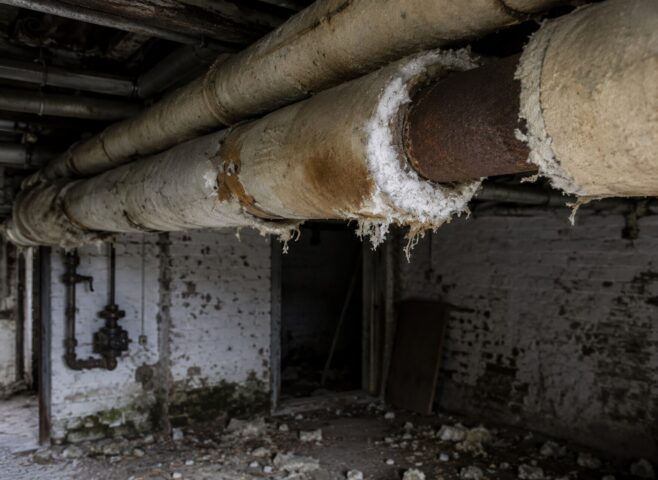
Asbestos was used widely because it was durable and resistant to heat and weather. A wall itself may not contain asbestos, but nearby structures, attached sheds, old garages and replacement panels can introduce a hidden risk. Materials may be painted, weathered or partly buried, making visual identification unreliable.
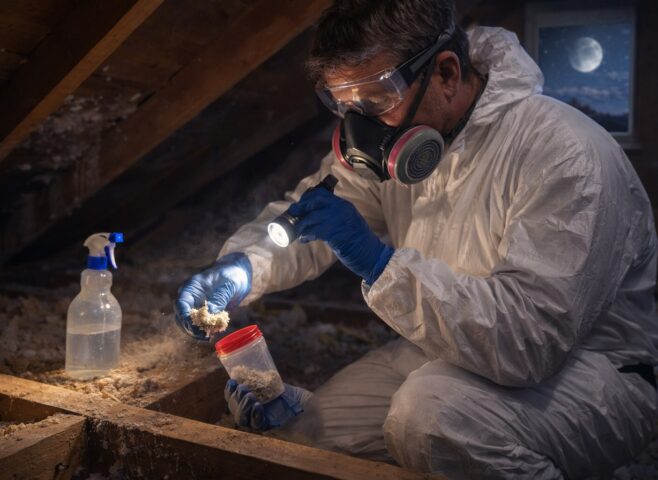
Before disturbing anything, arrange a survey or targeted sample through a competent asbestos professional. Sampling is especially sensible when the wall is connected to an older garage, has corrugated cement sections, or includes panels that do not match the surrounding brickwork.
What testing should cover
The testing scope should reflect the planned work rather than stopping at the most obvious surface. A professional will consider the wall, attached structures, soffits, roof edges, flues, debris and any material that could be damaged while access is created. This is important because asbestos can be present in more than one product in the same work area.
If testing identifies asbestos-containing material, the result should be recorded clearly and used to plan the next stage. It may be possible to leave sound bonded material in place, but any removal must be planned around its condition, location and the method needed to keep fibres from becoming airborne.
How the result changes the removal plan
A negative result can help a contractor proceed with greater confidence, but it does not make unsafe demolition methods acceptable. Dust suppression, suitable tools and sensible exclusion zones still matter when breaking old masonry or cement products.
A positive result may mean arranging controlled asbestos removal before the garden work starts. Read our guide to asbestos testing before removing an old conservatory for a similar example of how adjacent building work can affect the safe sequence.
Keep the work area controlled
Do not sweep, pressure-wash or use power tools on suspect materials while waiting for advice. Keep children, pets and other workers away from the area, and avoid moving broken fragments. If weather or accidental damage has already affected the wall, explain what has happened when booking the assessment.
For wider renovation planning, our advice on testing before replacing an older Exeter roof shows why linked work areas should be considered together. If damp, flooding or previous disturbance has affected the property, our article on asbestos testing after water damage may also be useful.
Plan asbestos removal before the contractor arrives
The safest approach is to identify the materials first, share the results with everyone involved and make sure the removal method matches the findings. Good preparation reduces delays, prevents avoidable exposure and gives Exeter homeowners a clearer idea of what the garden project involves.
If you are unsure whether an older wall, shed or attached structure should be tested, arrange professional advice before any disturbance begins.