Replacing a damaged fascia board can look like a straightforward exterior repair, but older Exeter properties may contain asbestos materials in unexpected places. Cement-based fascia boards, soffits, backing panels and adjacent roof components were manufactured with asbestos for decades because the fibres improved strength, weather resistance and durability. The material is usually low risk when intact, yet cutting, drilling, breaking or sanding it can release hazardous dust.
That is why asbestos testing should be part of the plan before a contractor removes an older fascia. A short inspection and carefully managed sample can clarify what is present, prevent an unsafe assumption, and help the replacement work proceed in a controlled way. It also gives homeowners, landlords and contractors a clearer idea of the time, equipment and waste arrangements that may be needed.
Why fascia boards can raise an asbestos question
Many homes built or refurbished before the year 2000 have a mixture of original and replacement materials. A fascia may be a modern uPVC board in one section and an older cement sheet in another. The visible face can also hide a soffit, packing piece or lining that has a different composition. Paint, weathering and layers of dirt make visual identification even more difficult, especially when the board is viewed from ground level.
Asbestos-containing cement is often hard and relatively stable while it remains undisturbed. The risk changes when a repair involves power tools, forceful removal or poorly controlled breakage. Work at height adds another complication: damaged fragments can fall, be carried on footwear or mix with ordinary building waste. If a fascia meets an older roof edge, guttering system or garage extension, the project may also disturb other materials that were installed at the same time.
For a broader example of why apparently limited building work needs a material check, see our guide to asbestos testing before replacing older Exeter fascias and soffits. The principle is simple: identify the material before deciding how to remove it.
What asbestos testing involves before the repair
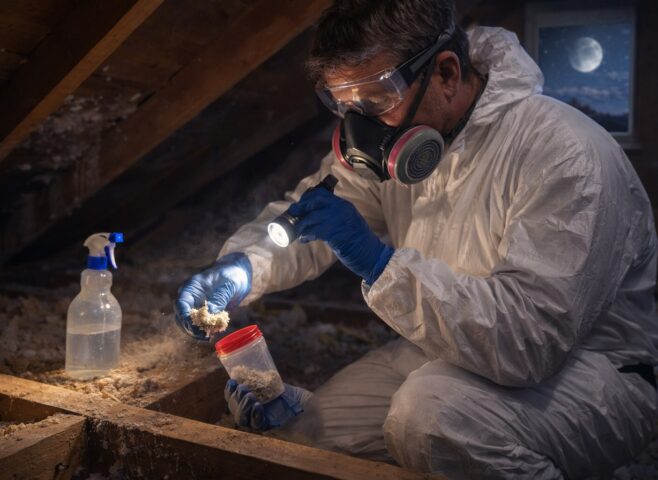
A competent asbestos surveyor begins by discussing the planned work and inspecting the accessible roofline. They consider the age and construction of the building, the condition of the fascia, the materials behind it and any connected areas that could be affected. The objective is not merely to collect a random piece of board. It is to select a representative sample from the material that the contractor is likely to disturb.
Sampling should be planned so the area is controlled and the disturbance is kept as small as possible. The sample is sealed, labelled and sent to a suitable laboratory for analysis. A report normally records the material tested, the result and any limitations of the inspection. If asbestos is identified, the result should be shared with everyone involved before work starts, including the roofing contractor and anyone responsible for arranging waste disposal.
Testing is not a substitute for a full survey where a larger refurbishment is planned. If the fascia replacement is part of a roof alteration, loft conversion or extensive external renovation, other materials may need separate consideration. For context, our article on testing before replacing an older Exeter conservatory roof explains why the work area should be defined before sampling begins.
How the result changes the work plan
A negative result can help a contractor select the normal repair method, while still requiring sensible dust control for other building materials. A positive result does not necessarily mean that the entire project must stop indefinitely. It means the scope, method and people involved must be reviewed. In some cases, an intact board may be left in place and managed. In others, removal is the practical option because the fascia is cracked, loose or directly in the way of the planned repair.
Where removal is required, the work should be assigned to people with the right asbestos training, equipment and procedures for the material and task. The area may need to be isolated, surfaces protected and fragments kept intact as far as reasonably possible. Waste must be packaged, labelled and transferred through the correct disposal route. Ordinary household bins, skips or mixed construction bags are not suitable for asbestos waste.
It is also important to think beyond the board itself. Guttering brackets, roof trims, insulation, old sealants and adjacent soffits may have been fixed through or against the fascia. A contractor who starts removing components before the result is known can unintentionally turn a small replacement into a wider contamination problem. If the repair follows storm damage, pause and arrange advice before sweeping up fragments or pressure-washing the roofline.
A sensible next step for Exeter property owners
If an older fascia is damaged or due to be replaced, avoid drilling a test hole or prising off a section yourself. Keep children, tenants and tradespeople away from loose debris, and provide the surveyor with any information about previous repairs. Photographs taken from a safe distance can help explain the situation, but they cannot confirm whether a material contains asbestos.
Arranging asbestos testing before the repair gives the project a defined starting point. The result can be recorded with the property documents, included in the contractor brief and used to choose an appropriate removal or management strategy. For owners planning several improvements at once, this early step can also prevent a fascia job from delaying other trades unexpectedly.
For related guidance on older exterior elements, read our article about asbestos testing before replacing an older Exeter garage door. If you are unsure about a fascia, soffit or connected roofline material, professional asbestos testing is the safest way to replace guesswork with evidence before work begins.