Kitchen and bathroom refits often involve much more than replacing visible finishes. Contractors may lift flooring, remove wall panels, open service ducts and drill into textured ceilings or old boards. In an older Exeter property, these activities can disturb asbestos-containing materials that were previously hidden and stable.
Testing before the strip-out begins gives the project team reliable information, reduces the chance of an emergency stop and helps the quotation reflect the real scope of work.
Refits uncover concealed building layers
Kitchens and bathrooms are frequently altered over many decades. New finishes may have been installed over older floor tiles, adhesives, insulation boards or textured coatings. Pipework and boxing can also conceal products that are not visible during an ordinary room inspection.
A refurbishment assessment should consider every material likely to be disturbed, not only the surfaces that can be seen. The proposed design and removal method help determine where sampling is needed.
Do not rely on age or appearance alone
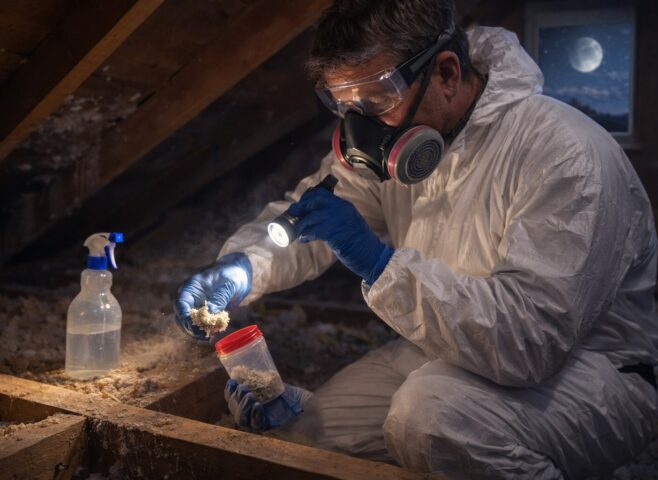
A product may look modern while concealing an older layer beneath it. Conversely, a suspicious-looking panel may contain no asbestos. Controlled sampling and laboratory analysis are the reliable way to establish what is present.
Our guide to asbestos testing and removal in Exeter explains how test results support the next stage of a renovation plan.
Test before contractors start stripping out
The best time to investigate is before trades arrive with drills, saws and demolition tools. Early results allow designers and contractors to adjust the programme, isolate affected areas and arrange specialist work where required.
If testing is left until a material is broken, the project may face delays while access is restricted and the area is assessed. Dust and debris may also spread beyond the original location, increasing the work needed to make the property safe.
Common areas that deserve attention
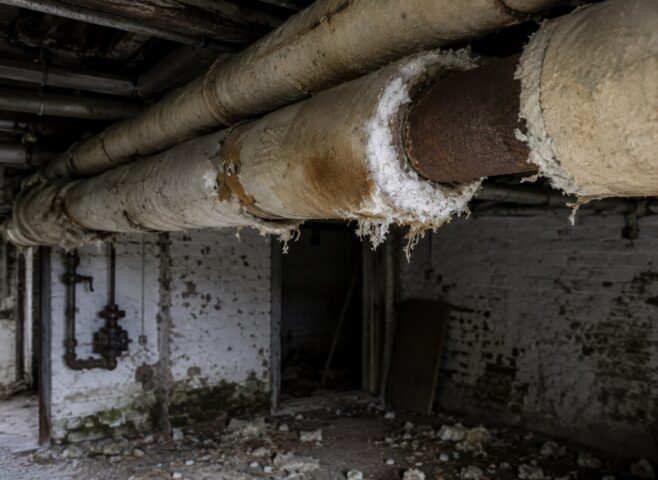
Flooring is a frequent source of uncertainty. Older vinyl tiles, backing materials and adhesives may remain beneath newer coverings. Walls and ceilings may contain insulation board or textured finishes, while airing cupboards and service areas can include pipe insulation or heat-resistant panels.
External bathroom additions, utility rooms and kitchen extensions may also contain asbestos cement roofing or cladding. The assessment should follow the planned work rather than assume the risk is confined to one room.
Use the result to choose the correct response
A positive result does not always require removal of every identified material. Sound products outside the work area may sometimes remain managed in place. Material directly affected by the refit will need a solution that prevents uncontrolled disturbance.
The type and condition of the product determine whether the work requires a licensed asbestos contractor. Learn more about licensed and non-licensed asbestos removal before comparing quotations.
Sequence specialist work before the main refit
If asbestos removal is needed, complete it before general trades enter the affected area. The removal contractor should define the work zone, access route, control measures, decontamination arrangements and waste-handling method.
Once the appropriate cleaning and clearance steps are complete, the kitchen or bathroom contractor can continue without risking accidental disturbance. Clear handover documents help everyone understand what was removed and whether any asbestos remains.
Avoid informal removal during demolition
A builder or homeowner should not improvise when a suspect product appears during strip-out. Ordinary masks, decorating overalls and domestic vacuum cleaners do not provide the controls required for asbestos work.
Before attempting to prise up tiles or break old boards, review why you should never remove asbestos yourself. Stopping early is far safer than trying to clean up after dust has spread.
Keep records for future maintenance
Retain the sampling report, laboratory result, contractor documents, waste records and any clearance certificate. If asbestos remains behind unaffected finishes or elsewhere in the property, record its precise location and condition.
These records will help plumbers, electricians and future owners avoid disturbing the same material during later repairs.
Make testing part of the refit budget
An asbestos test is a practical planning step, not an unnecessary complication. It can prevent delays, protect workers and allow specialist costs to be understood before the room is dismantled.
For kitchen or bathroom work in an older Exeter property, arrange testing before intrusive work begins. A confirmed result gives the whole project a safer, clearer route from strip-out to completion.