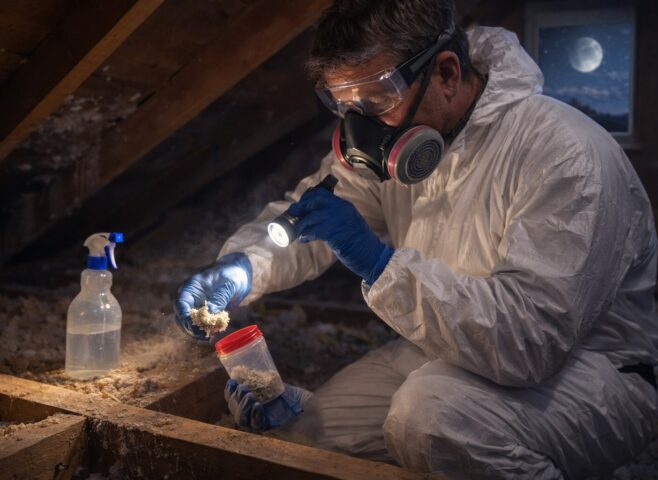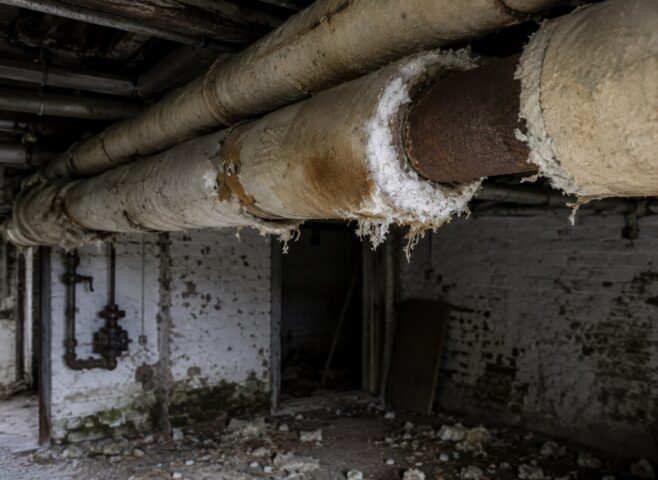
Discovering a suspect material during renovation can bring work to an abrupt stop. That pause is useful: it creates the opportunity to replace guesswork with evidence before anyone drills, cuts or removes a product that may release asbestos fibres.
For homeowners, landlords and contractors in Exeter, the important question is not simply whether asbestos is present. The test result needs to be translated into a safe, practical plan that considers the material’s condition, location and likelihood of disturbance.
Start by protecting the area
If work has exposed or damaged a suspect material, stop the activity and keep people away from the immediate area. Do not sweep, vacuum or attempt to bag fragments with ordinary household equipment, as this can spread fine dust. Record what happened, restrict access and seek competent advice.
Where material has not been disturbed, leave it in place until sampling can be completed. A controlled sample and laboratory analysis can establish whether asbestos is present and provide the information needed to decide what happens next. Our overview of asbestos testing and removal in Exeter explains how the two stages work together.
Understanding a positive asbestos result
A positive result does not automatically mean that every affected product must be removed immediately. The level of risk depends on factors including material type, condition, surface treatment, accessibility and planned building work. A sealed asbestos cement sheet in an undisturbed location presents a different management challenge from damaged insulation board in a busy service area.
The report should therefore lead to a risk-based decision. Sound material that will remain undisturbed may sometimes be managed in place, clearly recorded and checked periodically. Material that is damaged, deteriorating or directly affected by refurbishment is more likely to require encapsulation or removal.
Deciding whether removal is licensed
The asbestos product, its condition and the nature of the work determine the controls required. Some higher-risk work must be undertaken by a licensed asbestos contractor. Other work may fall into a non-licensed category, but this does not make it casual DIY: appropriate training, equipment, procedures and waste controls are still essential.
Before instructing a contractor, understand the difference between licensed and non-licensed asbestos removal. A competent provider should explain which category applies, why it applies and what documentation will be supplied.
Planning the work around the result
Once the test result is known, the wider project programme may need revising. Asbestos work should be completed before trades enter the affected area or begin activities that could disturb the material. The plan should identify the work zone, access arrangements, isolation requirements, decontamination provisions and the route used to remove packaged waste.
Everyone involved in the project should receive consistent information. The survey or sampling report needs to be available to designers, site managers and contractors, with any remaining asbestos clearly marked on the building record. This reduces the chance of a later trade unknowingly disturbing it.
Why DIY removal creates unnecessary risk
Asbestos hazards are not always visible. Improvised removal can contaminate clothing, tools, vehicles and rooms beyond the original work area. Ordinary dust masks and domestic vacuum cleaners do not provide the controls used during professional asbestos work.
If cost or timing pressures make DIY removal seem tempting, review the reasons you should never remove asbestos yourself. A poorly controlled attempt can turn a limited task into a much larger clean-up.
Completion, clearance and records
After removal, the area must be cleaned and checked in line with the type of work undertaken. Licensed work may require a formal clearance process before the enclosure is dismantled and the area is returned to normal use. Asbestos waste must be correctly wrapped or bagged, labelled and transported to an authorised disposal facility.
Keep the laboratory result, contractor’s plan, waste consignment documentation and any clearance certificate with the property records. If asbestos remains elsewhere in the building, update the management information so future occupants and contractors know exactly where it is located.
A test result is the start of a safer decision
Asbestos testing is valuable because it turns suspicion into a documented fact. The result should then guide a measured response: manage safe material in place where appropriate, or arrange controlled removal when condition or planned work makes that necessary.
For an Exeter property, the safest next step is to keep the suspect area undisturbed, obtain competent advice and ensure the result is shared with everyone whose work could affect the material. A clear plan now can prevent exposure, disruption and avoidable cost later.