Suspected asbestos can turn an ordinary renovation, repair or property purchase into a serious safety question. The right response is not to disturb the material or rely on appearance alone, but to follow a controlled process: identify the risk, arrange professional asbestos testing and use the results to decide whether the material can remain safely managed or needs to be removed.
This practical guide explains how testing and removal fit together, what property owners in Exeter should expect, and why careful planning protects occupants, contractors and the wider environment.
Why asbestos testing comes first
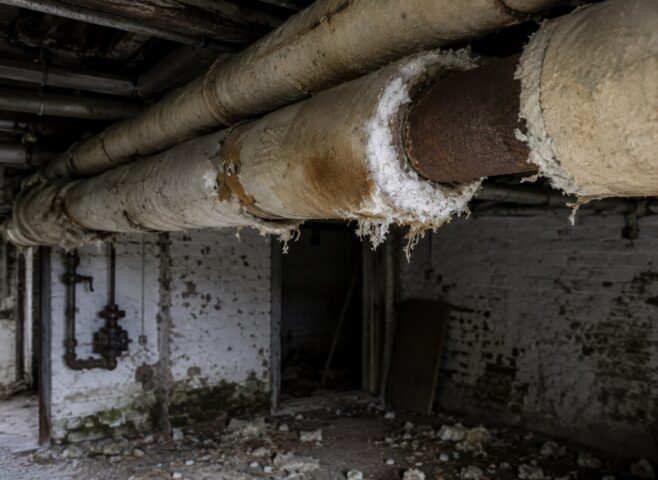
Asbestos was used in many building products, including insulation board, textured coatings, cement sheets, pipe lagging, sprayed coatings and floor tiles. It cannot be confirmed reliably by sight. A material that appears harmless may contain asbestos, while another that looks suspicious may not. Laboratory analysis of a representative sample provides the evidence needed for a proportionate plan.
Testing is especially important before refurbishment, demolition or any work likely to drill, cut, sand or break older materials. If you need appointments outside normal working hours, our guide to evening and weekend asbestos testing in Exeter and across Devon explains the flexible options available.
What happens during an asbestos test?
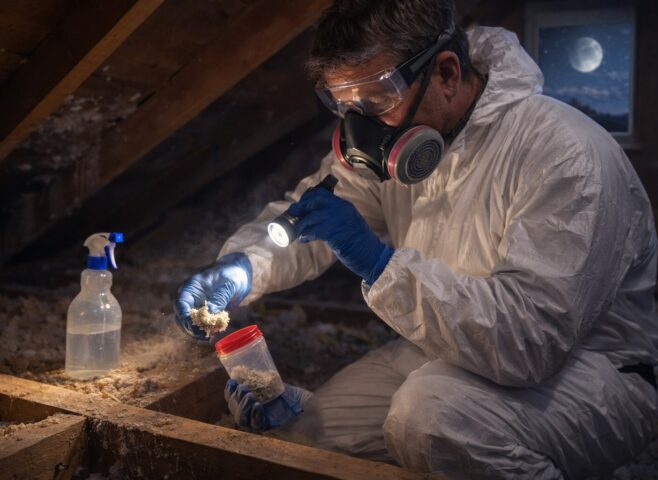
A competent surveyor first considers the building’s age, construction and planned work. Suspect materials are assessed, and small samples are taken using controlled methods designed to minimise fibre release. The sample is securely packaged, labelled and sent to an accredited laboratory for analysis.
The resulting report identifies whether asbestos is present and, where possible, the asbestos type. It also gives the property owner a reliable basis for deciding what happens next. Until results are available, the safest approach is to leave the area undisturbed and prevent unplanned work around the suspect material.
Does every asbestos-containing material need removing?
No. Material that is in sound condition, unlikely to be disturbed and properly recorded may sometimes be managed in place. This can involve labelling, restricting access, monitoring its condition and keeping an up-to-date asbestos management plan.
Removal is more likely to be appropriate when the material is damaged, deteriorating or positioned where future work will disturb it. The type of product and the likelihood of fibre release also matter. Some higher-risk tasks require a licensed contractor, while other lower-risk work may be non-licensed but must still be completed by trained people using suitable controls. Our overview of licensed and non-licensed asbestos removal explains this distinction in more detail.
Planning safe asbestos removal
A professional removal plan begins with the survey or test results. The contractor then defines the work area, selects appropriate control measures, prepares safe access and considers how waste will be packaged and transported. Depending on the material, controls may include an enclosure, negative pressure equipment, specialist respiratory protective equipment, decontamination arrangements and independent air monitoring.
The work should be sequenced so asbestos is dealt with before other trades enter the affected area. Clear communication is essential: everyone involved needs to understand which materials are present, where the exclusion zone begins and when the area can be reoccupied.
Trying to save money by disturbing suspect asbestos yourself can create avoidable exposure and contamination. Before picking up tools, read why you should never remove asbestos yourself.
What happens after removal?
Once the material has been removed, the work area is carefully cleaned and inspected. For licensed work, a formal clearance process may include a detailed visual examination and air testing before the enclosure is dismantled. Waste must be double-bagged or wrapped as appropriate, clearly labelled and taken by authorised carriers to a licensed disposal facility.
Property owners should retain the survey, laboratory results, plan of work, waste consignment documentation and any clearance certificate. These records demonstrate what was found, what was removed and whether any asbestos-containing materials remain elsewhere in the building.
Choosing help in Exeter
Look for a provider that explains the process clearly, separates assumptions from confirmed laboratory findings and recommends action based on risk rather than fear. Ask how samples are analysed, what the quotation includes, who will carry out the work and what documentation you will receive at completion.
Asbestos testing and asbestos removal are two connected stages of one safety process. Testing replaces uncertainty with evidence; careful removal, when required, deals with the risk under controlled conditions. If you are planning building work or have discovered a damaged suspect material in Exeter, stop work, keep the area undisturbed and arrange professional advice before proceeding.