Replacing a garage door can look like a straightforward improvement, but older garages often contain more asbestos-containing materials than homeowners expect. The door itself may not be the concern. Cement panels, soffits, roof sheets, wall linings, textured coatings, insulation and old boards around the opening can all be disturbed during the work. Before drilling, cutting or removing anything, asbestos testing gives you a clearer and safer plan.
In Exeter properties built or refurbished before the year 2000, asbestos may be present in materials installed during different stages of the building’s life. A garage that was added later may have a corrugated cement roof, a panelled ceiling or an older fire-resistant board around the doorway. These materials can appear ordinary and may be hidden behind paint or later repairs. Treating them as harmless simply because they are intact is not a reliable way to assess the risk.
Why a garage door replacement can disturb asbestos
Removing an old garage door usually involves fixing new tracks, brackets, springs or an electric opener to the surrounding structure. Installers may need to drill into lintels, side panels, soffits and internal walls. If a board or panel contains asbestos, even a small number of holes can release fibres into the garage and potentially into the adjoining home. Cutting away an old threshold or breaking out damaged material can create more dust than the visible size of the job suggests.
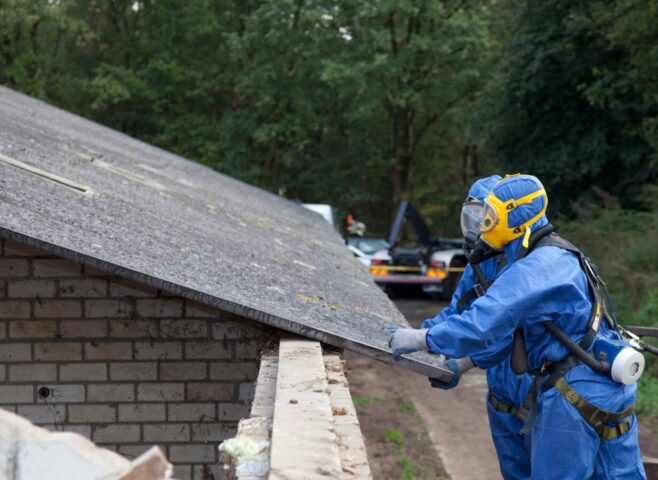
Some garages also contain asbestos cement sheets used as roof panels or wall cladding. These are generally lower risk when sound and left undisturbed, but drilling, sawing, snapping or pressure-washing them can change the situation quickly. A surveyor can identify which materials need sampling and which can remain in place, helping the door contractor work around them rather than discovering a problem halfway through installation.
What asbestos testing can establish
Asbestos testing involves a competent professional assessing the materials that may be affected by the proposed work and, where appropriate, taking carefully controlled samples. The samples are analysed by a suitably accredited laboratory. The result can confirm whether asbestos is present and, if so, identify the material type. This is more dependable than judging by colour, texture or age because asbestos-containing products can look almost identical to non-asbestos alternatives.
The most useful testing is focused on the actual work area. That might include the garage ceiling, panels beside the door, an older rendered board, a fire break, roof sheets or a bitumen-based product around the threshold. You should explain the intended replacement method so the assessment considers every point where fixings, access equipment or removal could affect the building. If the testing finds asbestos, the report can inform a plan for leaving it undisturbed, encapsulating it or arranging controlled removal.
Planning the work after a positive result
A positive result does not always mean the garage door project must stop. It means the sequence and method need to change. Some materials can remain in place if they are in good condition and the installation can be redesigned around them. Other materials may be too damaged, too close to the fixing points or impossible to avoid. In those cases, asbestos removal should be planned before the door contractor begins.
Keep the testing report with the project paperwork and give the relevant information to everyone involved. The door installer needs to know where they can and cannot drill. If removal is required, it should be arranged with a suitably competent asbestos contractor using appropriate controls, waste handling and decontamination procedures. The garage should not be swept, blown out with compressed air or cleaned with a domestic vacuum after suspected asbestos has been disturbed.
Other older-property work that deserves the same care
The same principle applies to many renovation tasks in Exeter homes. If you are replacing internal doors, check whether the surrounding linings, panels or fire-resistant boards could be affected. Work near a bedroom ceiling can also disturb textured coatings or hidden boards. And if the garage connects to an older extension, planning for garage roof materials may be just as important as checking the door opening.
Testing before work starts is especially valuable when several trades are involved. It gives the homeowner one clear record of the materials assessed and reduces the chance that a contractor makes an assumption on site. It can also prevent delays caused by an unexpected discovery, because any necessary removal or revised fixing detail can be organised before the new door arrives.
A sensible first step for Exeter homeowners
If your older garage is due for a new door, avoid drilling or removing suspect materials until they have been assessed. Arrange asbestos testing around the proposed work area, share the findings with your installer and use the result to decide whether the material should stay, be managed or be removed. A short assessment at the planning stage can protect occupants, tradespeople and neighbours while keeping the project moving with fewer surprises.