Replacing a cracked or leaking conservatory rooflight can look like a straightforward home improvement job. In an older Exeter property, however, the work may disturb materials that were installed decades ago, when asbestos was still common in building products. Rooflight surrounds, textured panels, old sealants, cement sheets, insulation boards and associated trims can all require careful consideration before anyone starts cutting, drilling or stripping.
The safest approach is to treat uncertainty as a reason to pause. A visual inspection can suggest that a product is asbestos-containing, but it cannot confirm what is inside it. Professional asbestos testing gives homeowners and contractors a clearer basis for planning the replacement, arranging appropriate controls and deciding whether asbestos removal is needed before the new rooflight can be fitted.
Why an older conservatory rooflight needs careful planning
Conservatories are often altered several times during their lives. A rooflight may have been replaced without the surrounding panels being renewed, or a later repair may have added layers of adhesive, mastic or board around the original opening. This means that a modern-looking roof can still contain older components beneath the visible finish. The age of the conservatory, rather than its current appearance, is an important part of the risk assessment.
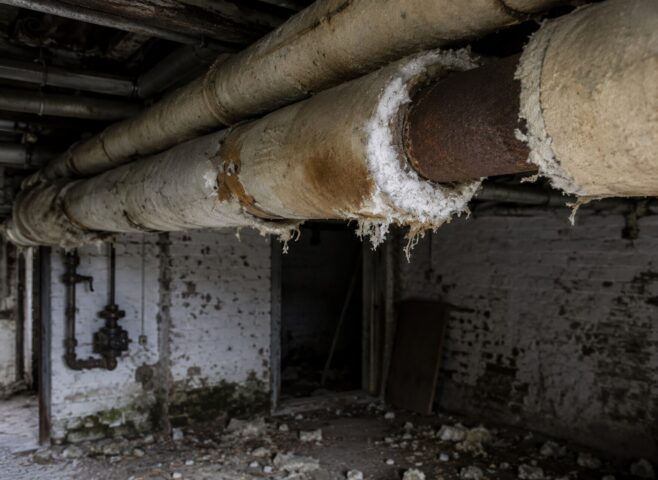
Asbestos cement is one possibility, particularly where older sheet materials, gutters, fascias or roof-edge components are present. More vulnerable asbestos-containing products may also have been used in backing boards, soffits, insulation panels or textured coatings. Damage, weathering and repeated repairs can make these materials harder to identify and more likely to release fibres if they are broken. Even a small rooflight job can therefore involve several different materials and not just the transparent panel itself.
Before arranging work, it is sensible to gather any available building records and ask when the conservatory was constructed or last refurbished. Photographs of the roof junctions can help an asbestos professional plan a visit, but they should not be treated as a substitute for sampling. If the material cannot be confidently identified, it should be managed as potentially hazardous until testing provides a reliable answer.
What professional asbestos testing can establish
A competent surveyor will first discuss the planned work and identify which materials could be disturbed. The inspection should consider the rooflight, its frame, the surrounding roof panels, internal linings, sealants and any areas where access equipment or temporary protection might be fixed. The aim is to understand the scope of the proposed job, not simply to collect a convenient sample from the most visible surface.
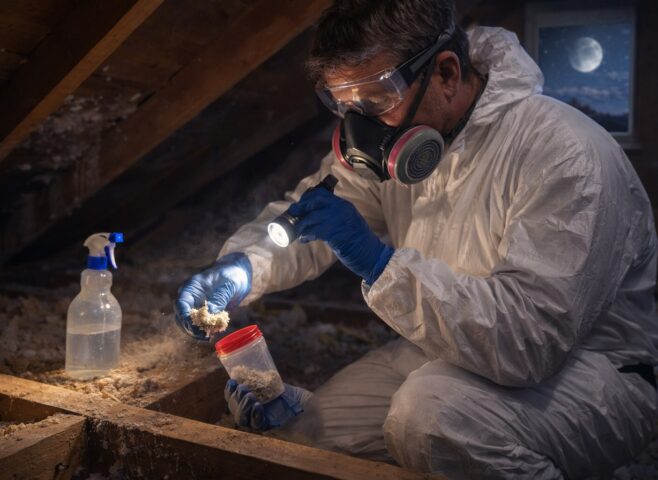
Where sampling is appropriate, a small piece of the suspect material is taken using controlled methods designed to minimise disturbance. The sample is then examined by a specialist laboratory. The report should identify whether asbestos is present and, where possible, describe the material and its condition. That information helps distinguish between a material that can remain safely managed and one that needs removal or specialist controls before the rooflight replacement begins.
Testing is particularly valuable when several layers are involved. A sealant might be negative while an old backing board is positive, or a replacement panel might conceal asbestos cement at the edge of the opening. A narrow result based on one material could give a false sense of security, so the sampling plan should reflect the actual work area. If the proposed replacement will involve drilling through, lifting or cutting adjacent materials, those materials need to be considered too.
How the test result changes the replacement plan
If asbestos is not identified in the materials that will be disturbed, the project can proceed with normal construction planning, while still using sensible dust controls and safe access arrangements. Keeping the laboratory report with the job records is useful because it explains why the work was allowed to proceed and can help future contractors understand what has already been checked.
If asbestos is present, the next decision depends on the product, its condition and the proposed method of replacement. Some sound materials may be left in place and protected from disturbance. Other materials may need to be removed before the rooflight can be accessed. The work may require a specialist asbestos contractor, controlled removal methods, suitable equipment, waste documentation and a clear handover confirming that the area is ready for the next trade.
It is important not to let the rooflight installer make the asbestos decision on the day. A roofing or glazing contractor may be experienced in fitting the new unit but may not be authorised or equipped to assess and remove asbestos-containing materials. Separating the testing, removal and replacement stages makes responsibilities clearer and reduces the temptation to improvise when an unexpected board or sealant is uncovered.
Practical steps for Exeter homeowners
Start by describing the planned work accurately: whether the rooflight will be lifted, enlarged, re-framed or simply resealed. Include the age of the conservatory and any photographs that show internal and external junctions. Do not scrape, sand or break a suspect surface to make it easier to photograph. If something is already damaged, keep people away from the area and avoid sweeping or vacuuming ordinary household dust until suitable advice has been obtained.
It is also worth allowing time in the programme for laboratory results and, if necessary, a separate removal stage. Rushing the testing process can create delays later, especially when a replacement rooflight has already been ordered. A written plan makes it easier to coordinate the homeowner, surveyor, asbestos contractor and installer, while giving everyone a clear point at which the area can be handed over safely.
For broader context, homeowners considering related work may also benefit from reading our guide to testing before replacing an older conservatory roof, the advice on conservatory floor replacement, and the checklist for replacing an older conservatory door. Each project can expose different materials, so an earlier test should not automatically be assumed to cover a new area.
Make asbestos testing the first step
A conservatory rooflight replacement is easier to manage when the materials around it are understood before work begins. Professional asbestos testing can prevent avoidable exposure, clarify who should carry out each stage and help the replacement contractor work from reliable information. If you are planning improvements to an older Exeter conservatory and cannot confirm the history of the roof, arrange an assessment before disturbing the rooflight or its surrounding materials.